Sometimes a product announcement hits your inbox and immediately derails your morning. The moment I saw the press shot for the Honeycomb Echo Aviation Controller, I stopped reading specs, forwarded the image to my colleagues, and just stared. It looks like a regular gamepad that wandered onto an airport runway and came back fused with a cockpit. This is not a bulky flight yoke or a desk swallowing HOTAS setup, but a compact flight sim gamepad that tries to squeeze a full flight deck into something you can rest in your lap while you slouch on the sofa. 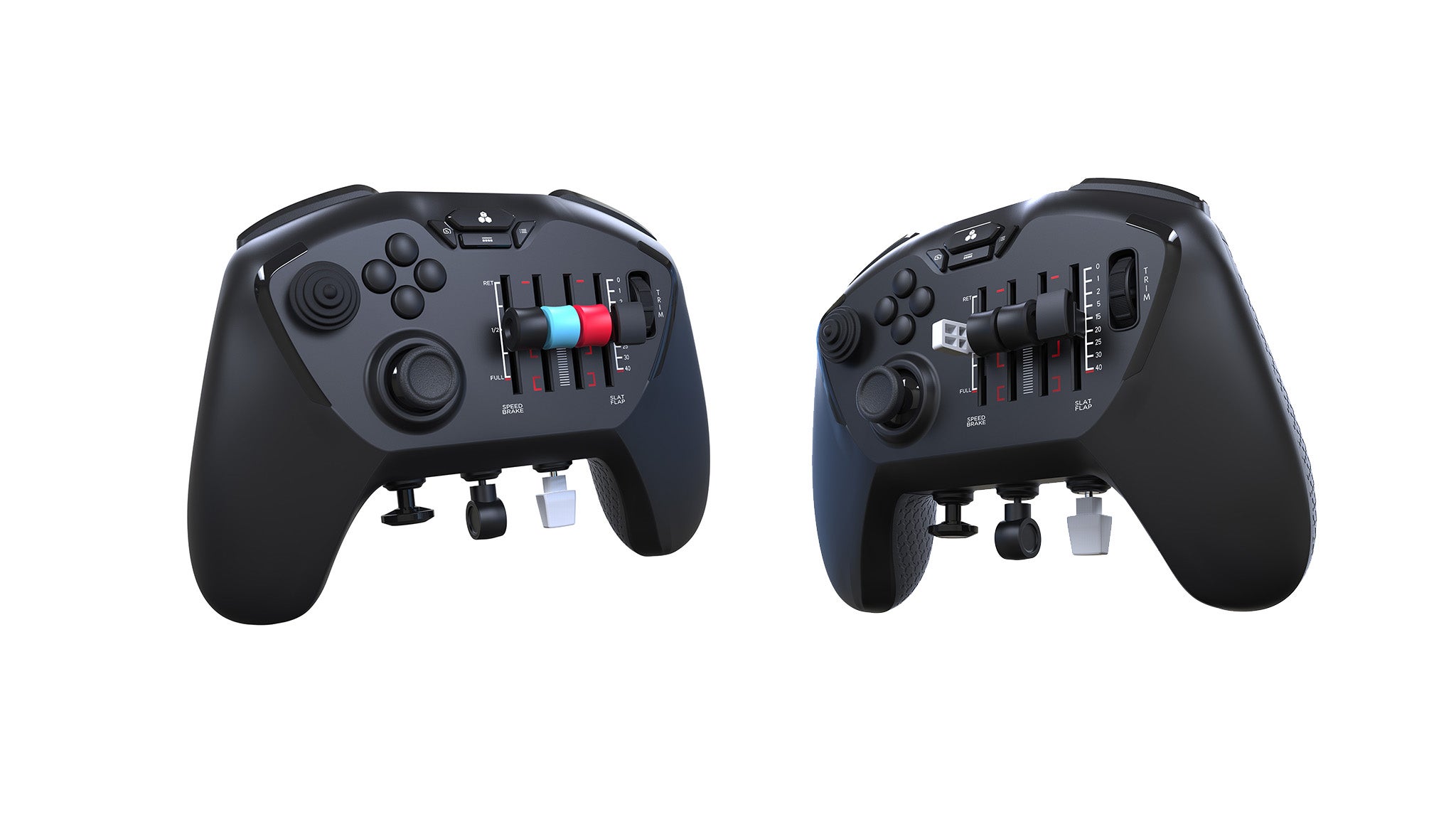
Whether it ends up being a genuinely great controller almost feels secondary to the simple fact that it exists at all, radiating chaotic energy and begging to be used for deeply silly challenge runs as much as serious virtual flying. Honeycomb says it is slated to go on sale next month, which makes the temptation even more dangerous.
Design: a cockpit hiding in your lap
Visually, the Echo Aviation Controller keeps the basic silhouette of a modern console pad, then stuffs almost every flat surface with switches, levers, buttons and tiny labels. Honeycomb clearly wants you to be able to command a digital jet airliner without leaving that relaxed, elbows tucked posture that makes normal controllers so comfortable. The result is something like a cockpit panel that has been shrunk in the wash and bolted to a gamepad shell. It looks part serious instrument, part toy from a Saturday morning cartoon, the sort of hardware that makes friends do a double take when you set it on the coffee table and tell them this strange plastic spaceship is your new way to fly across photorealistic versions of the world in Microsoft Flight Simulator.
Sticks, paddles and levers everywhere
Under the novelty, there is a fairly serious set of inputs. The main stick is a classic left side analog, but built on hall effect sensors rather than the usual contact based potentiometers. In theory that should mean smoother input and none of the dreaded stick drift that haunts older pads. Honeycomb maps that stick for full elevator and aileron control, so you can bank, pitch and yes, execute your best barrel rolls without needing a full yoke assembly. On the back of the pad sit a pair of paddles that move in opposition to one another, a clever way of giving you yaw control without separate rudder pedals under your desk. Squeezing one side and easing off the other becomes your way of nudging the tail left or right, making coordinated turns or wrestling crosswinds while you line up with the runway lights.
Along the top and front plate, things get even busier. Four chunky, independently assignable thrust levers rise from the center, each with swappable caps so you can dress the controller for general aviation aircraft or big commercial jets. If you fly twin engine turboprops one evening and wide body airliners the next, you can tweak your layout to match. Additional mini levers near the bottom edge handle essentials like flaps and landing gear, so you can tap down for takeoff, flip them up once you are safely climbing, and drop the wheels at the last second like a show off on short final. A cluster of face buttons near the top can be bound to camera views, in sim checklists or toolbar shortcuts, saving you from digging into menus with a mouse every few seconds while you try not to stall.
Why sim fans are building handheld cockpits
Because it is still, at heart, a gamepad, the Echo Aviation Controller is meant to live wherever you do your casual gaming, not only at a dedicated sim rig. Arms in your lap, back against the sofa, screen a few meters away, you can still reach nearly every primary function a typical airliner demands. That makes it interesting not just for seasoned sim pilots with overflowing desks, but also for newcomers who never wanted to invest in a huge metal yoke and pairs of clunky pedals. It promises a halfway point between a standard pad and a full cockpit, a travel friendly controller that can slide into a bag alongside a laptop yet still let you feel like you are actually managing a complex machine.
Honeycomb is not alone in chasing this weirdly specific niche. The Meridian GMT X-Ray aims at a similar hybrid role, and the wonderfully named Yawman Arrow is already on sale for around 199 dollars, offering its own take on a handheld cockpit. Together they mark a growing subculture inside the flight sim world, one that wants serious controls without the serious footprint. These devices will never replace the sprawling multi monitor setups that hardcore simmers build in spare rooms, but they are trying to give everyone else a richer way to fly than the default console controller. For players who split time between work trips, small apartments and crowded desks, that trade off between depth and portability might be exactly what keeps Microsoft Flight Simulator installed instead of pushed aside for lack of space.
The meme potential is off the charts
Of course, the second you see something this over the top, your brain also jumps to pure chaos. I can already hear friends saying they will only believe in the Echo once someone beats a brutally hard song in Guitar Hero with it, or uses it to take down Malenia in Elden Ring as the internet sips popcorn and watches the highlight clips. This is the era of playing everything with the wrong controller, and a pad covered in throttles and flap switches is practically built to star in those challenge runs. Even if you never load a single sim, you can imagine handing this to a buddy when they sit down expecting a normal round of Smash and telling them this is their character select screen now. It has that energy, the feeling that whoever designed it deeply loves Flight Simulator but also understands that part of the fun is just laughing at the absurdity of building a cockpit into something you can hide in a drawer.
Platforms, battery life and what comes next
Beneath the jokes there are some practical touches. The Echo Aviation Controller connects wirelessly and Honeycomb claims up to around fifteen hours of battery life, which should comfortably cover a long haul across continents or a weekend of shorter hops. When the charge runs low you can plug in over a USB C cable and keep flying, treating it like a wired pad. The version Honeycomb is talking about right now is aimed at Windows PCs and Macs, which makes sense given where most sim diehards live, but the company has also shown a trailer promising console support starting in 2026. In other words, this thing is being pitched as a long term companion rather than a fleeting novelty, something that could move with you from laptop to desktop to living room as your sim obsession evolves.
Whether the Echo Aviation Controller actually nails the feel of a proper flight rig is a question only extensive testing can answer. What is clear already is that it captures a particular moment in gaming hardware, where enthusiast tools and playful memes collide. For a certain type of player, the promise here is irresistible. Maybe you simply want, finally, to coax a virtual airliner cleanly off the runway in Microsoft Flight Simulator after years of stalling on takeoff. Maybe you are dreaming up the most ridiculous boss runs you can livestream with a dashboard full of tiny levers under your thumbs. Either way, Honeycomb has built a controller that refuses to blend into the pile of black plastic pads under the television. It is unapologetically strange, oddly charming, and very likely to find a home with anyone who loves the idea of flying from the couch.
1 comment
whoever designed this definitely lives inside Flight Simulator and had one very long late night brainstorming session lol