Qualcomm’s roadmap for 2025 is finally coming into focus. After showing the ultra high end Snapdragon 8 Elite Gen 5 at its Summit earlier in the year, the company is now preparing to move the regular Snapdragon 8 Gen 5 into the spotlight, with its Chinese arm confirming a November 26 launch event. 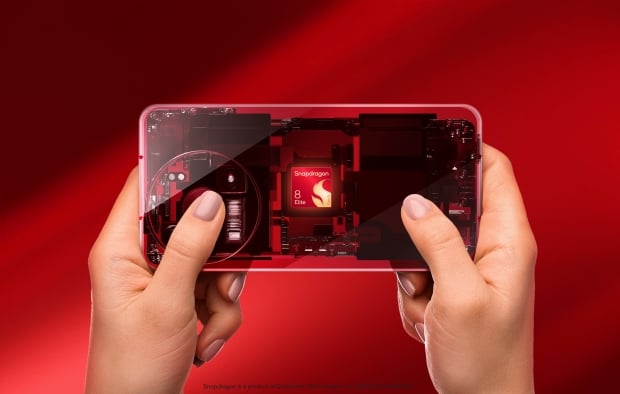
The new system on a chip is built for next generation Android flagships, but it sits just below the Elite tier in Qualcomm’s growing stack.
Importantly, Snapdragon 8 Gen 5 is not a budget part and not even really a lite edition. It is Qualcomm’s way of carving out a second flagship tier for devices that still need top class speed, modern connectivity, and strong on device AI, but do not have to chase every last benchmark point. The Elite version is there for no compromise halo phones, the ones built mainly to win spec sheet wars, while 8 Gen 5 aims to bring most of that experience into slightly more sensible designs and price brackets.
3 nm process, Oryon cores and a 2 plus 6 layout
Under the hood, Snapdragon 8 Gen 5 uses the same cutting edge 3 nm manufacturing process as its Elite sibling. That shrink is about more than marketing; moving to 3 nm allows denser logic, lower power leakage and higher peak clocks compared to older 4 nm chips. Qualcomm combines this node with its in house Oryon CPU architecture in a 2 plus 6 core arrangement. Two prime cores are tuned for heavy single thread bursts at up to around 3.8 GHz, while six performance cores can reach roughly the mid 3.3 GHz range and are meant to carry long gaming sessions and demanding apps.
The Elite version pushes clocks even further, which looks impressive in synthetic tests but also increases heat and power draw. By stepping the regular 8 Gen 5 back slightly, Qualcomm is clearly trying to hit a sweet spot where phones can stay fast without instantly bumping into thermal limits. On paper it still looks like a true high end chip; the real question is how well it can hold that speed once you have been playing a heavy game or recording 4K video for more than a few minutes.
Adreno 840 graphics and AI heavy workloads
Graphics duties are handled by an Adreno 840 GPU, closely related to the unit inside the Elite part, only tuned more conservatively. For users that likely still means console like visuals, high frame rates at full HD and beyond, and support for modern rendering features such as advanced lighting, upscaling and high refresh rate displays. In practical terms you should be able to run the latest big Android games smoothly, just without pushing the silicon quite as brutally as the Elite tier does.
Where this generation really gets interesting is AI. Qualcomm is designing Snapdragon 8 Gen 5 for a world where phones are no longer just thin clients for cloud services but small AI workstations in your pocket. The chip’s hexagon style neural unit, combined with fast Oryon cores and modern memory, is meant to handle image generation, voice assistants that work fully offline, translation and summarisation in real time, and even small large language models running locally. Give such a phone enough RAM and storage and you are not far from the scenario enthusiasts joke about in forums, where even someone’s grandmother can download a compact gguf model and play with her own on device chatbot without ever touching the cloud.
Benchmarks are nothing without sustained performance
Power users in comment sections keep repeating the same warning: there is no point in chasing a record breaking benchmark score if the chip can only hold that performance for a handful of seconds before throttling. That criticism has followed several recent Snapdragon generations, and it is just as relevant here. A 3 nm process and a more balanced core layout give Snapdragon 8 Gen 5 good raw ingredients, but sustained performance will depend heavily on each phone maker’s cooling system, software limits and chassis design.
If brands pair this chip with serious heat spreaders, vapor chambers and reasonable power targets, 8 Gen 5 could prove more pleasant than some of the most aggressive flagships of the past few years, staying comfortably fast rather than bouncing up and down as thermal throttling kicks in. If they instead chase screenshots of million point benchmark runs at all costs, we will be back to phones that feel amazing in the first minute and disappoint over the next twenty.
Hidden features and wasted potential
Another recurring complaint from long time Snapdragon fans is how much potential never reaches buyers. For years, high end Qualcomm chips have been able to output video over USB C, letting a phone act like a small desktop computer when connected to a monitor or TV. Yet only a handful of brands ship proper desktop style modes, and some manufacturers do not even bother to enable wired video out at all. That leaves a flagship chip idling while users buy separate dongles or mini PCs to do something their phone hardware already supports.
The same frustration appears with smaller details. A part of the enthusiast crowd still cares deeply about having an FM radio on board; for them, seeing a spec sheet with no radio is an instant rejection, no matter how fast the CPU and GPU might be. Snapdragon 8 Gen 5 will not magically fix those decisions. Qualcomm can add the hooks for advanced display, audio and connectivity tricks, but it is device makers who decide whether those capabilities turn into features you can actually use.
Naming chaos and overlapping lineups
There is also the headache of Qualcomm’s branding. Between Snapdragon 8 Elite Gen 5, the standard 8 Gen 5 and the expected 8s versions, even seasoned followers can feel dizzy trying to remember which chip sits where. Some readers already joke that by 2026 there will be yet another 8s Gen 5 variant to memorise. The differences are real enough if you look closely at core layouts, clocks, GPU frequencies and supported features, but the overlap is big enough that many buyers will simply see three chips promising almost the same thing.
For enthusiasts, the interesting twist this year is that the regular 8 Gen 5 brings a 2 plus 6 Oryon design very close to the one used in the Elite line. That raises a pointed question: if both chips share the same basic CPU blueprint and GPU family, is the extra money for an Elite powered phone really worth it outside of peak benchmark runs and a few extreme use cases? The answer will largely depend on how phone brands position their devices and how much of the theoretical performance headroom they are willing, or brave enough, to unlock.
Looking beyond the spec sheet
Finally, there is the future proofing angle. Some commenters dream of even more dramatic jumps, throwing around fantasies about 1.8 nm processes, liquid metal cooling and twelve thousand milliamp hour batteries as the only way to break six gigahertz on mobile. Snapdragon 8 Gen 5 is not that kind of sci fi leap, but it is an important step toward phones that behave more like small computers, capable of running serious AI workloads and complex games locally while staying in a hand friendly form factor.
When Qualcomm takes the stage on November 26, the headline numbers will be easy to read. What will matter more is how the chip behaves under sustained load, which features are guaranteed across phones, and how aggressively partners choose to exploit its AI and multimedia capabilities. If the balance is right, Snapdragon 8 Gen 5 could become the quiet workhorse of the 2025 flagship season, the chip that finally makes high end Android phones feel effortlessly fast in real life rather than just in marketing slides.