Subnautica 2 should be in the spotlight for its alien oceans and deep sea horrors. Instead, it is at the center of one of the strangest corporate dramas the games industry has seen in years. 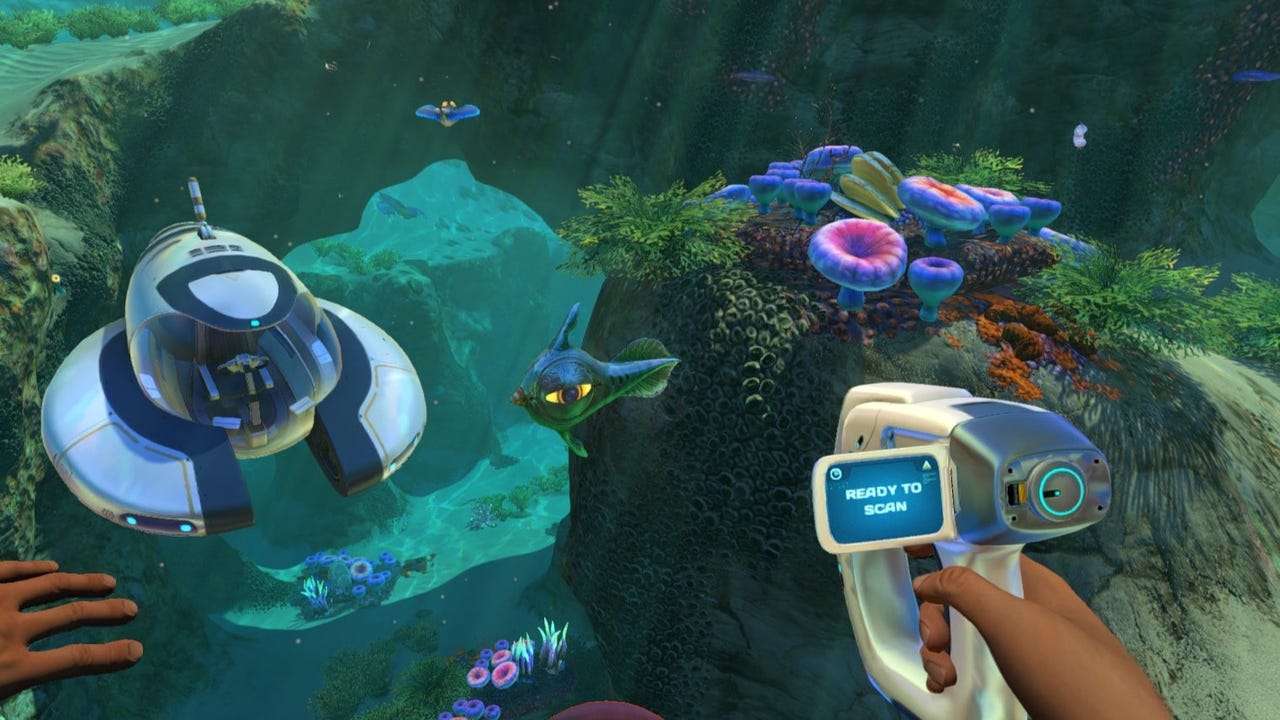
Fired founders of Unknown Worlds, the studio behind the series, now claim that Krafton chief executive CH Kim used ChatGPT to brainstorm ways to avoid paying a 250 million dollar earnout and privately discussed taking over the studio through Slack messages.
The dispute is now heading into court, with lawsuits and countersuits flying in both directions. What started as a seemingly straightforward acquisition in 2021 has curdled into a complex fight over money, control, and who really gets to decide the future of Subnautica 2. Around it all sits a familiar question for players: when you spend 70 dollars on a game, how much of that investment is going into the worlds you love, and how much is feeding corporate power games behind closed doors.
The acquisition that came with a huge promise
Krafton bought Unknown Worlds in October 2021 in a high profile deal that included an enormous performance based earnout. If Subnautica 2 hit ambitious sales and development milestones, the founders and key stakeholders would be entitled to up to 250 million dollars in additional payments. Earnouts like this are common in tech and media, but the sheer scale here raised eyebrows even at the time. Subnautica is respected and beloved, but it is still a niche survival series, not a mainstream juggernaut on the scale of the biggest blockbuster franchises.
Critics of the deal argued that the earnout set expectations at a level where Subnautica 2 effectively had to behave like a giant triple A tentpole. That kind of structure can be a ticking time bomb: if the target is hit, executives grit their teeth and pay a huge bill; if it is missed, founders feel cheated and claim the publisher sabotaged their chances. In other words, the contract almost guaranteed a clash if anything went wrong.
From honeymoon phase to legal war
According to the new legal filings, the relationship between Krafton and the Unknown Worlds founders deteriorated sharply as Subnautica 2 moved toward its planned early access launch. The studio leadership claims they had prepared for a soft launch in 2025, and that internal milestones suggested the project was on track. Then, in 2024, Krafton allegedly pushed the release back to 2026, just months before the earnout was due, over the objections of the old leadership.
Founders Charlie Cleveland and Max McGuire fired back with a lawsuit accusing Krafton of wrongful termination and of manipulating the schedule to avoid the payout. Krafton responded that the pair had simply not earned the money, painting them as disengaged leaders more interested in cashing out than in shipping a great game. On top of that, Krafton, through Unknown Worlds itself, sued Cleveland, former chief executive Ted Gill, and McGuire for allegedly taking game design files shortly before their dismissal. The story is no longer just a simple employer employee conflict; it is a tangled snarl of overlapping claims, counterclaims, and reputational damage on all sides.
Inside Project X and the alleged takeover plan
The latest filing, surfaced by Game Developer, adds even more explosive claims. It alleges that Krafton assembled a secret internal group called Project X, led from the top by CH Kim and involving newly appointed Unknown Worlds chief financial officer Richard Yoon. The mandate of this group, according to the founders, was blunt: either force a new deal on the earnout or execute a takeover of the studio that would remove its original leadership entirely.
Legal documents quote Kim as being frustrated with the acquisition contract, describing it as a bad deal that left Krafton being dragged around. The filing argues that after failing to pressure the founders into a cheaper settlement, Krafton used Project X to accelerate their removal. For players used to thinking of studios as creative havens, it is a sobering picture of how quickly a beloved developer can be reduced to a corporate asset on a spreadsheet.
When executives turn to ChatGPT
The most surreal detail in the filing is the allegation that Kim turned to ChatGPT in search of ways to escape the earnout. The court documents claim that Krafton legal advised that the payment would likely still be owed if the sales goals were met, even if the founders were fired for cause. Faced with that, Kim allegedly asked the chatbot to suggest strategies for canceling or limiting the earnout obligations.
According to the complaint, even ChatGPT responded that canceling the earnout would be difficult under the terms of the contract. The founders say Krafton later refused to provide the ChatGPT logs in discovery, asserting that those conversations no longer exist. True or not, just the idea of a multibillion dollar publisher using a consumer AI chatbot to brainstorm around a quarter billion dollar promise has ignited public anger. Many players already suspect that what executives discuss in private would look ruthless, even grotesque, to the people who actually buy and play these games. Allegations like this only confirm that fear.
Was Subnautica 2 ready or not
At the core of the disagreement is a simple but crucial question: was Subnautica 2 genuinely ready for its original release window. The founders say yes. They point to playtest data shared with Krafton in May that showed the game meeting or exceeding player expectations for an early access launch. An internal Krafton expert, they claim, recommended a 2025 release as the best path forward and warned that firing Gill would likely delay the project by years.
The filing also cites Krafton executive Maria Park as having written that the game was ready for an August launch. Against that, Krafton argues that the leadership was not prioritizing the game and that the extra time was needed to deliver something that matched or surpassed the first Subnautica. For fans on the sidelines, it is hard to know whose version is closer to the truth. What is certain is that the longer the legal fight drags on, the more risk there is that the game itself loses momentum, and in this industry, time is one of the deadliest enemies a studio can face.
Krafton insists it is defending the players
In its public statements, Krafton is trying to frame the dispute around quality and accountability rather than money. The company says that nothing matters more than delivering the best possible experience for Subnautica fans, and that all of its decisions around leadership changes and scheduling were driven by that goal. It accuses the former leaders of losing interest in the day to day development of Subnautica 2, declining opportunities to come back into their roles, and now going to court to regain positions they no longer wanted.
This is the classic corporate narrative: we protected the product from negligent leadership, and now that we are being sued, we are simply defending our ability to put players first. The founders, obviously, tell a different story, one where committed creators were pushed out so that a publisher could avoid paying what it had promised and consolidate control over a successful studio.
Who really benefits from a 250 million earnout
Another uncomfortable issue lurking underneath the headlines is how that enormous earnout would actually have been distributed. Players naturally want to side with the underdog studio against the big publisher, especially when AI is allegedly being used to squeeze contracts. But some observers question whether most of that windfall would have gone to a small group of founders and executives, while the rank and file developers who built Subnautica 2 received only a fraction.
That tension does not excuse any bad behavior by Krafton, but it does highlight how unevenly rewards are often shared in gaming. The people writing code, animating creatures, and designing levels are rarely the ones negotiating nine figure earnouts. Even when players see themselves as supporting the little guy, the money can still end up concentrated at the top of both sides of the table.
Echoes of past studio breakups
For longtime followers of the industry, the Unknown Worlds saga has a familiar ring. It recalls the infamous split between Activision and Infinity Ward after the early success of the modern warfare series, when lawsuits, countersuits, and accusations of withheld bonuses dominated headlines. Just as in that case, the Unknown Worlds dispute will likely hinge on documents, milestones, and technical definitions buried in dense contracts that few outsiders ever read.
The difference now is that AI is part of the narrative. It is one thing to hear about executives arguing with lawyers and bankers; it is another to imagine them pasting contract details into a chatbot window and asking for clever ways to avoid paying people. Whether the court ultimately finds those alleged conversations relevant or not, they speak to a growing anxiety about how new technologies can be used to reinforce existing power, rather than democratize it.
The game moves forward while trust erodes
Meanwhile, Subnautica 2 itself continues to inch ahead. Unknown Worlds recently showed off a behind the scenes look at a new deep sea predator and talked about how it is using Unreal Engine 5 and AI driven behavior systems to create more lifelike reactions and tense underwater encounters. The vlog was one of the first substantial updates since the dispute exploded into public view, a reminder that dozens of developers are still trying to build something memorable while lawyers argue over their heads.
Among fans, reactions are mixed. Some say they refuse to take a side in a corporate fight and will simply buy the game if it looks good once it hits version 1.0. Others feel instinctively drawn to support the ousted founders, seeing a pattern of big publishers treating creative teams as disposable. A few are just exhausted: yet another week in gaming where the loudest stories are not about games but about executives, contracts, and courtroom strategy.
What this means for players
In the end, the courts will decide whether Krafton wrongfully pushed out Unknown Worlds leadership and whether the 250 million dollar earnout is still owed. Whatever the verdict, the case is already a cautionary tale about how fragile the relationship between creators, publishers, and players can be. Every time a story like this surfaces, it becomes a little harder for fans to believe that the price of a game is primarily funding creativity rather than corporate infighting.
Subnautica 2 may still emerge as a brilliant survival adventure that justifies the delays and drama. But the saga around it is a reminder that when deals are wired in a way that concentrates huge amounts of money and control at the top, the fallout from a bad bet does not only hit executives. It also ripples down to the teams whose work gets paused, redirected, or scrapped, and to the players who are left wondering what exactly they are paying for when they dive back into the depths.