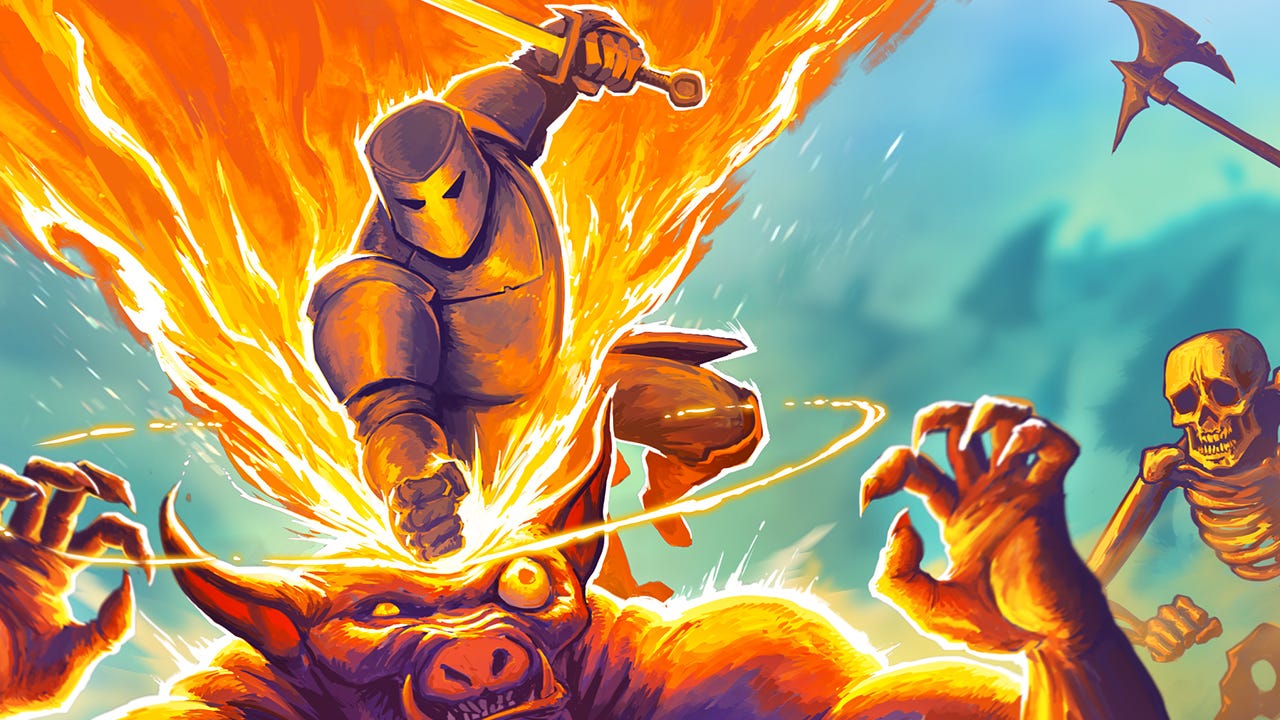
Megabonk Dev Steps Away From The Game Awards And Reopens The Indie Debate
Every awards season has that one story that cuts through the marketing noise and reminds people that real humans are behind the games. This year, that moment belongs to Megabonk creator Vedinad. After his colorful roguelite was nominated for Best Debut Indie Game at The Game Awards, the solo developer did something almost unheard of in an industry that lives on visibility: he asked to be taken out of the category because he does not believe Megabonk truly qualifies as a debut.
The announcement came via the official Megabonk account on Twitter X, where Vedinad explained that while the nomination was an honour and a childhood dream, he had shipped games before under other studio names. In his view, that means Megabonk is not a genuine first release, even if the Megabonk name and branding are new. Rather than quietly accepting the spotlight, he thanked voters, encouraged them to support other nominees he sees as real debuts, and casually teased that a new Megabonk update is on the way.
On the other side of the table, The Game Awards moved quickly. Show creator and host Geoff Keighley posted that the team had been contacted by the developer, who clarified that he is an established solo creator presenting himself under the new moniker Vedinad. Keighley described the message as an act of honesty, confirmed that Megabonk would be removed from the Best Debut Indie Games list, and stressed that the decision came from the developer, not from the organisers. It is one of those rare moments where an awards body effectively says: we agree that you are being too modest about your eligibility.
What Best Debut Indie Is Supposed To Celebrate
On paper, the category sounds simple enough. Best Debut Indie Game at The Game Awards is meant to highlight the first release from a new independent studio. It is the stage where small teams introduce themselves to a global audience, sometimes standing shoulder to shoulder with blockbuster franchises for a single night. In practice, though, defining what counts as a new studio is messy. Game development is fluid: people leave big companies, form collectives, fold, rebrand, then reassemble under a new logo while carrying decades of experience with them.
Take this year and recent winners as examples. Dispatch comes from AdHoc Studio, a team made up largely of former Ubisoft and Telltale developers who have worked together before on narrative projects. Cocoon, which took home the Debut Indie award in 2023, was developed by Geometric Interactive, founded by veterans who had previously contributed to the haunting worlds of Playdead. These are not naive first timers stumbling into the craft. They are experienced creatives forming a new banner and shipping their first project under that name. By the wording of the rules, they fit, but they complicate the public image of what a debut really is.
Where Megabonk Sits In That Grey Area
In that context, Vedinad could easily have shrugged and stayed in the race. He is, after all, as close to a classic one person studio as modern commercial development tends to get. Megabonk is primarily his vision, his code, his design work. But like almost every so called solo project, it is still a small village behind the scenes. Composer Miguel Angel is credited with the soundtrack, artist Giovanni Fim contributed the Steam artwork, a list of playtesters helped shape the moment to moment feel, and there is even a special thanks line to his mum. This is a micro team, but a team nonetheless, clustered around a single creator who wears most of the hats.
That is where the question stops being about paperwork and starts being about identity. When one developer has shipped prior games under different labels, is a new one person brand genuinely a debut studio, or just a fresh coat of paint on an ongoing career The rules do not explicitly forbid it, and other nominees this year and in the past arguably sit in similar grey zones. Vedinad simply decided that his threshold for what feels honest is stricter than the official criteria and opted out on principle.
Players Call Out Double Standards Across Nominees
Fans, of course, immediately zoomed out to the rest of the ballot. Some pointed out that if Megabonk is disqualified in spirit, then other heavy hitters in the category are hardly squeaky clean debuts either. Clair Obscur Expedition 33 and other touted indie darlings are built by teams stacked with former AAA talent, often from studios like Ubisoft. For many players, the reality is that almost no one ships a polished game as their literal first project. People cut their teeth on student work, mobile experiments, game jam prototypes, then finally put a logo on the door and call that their debut. By that logic, Megabonk looks pretty similar to the rest of the field.
Still, the tone around Megabonk himself has been largely positive. Plenty of commenters praised the developer for walking away from a stage most indies would kill to stand on, calling it a rare example of integrity in a climate where clout can matter more than nuance. Others are a little more sceptical, suggesting with a wink that publicly withdrawing from a category you probably were not going to win is also a clever way to generate buzz. Turning an eligibility technicality into a narrative about ethics is, after all, a very online kind of marketing, even if the intent behind it is sincere.
Alongside the serious discussion, the usual internet mythology kicked in. Some fans joked that this is yet more evidence that Vedinad is secretly the YouTube famous solo dev Dani in disguise, weaving another layer into an ongoing meta story about chaotic indie releases. Others admitted they had not even touched Megabonk, having written it off at a glance as a 3D Vampire Survivors copy, and were now reconsidering whether there might be more going on under the hood than a simple clone. The withdrawal has, paradoxically, made more people curious about the game than the nomination itself did.
The Bigger Indie Question: Who Really Counts
None of this is happening in a vacuum. The Game Awards has been wrestling with the meaning of indie for years, and the internet never forgets. In 2023, Dave the Diver sparked outrage when it appeared in the Best Indie category despite being developed by a studio owned by Korean giant Nexon. The creators described themselves as semi independent, but for many viewers, seeing a company backed by a major publisher in the indie lane felt like the term had been stretched to breaking point. That same year, Sifu showed up in Best Fighting Game, even though most players think of it as a single player action beat em up rather than a traditional fighter. More recently, titles like Monster Hunter Wilds being slotted into role playing categories have raised eyebrows over genre definitions in general.
Underneath all the memes lies a serious frustration. To some players, indie now means little more than not being openly tied to a mega publisher that the public already dislikes, or simply looking like the stereotypical quirky indie game with flat colours and heartfelt marketing. Others argue that the only meaningful line is money and control. They want hard caps on production budgets perhaps five or ten million dollars and strict limits on publisher ownership or marketing assistance. If you blow past those numbers or rely on a corporate pipeline, they say, you are not indie, no matter how heartfelt your story about being a small team might be.
Why This Withdrawal Matters More Than One Trophy
Vedinad stepping away from Best Debut Indie will not bring the awards machine to a halt. The remaining nominees still get their night on stage, the show goes on, and Megabonk will continue to live or die based on word of mouth, reviews, and updates rather than a line on a trophy. Yet the gesture resonates precisely because it came from the creator, not from an angry comment thread or a technical disqualification. It highlights how fuzzy the boundaries are, and how uncomfortable that fuzziness can make the very people who are supposed to benefit from it.
It also nudges The Game Awards and similar events toward a conversation they have been skirting for years. If one of the most visible solo dev success stories of the season feels compelled to self disqualify, maybe the categories need clearer language than new independent studio. Maybe debut should mean first publicly released game from a core team, regardless of branding, or perhaps there should be a separate space for veterans forming new labels. Maybe indie should be defined by budget and publisher involvement rather than vibes. None of these questions are easy, but right now they are being answered in ad hoc ways, on social media, one controversy at a time.
For the moment, the takeaway is simple. Megabonk loses a nomination but gains a myth. Its creator has chosen to stand on an unusually strict definition of debut, even while similar teams stay in the running, and that decision has reignited debate about who indie awards are really for. Whether you see the move as pure integrity, smart self promotion, or a bit of both, it has ensured that when people look back at this year in The Game Awards history, the conversation will not just be about who won, but about what those trophies were supposed to represent in the first place.
1 comment
Huge respect to the dev tho. In a year where everyone is chasing clout, dude just went nah, give that spotlight to someone more debut than me