Google is turning up the heat in the AI image race with the launch of Nano Banana Pro, its latest and most powerful image generation model built on top of Gemini 3 Pro. Instead of being just another shiny demo, Nano Banana Pro is positioned as a serious creative engine: a tool that can generate studio-quality visuals, render clean and readable text directly inside images, and bring a new level of transparency to AI-created media. 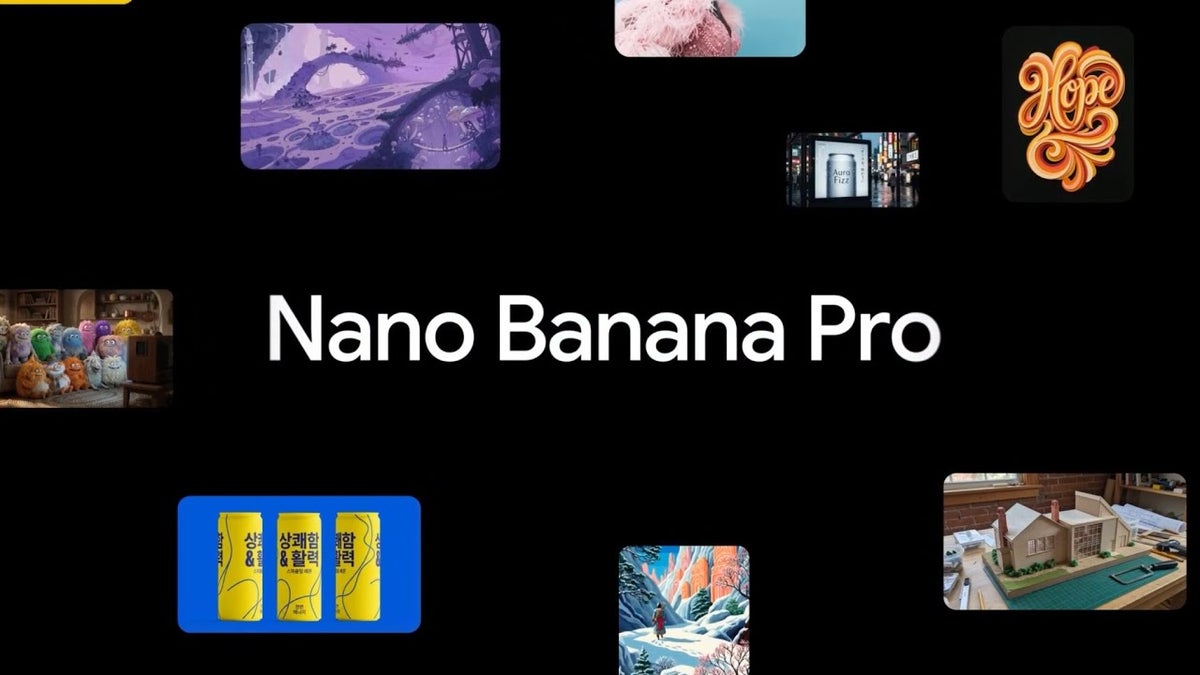
From casual creators to advertisers, filmmakers and developers, Google clearly wants this model to sit at the center of how visual content is produced, checked and trusted in the years ahead.
What exactly is Nano Banana Pro?
Nano Banana Pro is the successor to Google's earlier Nano Banana model, which was based on Gemini 2.5 Flash. That first generation was fast and fun, but clearly experimental. The Pro version is a different beast. Backed by the more powerful Gemini 3 Pro foundation model, Nano Banana Pro is designed to turn loose ideas into polished, production-ready designs. Google describes it as capable of creating "studio-quality designs with unprecedented control, flawless text rendering and enhanced world knowledge" — and for once, that marketing line is not just hype. The underlying upgrade to Gemini 3 Pro means the system can understand nuance in prompts, connect multiple pieces of information, and reflect real-world context far better than before.
That enhanced reasoning shows up in practical use cases. Instead of simply drawing a generic picture when you ask for a travel poster or an infographic, Nano Banana Pro can build visuals that are aligned with actual data, locations or recipes you describe. Ask it to visualize the nutritional breakdown of a meal, mock up a slide summarizing quarterly results, or illustrate a complex process, and the model uses Gemini 3 Pro's reasoning layer to keep the image both beautiful and meaningful.
Studio-grade visuals with real-world understanding
Where many consumer image generators focus on flashy aesthetics, Nano Banana Pro tries to bridge the gap between pretty pictures and genuinely useful design assets. It can produce crisp product shots, stylized concept art, and cinematic frames, but it also tries to maintain consistency across a set of images. That is crucial for advertisers and brands that need visual coherence over an entire campaign — from banner ads and social posts to presentation decks and video storyboards.
Because the model sits on top of Gemini 3 Pro, it benefits from richer world knowledge. This makes it better at interpreting references to specific places, objects or cultural details, reducing the number of bizarre or off-target generations. Want an infographic comparing ingredients from different cuisines, or a slide visualizing a real economic trend? Nano Banana Pro can incorporate details from your prompt more intelligently, instead of just guessing based on style keywords. For teams that live inside Google's ecosystem, that quality jump turns AI images from a novelty into something that can realistically enter a professional workflow.
AI images that can finally spell properly
Anyone who has experimented with AI image generators knows the pain of broken text: menus with nonsense words, posters full of gibberish, and logos that melt the longer you look at them. Google is making a bold promise with Nano Banana Pro: significantly better in-image text rendering. The model is tuned to produce legible, correctly spelled text directly inside the generated image, from short labels and signs to full blocks of type on posters, packaging, UI mockups or presentation slides.
Crucially, this is not limited to English. Nano Banana Pro supports multiple languages and can even combine image generation with translation. That means you can design a poster in one language and have the model render an equivalent visual with translated, properly laid-out text. For global brands, educators, or social media teams that speak to audiences in several regions, this multilingual capability alone makes Nano Banana Pro stand out against many competing models whose text still collapses into random characters.
Where you can use Nano Banana Pro right now
Google is not keeping Nano Banana Pro locked away in a research lab. It is being deployed across many of the company's products so that different types of users can tap into the same underlying engine. Everyday creators will meet it first inside the Gemini app: in the 'Create images' section, selecting the 'Thinking' model gives access to Nano Banana Pro. Free-tier users receive a limited quota of generations, after which the system quietly falls back to the original Nano Banana model, but the experience is enough to get a taste of the Pro-level output.
For professionals and businesses, Nano Banana Pro is weaving itself into the tools they already use. Advertisers will see it inside Google Ads, where it can help generate campaign visuals, banner concepts and creative variations that still respect brand guidelines. Workspace customers will encounter it in Google Slides and Vids, turning text prompts and bullet points into full slide backgrounds, explainer visuals and storyboard frames for internal training or external pitches.
Developers are not left out either. Nano Banana Pro is accessible via the Gemini API and Google AI Studio, giving builders the ability to integrate advanced image generation into their own apps or services. For enterprises that need scale, Google is rolling the model into Vertex AI, so large organizations can generate thousands of on-brand images, run automated tests, or connect it to existing data pipelines. And for the ultra-creative crowd, Google AI Ultra subscribers can use Nano Banana Pro in Flow, the company's AI filmmaking tool, where it promises tighter control over individual frames and scenes, helping artists experiment with animatics, concept reels and mixed-media storytelling.
Transparency as a built-in feature, not an afterthought
As AI-generated media explodes across the web, identifying what is real and what is synthetic has become a critical problem. Google is using Nano Banana Pro's launch to push a broader answer: transparency by default. While other models, including OpenAI's DALL-E, have explored watermarking, Google is going a step further by shipping an easy verification tool directly to end users inside the Gemini app.
The system relies on SynthID, Google's digital watermarking technology. Instead of adding a visible logo or an obvious badge, SynthID embeds an imperceptible signal into AI-generated images. That signal is designed to resist common edits like cropping, resizing or light filtering. Inside the Gemini app, you can upload an image and simply ask whether it was generated by Google AI. If the SynthID signal is present, Gemini can flag it as such, giving everyday users a simple way to check the origin of a suspicious picture circulating online.
This approach does not magically solve misinformation or deepfakes, but it marks an important shift. Rather than treating transparency tools as optional, Google is baking verification into the same place where the images are created and consumed. In a landscape where synthetic visuals can influence politics, markets and culture, that verification layer may turn out to be as important as the flashy image quality itself.
Watermarks, clean canvases and professional workflows
There is another delicate balance Google is trying to strike: maintaining transparency without cluttering the creative canvas. For Google AI Ultra subscribers using Nano Banana Pro in professional settings, the company is removing the visible 'Gemini sparkle' watermark that previously appeared on content. Designers, filmmakers and agencies often need clean imagery with no visible logos or overlays, especially when delivering work to clients or integrating AI assets into broader campaigns.
At the same time, Google keeps emphasizing its commitment to open verification. The invisible SynthID watermark remains, and the company plans to extend the same verification mechanisms beyond still images into video and audio. That means an AI-generated clip created in Flow or an audio track produced in future Gemini tools could carry a similar hidden signal, allowing platforms and users to check whether it comes from Google's models. For newsrooms, educators, and platforms moderating user-generated content, this combination of clean visuals and traceable origin could become a powerful standard.
A broader ecosystem, from Photos to editors
Nano Banana Pro does not exist in isolation. Google is steadily threading AI creation and editing features through its ecosystem, including Google Photos, where Nano Banana-powered editing tools can already help enhance or reimagine shots on both Android and iOS. Gemini's newer image editing capabilities are designed to fix some of the most annoying quirks of AI photos, such as warped hands, inconsistent lighting or awkward text placement, by letting users refine or partially regenerate only the parts of an image that bother them.
As these tools mature, the line between generating and editing blurs. You might start with a real photograph, then ask Nano Banana Pro to extend the scene, clean up clutter, add stylized text in another language, or match the framing to a wider campaign. For creators and marketers, this unified workflow — capture, enhance, extend, verify — matters more than any single model benchmark. It is here that Google hopes its Gemini-based stack will feel more coherent and reliable than rival offerings that live in separate apps and services.
The long game: trust plus control
Nano Banana Pro lands at a moment when AI images are everywhere, but trust is fragile. Many models can already generate beautiful pictures; far fewer can reliably handle text, honor brand constraints, integrate with business tools and support robust verification. By focusing on those unglamorous but crucial pieces — legible multilingual text, enterprise integration, watermarking and user-facing verification — Google is signaling that the future of AI imagery is not just about wow-factor visuals. It is about control and accountability.
If Nano Banana Pro delivers on its promise, Google will not just have a more powerful image generator; it will have a framework for how responsible, high-end AI visuals should work across the wider web. In that sense, this launch is less a one-off product release and more an opening move in a longer strategy: make AI images sharper, smarter and easier to trust, and the rest of the ecosystem will eventually have to follow.
1 comment
finally an ai that can actually spell on a poster lol, this is huge for memes AND work