When Bungie finally unveiled the eight minute reveal cinematic for Marathon, the studio probably expected debate about the game’s tone, lore, or extraction shooter direction. Instead, a large chunk of the internet immediately jumped to a different conclusion: it must be AI generated. 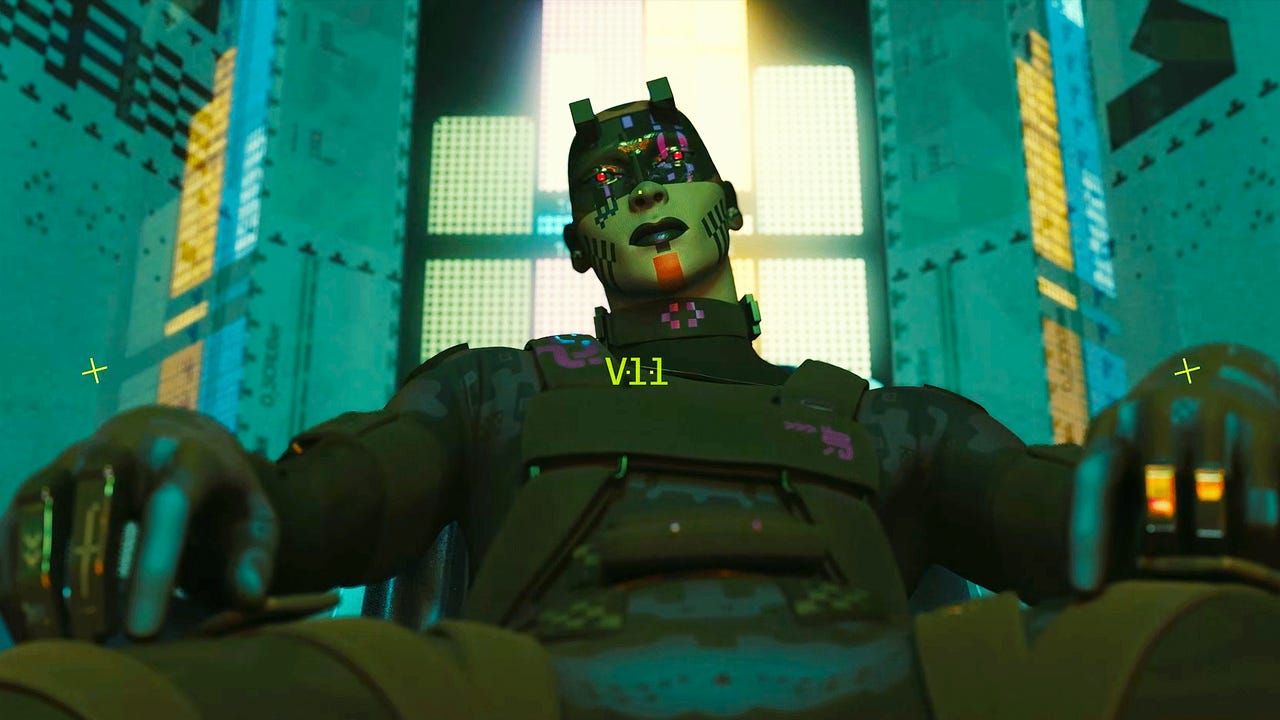
The reaction was so loud that director Alberto Mielgo felt compelled to do something no filmmaker of his stature should have to do in 2025 – publicly explain that his own film was actually made by human artists.
The Marathon cinematic, which introduces Bungie’s new sci fi universe and a cast of hardened runners, is a dense piece of animation and design. It features performances from actors such as Elias Toufexis and Ben Starr and is built in the hyper stylized visual language that has become Mielgo’s calling card. He wrote and directed the short, just as he did with The Witness for Netflix’s anthology Love, Death and Robots, and he is already an Academy Award winner for his 2022 short The Windshield Wiper. In other words, this is not some anonymous marketing clip; it is a signature work by a director known for obsessive control over color, framing, and motion.
In a long Instagram statement responding to the AI accusations, Mielgo broke down what went into the project. He stressed that every painting, animation, 2D sketch, 3D model, composite and render was crafted by a real team, not spat out by a prompt. The production, he said, added up to 155 staff months of work, spread across more than a hundred and fifty artists and technicians who spent an exhausting amount of time refining shots, fixing continuity, and pushing the look as far as they could. The real Achilles heel, as he put it, was not a dataset or a pipeline but the oldest constraint in filmmaking: time.
Mielgo also tried to address the wider fear hanging over the conversation. He admitted he does not claim to be an expert on artificial intelligence and where it is heading, but he drew a clear line around what it cannot touch. Whatever tools emerge, he argued, they cannot erase the human urge to create, or the joy that comes from painting, animating, and building worlds with your own hands. For him and his collaborators, that desire to make art is the whole point of the job, and it survives whatever technology comes along.
The problem he is running into is psychological as much as technical. We now live in a climate where any image that looks slightly surreal, stylized, or simply too polished is immediately branded AI slop by bored commenters. Under almost every trailer, illustration, or photo, you will find people insisting it is fake, often after only a few seconds of viewing. Some Marathon viewers praised the short as a masterclass in consistency, arguing that current AI tools still struggle to keep a coherent style even for a few seconds. Others, however, dismissed it out of hand, convinced that a studio under pressure would have quietly leaned on generative tools for speed and cost savings.
This suspicion is not appearing in a vacuum. Generative image and video tools have improved fast enough that it is becoming genuinely difficult for casual viewers to distinguish between prompt driven work and traditional animation, especially once material is compressed, edited, and uploaded to social platforms. There is no universal requirement for clear disclosure, either, so audiences are left to guess. At the same time, deepfake tech has blurred the line between impersonation and reality. Celebrities like Keanu Reeves have reportedly been spending real money every month paying firms to chase down fake versions of themselves on TikTok and Meta platforms, while ordinary users say they now scrutinize hands, ears, and jewelry in every photo that looks a bit too clean.
Bungie’s own recent history makes the conversation even messier. Earlier this year, the studio was hit with a plagiarism controversy around Marathon’s concept art, which led some fans to sneer that the short might as well be AI if the studio was willing to lean so heavily on someone else’s visual style. Others argue that the core issue is not whether algorithms were used but whether Bungie has already burned too much trust by appearing to borrow too liberally from existing artists and then moving on without fully repairing the damage.
On top of that, there is a separate layer of skepticism about the game itself. Marathon is an extraction shooter, a genre that already feels saturated to many players, and a subset of Bungie fans still dream of a focused, story driven campaign instead of another loot centered live service project. Some commenters openly doubt that the game can succeed in a meaningful way, even if the cinematic is impressive. For them, the disappointment of Destiny 2’s ups and downs, combined with Bungie’s layoffs and restructuring, overshadows any trailer. The delay from a planned September 2025 launch into 2026, announced after playtest feedback, only reinforces the perception of a troubled project.
Financial pressure adds even more heat. Sony, Bungie’s parent company, recently confirmed that the studio missed key sales and engagement targets, leading to a roughly 200 million dollar impairment charge tied to the Destiny business. Against that backdrop, the Marathon reveal carries a lot of weight: it is not just a cool piece of animation, but the flag for Bungie’s future beyond Destiny. When critics call the trailer something that looks like it was churned out by a hyper caffeinated prompt addict, they are not only insulting the artists; they are also questioning Bungie’s creative direction at a moment when the studio can least afford that doubt.
What is striking about this incident is the gap between effort and perception. An eight minute film shepherded by an Oscar winning director and a team of more than a hundred people can now be written off in a comment as lazy AI content, based purely on vibes. That has consequences for how audiences talk about art. Disliking a design choice or a game genre is fair criticism; reflexively shouting that anything you dislike is fake or automated, however, makes it harder to have a real conversation about style, influences, or ethics. It can also demoralize the very human artists whose work people claim to be defending from automation.
Marathon’s cinematic short sits exactly at that intersection of craft and paranoia. For Bungie, it is a chance to prove there is still a bold artistic vision behind its new projects. For Mielgo, it is another entry in a career built on distinctive, painstakingly constructed images. And for players, it is a test of how they will respond to big budget game marketing in an era where the default assumption for anything eye catching is that a machine did it. The game now has extra work to do: not only must it justify its extraction shooter design and answer concerns about plagiarism and live service fatigue, it also has to convince a skeptical audience that they are looking at the messy, time consuming work of human beings.
2 comments
Honestly, when a studio already got called out for stealing art styles, folks are gonna say it might as well be AI. Trust is kinda gone, no matter how the trailer was actually made
I get why the director is annoyed, but also, this is Bungie. With their recent history I totally understand people assuming they leaned on AI somewhere in the pipeline, even if he says they did not