Apple’s thinnest iPhone was supposed to be the showpiece of its China comeback. When the iPhone Air launched, early chatter out of Beijing and Shanghai painted it as a status symbol: an impossibly slim handset, eSIM-only, and scarce enough to feel exclusive. For a brief moment it looked like Apple had found a new way to excite a market that has become numb to incremental camera bumps and marginally brighter displays. 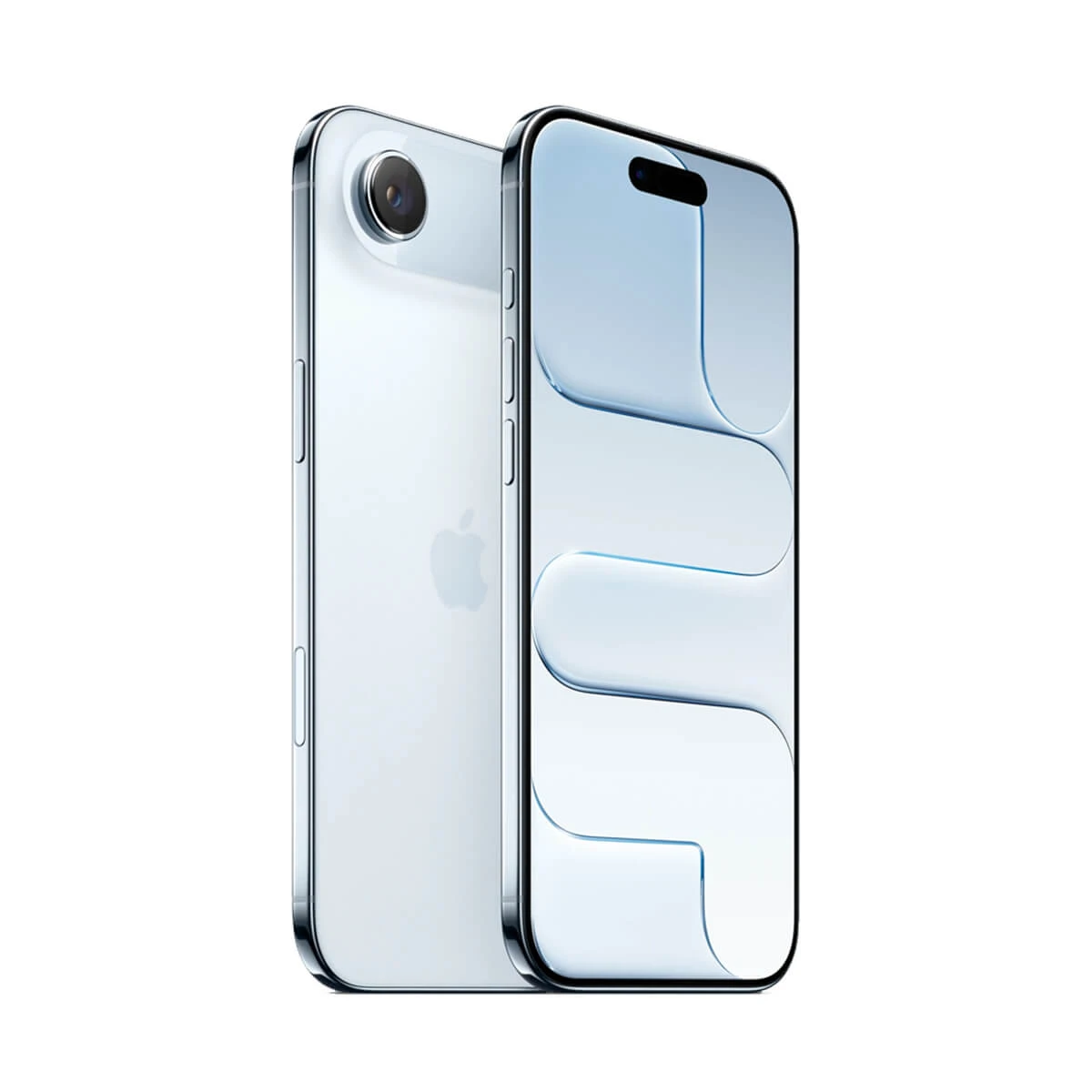
But the latest sales data from Counterpoint Research suggests a very different story. China is indeed falling back in love with the iPhone, yet the iPhone Air itself has almost vanished from the narrative.
China’s smartphone rebound is real, and Apple is riding it
Counterpoint’s October 2025 Market Pulse report paints a striking picture of China’s smartphone rebound. Overall smartphone sell-through rose 8 percent year over year, a welcome change after years of stagnation and pandemic hangover. Apple benefited more than anyone: iPhone volumes jumped 37 percent compared with the same month last year, and an estimated 80 percent of those units came from the new iPhone 17 family. Analysts describe it as the best start to a December quarter Apple has ever had in China, with total sell-through surpassing even the previous peak in October 2021. One in every four smartphones sold in the country during October was an iPhone, a share Apple has only reached once before in 2022, back when it faced fewer high-end rivals.
Meanwhile, Xiaomi quietly reclaimed the number-two spot in the Chinese rankings for the first time in more than a decade, underscoring how fierce the local competition has become. Chinese shoppers can choose from a wall of aggressively priced flagships boasting huge camera sensors, ultra-fast charging, and high-refresh OLED panels. Against that backdrop, Apple winning so much share with the iPhone 17, 17 Pro, and 17 Pro Max is a clear sign that its brand and ecosystem are still incredibly powerful in the country. Yet the device that was meant to symbolize Apple’s boldest design swing, the iPhone Air, is nowhere to be seen in the top-line numbers.
The silent disappearance of the iPhone Air
Buried within those upbeat figures is a glaring omission: the iPhone Air is not mentioned even once in Counterpoint’s latest breakdown of China’s market. That is especially odd because the same firm had previously called out the ultra-slim model in its October commentary, estimating that it made up around 3 percent of Apple’s sales mix in China and the US, compared with roughly 4 percent for the iPhone 16 Plus. That split already hinted that the Air was tracking below internal expectations for a brand-new design. This time the researchers chose to highlight the standard iPhone 17, 17 Pro, and 17 Pro Max instead, leaving the experimental thin variant on the cutting-room floor. In a data-driven industry, that kind of silence is rarely accidental.
For seasoned China watchers, the omission sounds like confirmation of what store staff and local reviewers have been hinting at for weeks. Interest in the Air exists, but mostly as curiosity, not as purchase intent. One common sentiment on Chinese social media can be summed up bluntly: the market does not really want this phone, even in China. The idea of the thinnest iPhone ever still looks good in marketing slides, but the moment buyers compare battery endurance, camera features, and price with the regular iPhone 17, the calculus changes fast.
Thin, eSIM-only, and out of sync with how China uses phones
The iPhone Air was conceived as a design-first device: ultra-slim chassis, eSIM-only, and a minimalist aesthetic that screams premium. Apple clearly believed that this would resonate in a country where hardware has long been used as a visible status marker. But Chinese consumers have moved on from simple thinness as a bragging right. Heavy messaging, mobile payments, food delivery, short video apps, and gaming sessions turn smartphones into all-day workload machines. In that environment, a device that even looks like it might compromise on battery life or thermal performance is starting from behind.
There is also the eSIM question. The Air arrived just as major Chinese carriers were still cautiously rolling out smartphone eSIM support, resulting in a confusing patchwork of which plans work where and on what terms. Dual-SIM habits are deeply ingrained in China, from students juggling personal and work numbers to business travelers relying on local data plans abroad. An iPhone that assumes eSIM is mature and universal collides with that reality. Many buyers simply do not want the risk of being locked into carrier apps and activation flows that still feel half-baked.
In practice, that means the iPhone Air asks people to pay flagship money for a phone that feels more fragile, leaves them with fewer connectivity options, and may offer worse endurance than the mainstream iPhone 17. When friends and family are recommending the regular model or the Pro version because they are more forgiving in everyday use, the ultra-thin variant quickly starts to look like a luxury toy rather than a smart upgrade.
A delayed sequel and the A20 gamble
At the same time, Apple has already pushed back the iPhone Air 2. Originally expected in the fall of 2026, the sequel is now said to be targeting a spring 2027 launch alongside the iPhone 18 and the more affordable iPhone 18e. Early whispers framed the delay as a straightforward hardware tweak, supposedly to squeeze a dual-camera system into that razor-thin frame without wrecking the silhouette. Bloomberg’s well-known Apple reporter Mark Gurman has floated a more ambitious explanation: Apple wants the second-generation Air to debut its A20 processor.
The A20 is widely rumored to be built on TSMC’s 2nm process and to use wafer-level multi-chip module packaging, in which the system-on-chip and DRAM are joined together directly on the wafer. This type of integration promises better performance per watt and more efficient use of internal space, both crucial for a phone that lives and dies on its thinness. In theory, that could let Apple restore some of the battery and camera compromises critics see in the first-generation Air, while still keeping the phone visibly slimmer than the rest of the lineup.
The catch, of course, is that 2nm capacity is going to be tight for years. If the A20 really does move to that node with advanced packaging, Apple will need to ration every usable wafer it can secure from TSMC. Folding the iPhone Air 2 into a spring 2027 launch window with other A20 devices could be the company’s way of smoothing out supply and avoiding an autumn release it cannot fully stock. Internally, Apple has always treated the Air as a relatively small piece of the pie, targeting somewhere between 6 and 8 percent of annual iPhone sales. That limited scale makes the Air an ideal laboratory for testing new manufacturing techniques and design directions without jeopardizing the core flagship lineup. But it also means that if the first-generation model is failing to resonate in China, the second generation will begin life under a cloud of skepticism.
Apple’s China strategy: mainstream first, experiments second
For now, the Counterpoint data makes one thing very clear: Apple’s China rebound is being led by the mainstream iPhone 17 line, not by niche experiments. The base model 17 is enjoying the strongest momentum of any non-Pro iPhone in years, while the 17 Pro and 17 Pro Max continue to attract aspirational buyers who want the full camera and display package. That is the formula that works in a market where Xiaomi and other domestic brands bombard consumers with spec-heavy flagships at aggressive prices. Against that backdrop, the iPhone Air looks like a side project, interesting to hardcore Apple fans but irrelevant to the brutal monthly sales race.
Strategically, this raises a familiar question for Apple: does it keep investing in a form factor that may never hit mass appeal, or does it quietly let the experiment fade away the way it did with the iPhone mini? There is a plausible future where the Air becomes a limited-run halo product, a kind of design flex that gives Apple a place to show off ultrathin engineering and new packaging technologies. There is also a less flattering scenario where the model becomes a footnote that analysts cite as evidence that even Apple can misread what Chinese buyers actually value. Either way, China is the worst possible market in which to ship a misunderstood product. It is too important, too competitive, and too transparent: if something is not selling, it disappears from the charts, just as the Air has in this latest report.
A ghost in the data
The absence of the iPhone Air from Counterpoint’s October numbers does not prove that Apple is about to cancel the line, but the signal is hard to ignore. When a device is performing well, it gets its own bullet points and callouts in analyst notes. When it goes unmentioned while its siblings are hailed for record-breaking sell-through, you are looking at a product that is, at best, underperforming. For now, Apple’s China story is being written by the iPhone 17, the Pro, and the Pro Max, while the Air lingers on the margins as a ghost in the data. If Apple wants its thinnest iPhone to matter in the world’s largest smartphone market, it will need to convince Chinese buyers that thinness plus bleeding-edge silicon adds up to more than just another compromise.
1 comment
as a nerd im more hyped for the A20 on 2nm than the air itself, if apple turns this thing into a testbed for new chip tech im fine with it tbh