ASUS has quietly turned an important corner for AMD's AM5 ecosystem, officially rolling out stable AGESA 1.2.7.0 BIOS updates across a growing list of motherboards. On paper it looks like a routine firmware bump that “improves compatibility with various CPUs and devices,” but anyone following the leaks knows this release is really about paving the way for AMD's next wave of Zen 5 desktop APUs.
MSI was the first major partner to push AGESA 1.2.7.0, and now ASUS has joined the party with a non-beta build, signaling that the code is mature enough for the wider public. 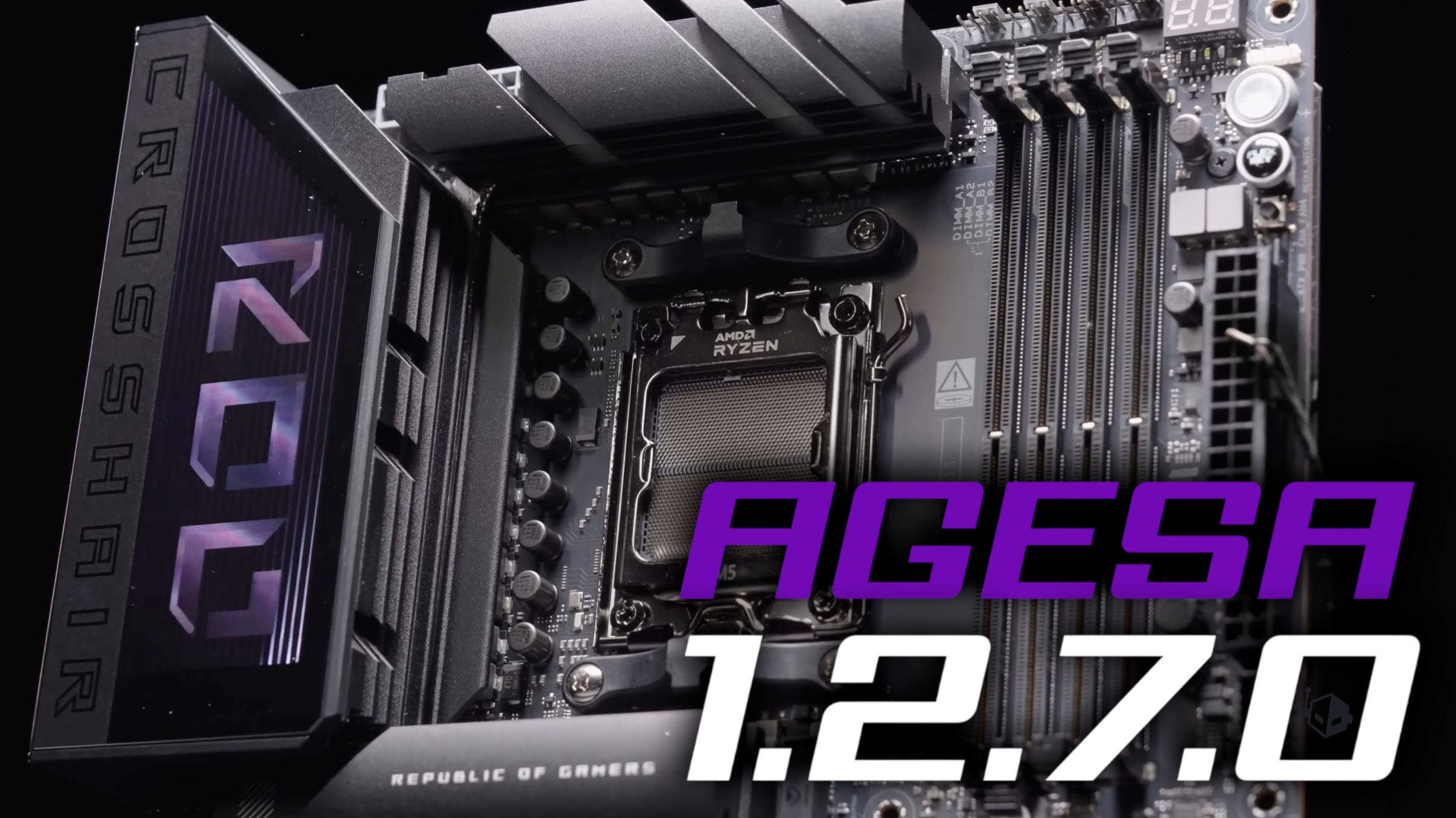
In practical terms, that usually means one thing: silicon that isn't on store shelves yet is getting very close to launch.
What AGESA 1.2.7.0 Actually Brings
AGESA (AMD Generic Encapsulated Software Architecture) is the low-level firmware block that teaches a Ryzen processor how to initialize memory, PCIe lanes, power states, and every other essential subsystem. When a new AGESA version appears, it often hides support for unreleased CPUs and APUs long before AMD is ready to print those names on a box.
With 1.2.7.0, insiders report that the code specifically prepares the AM5 platform for Zen 5-based APUs, codenamed Krackan Point and Strix Point. Even though ASUS's changelog sticks to vague wording, firmware sleuths have already spotted Strix Point identifiers in the microcode, strongly hinting that these chips are the true reason this AGESA exists.
Ryzen 9000G, Ryzen 10000G, or Something Else?
One mystery that remains is branding. AMD hasn't confirmed whether these Zen 5 desktop APUs will arrive as the Ryzen 9000G series, jump straight to 10000G, or introduce some fresh naming twist. Whatever logo ends up on the heatspreader, the expectation is the same: these will be the most capable desktop APUs AMD has ever shipped.
Krackan Point is rumored to target the value end of the stack, with 6-core and 8-core configurations built for compact, affordable gaming and creator rigs. Strix Point, by contrast, looks set to break past the traditional 8-core ceiling, bringing 10-core and 12-core SKUs with simultaneous multithreading. For anyone building a small form-factor PC or an all-in-one without a discrete GPU, that kind of core density on an APU is a serious upgrade.
RDNA 3.5 Graphics on the Desktop
The graphics side is just as interesting. These Zen 5 APUs are expected to sport RDNA 3.5-based integrated GPUs comparable to Radeon 840M, 860M, 880M, and 890M solutions. On laptops, similar silicon already delivers respectable 1080p gaming with sensible settings. Dropping that into a desktop socket with higher power limits and more thermal headroom should unlock even better sustained performance and higher boost clocks for both CPU and iGPU.
If AMD hits its targets, we could be looking at APUs that genuinely replace low-end discrete graphics cards for esports titles and lighter AAA gaming, especially for builders who care more about a clean, cable-free build than chasing the highest frame rates.
Motherboard Support and Release Timing
The fact that multiple vendors, now including ASUS, are rolling out AGESA 1.2.7.0 is one of the clearest signs yet that launch day is getting close. Partners don't usually burn engineering time pushing wide BIOS support unless hardware is approaching retail. Previous roadmaps have pointed to an arrival before the end of the year, and the current BIOS wave lines up neatly with that window.
As always, users should approach any BIOS update with a bit of caution: back up your settings, read your board's specific release notes, and don't flash firmware on an unstable system. Early adopters, though, will likely want AGESA 1.2.7.0 on board if they plan to drop in a Zen 5 APU the moment it appears in stores.
Community Reactions: Hype, Memes, and Worries
The PC hardware community has responded in its usual chaotic fashion. Some enthusiasts are already spamming reaction GIFs and joking that ASUS and AMD are “teasing us again” with yet another BIOS hint instead of hard launch dates. Others remain skeptical, pointing out that while firmware keeps moving, long-standing concerns like AM5 socket thermals and the infamous burned-socket incidents still loom large in their buying decisions.
There are also quieter voices from users who have been running AM5 without drama. One early adopter proudly reports an X870-series board paired with a Ryzen 9 9800X3D that has been “going strong since day one,” using that stability as proof that careful setup and sane voltages can keep the platform perfectly safe.
What This Means for Your Next Build
For prospective builders, AGESA 1.2.7.0 isn't just another line in a changelog. It's a concrete signal that AM5 is about to get far more flexible. With Zen 5 APUs combining higher core counts and serious integrated graphics, you'll be able to start with an iGPU-only build and add a discrete card later, or stick with the APU and still enjoy a smooth gaming and creator experience.
Combine that with maturing BIOS support from ASUS and other vendors, and the AM5 platform is finally starting to look less like a bleeding-edge experiment and more like the long-term mainstream home for Ryzen. If AMD delivers on the promise of Krackan Point and Strix Point, this round of BIOS updates may end up being remembered as the quiet start of a very big shift in what we expect from desktop APUs.
1 comment
Cool update and all but still no word about the socket melting drama? not touching AM5 till that’s 100% sorted tbh