Huawei is quietly preparing its next big strike against Apple in the Chinese premium market, and at the center of that strategy sits the upcoming Mate 80 series and a new in-house chipset, the Kirin 9030. Alongside these more conventional flagships, a particularly loud rumor has started to circulate: a gaming-focused Huawei smartphone, allegedly launching in early 2026, powered by a Kirin 9030 manufactured on an “equivalent” 3nm process. It sounds bold, it sounds dramatic – and, at least for now, it sounds more wishful than real.
Our rumor score: 35% – intriguing, but still questionable
Before diving into the technical claims, it’s worth putting a number on how believable this leak actually is. 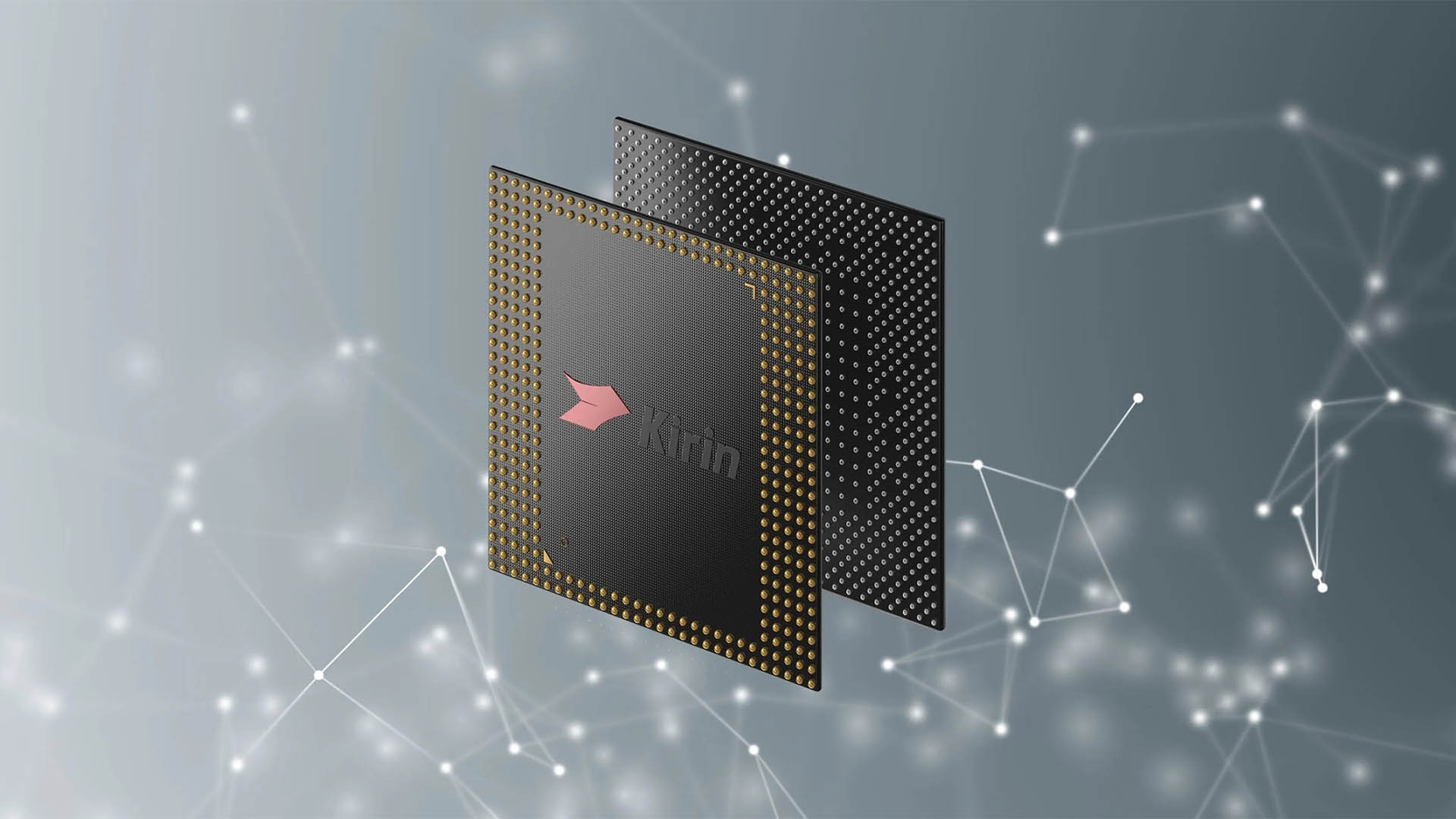
Based on what is publicly known about Huawei’s and SMIC’s semiconductor capabilities, plus the track record of the source, we would place this rumor at roughly 35% likelihood, which falls into our “questionable” band.
- Source credibility – 4/5: The information comes from the Weibo tipster known as Momentary Digital (also called Setsuna Digital), an account that has occasionally shared accurate early details about Chinese smartphones, but is far from infallible.
- Corroboration – 1/5: So far, no major Chinese supply-chain reports, no manufacturing partners, and no secondary leakers have backed the 3nm-equivalent claim.
- Technical feasibility – 1/5: Public evidence suggests SMIC is still fundamentally constrained to 7nm-class production with tentative 5nm development, making any 3nm comparison extremely optimistic.
- Timeline – 1/5: Early 2026 is very aggressive for a node Huawei and SMIC have not yet demonstrated at scale, especially without access to full EUV tooling.
In short: a gaming-centric Kirin 9030 phone in 2026 is plausible. A true 3nm-class Kirin 9030 in that same product is, for now, a long shot.
Why a gaming Huawei phone makes sense
The idea itself – Huawei launching a gaming-branded handset – is not far-fetched at all. With brands like REDMAGIC, Black Shark and ASUS ROG Phone carving out a niche among power users, a Huawei device with aggressive RGB-style aesthetics, active cooling and tuned performance would fit neatly into the market. The company has already shown strong progress in GPU and system tuning, and a Kirin 9030 designed with higher sustained clocks could comfortably target gamers who spend hours in titles like Honor of Kings and Genshin Impact.
On top of that, the Mate 80 family is expected to double down on Huawei’s traditional strengths: cameras, battery life and connectivity. A separate gaming-oriented model would let Huawei experiment with more radical designs – shoulder triggers, bold vents, even external fans – without diluting the more polished Mate brand.
The 3nm claim hits the wall of reality
The real problem with this rumor is not the phone itself, but the manufacturing claim. The tipster suggests the Kirin 9030 will be produced on a process node “equivalent to TSMC’s 3nm.” That’s where the red flags start waving.
Today, Huawei relies on SMIC for advanced chip fabrication, and SMIC still appears capped around a refined 7nm-class technology. There have been repeated reports of a 5nm process under development, but development and volume production are two very different battles. The key bottleneck is access to next-generation EUV (extreme ultraviolet) lithography machines, which are essential for efficient 5nm and below mass manufacturing.
China has reportedly been working on homegrown EUV-like equipment that could enter trial production around Q3 2025, but we have seen little solid progress or yield data in public since those early claims. Even if trial tools exist, getting them to a stage where they produce competitive, high-yield 3nm-class wafers in time for an early-2026 gaming phone would be a heroic leap.
Could Huawei and SMIC use aggressive multi-patterned DUV to squeeze out something they can market as “3nm-equivalent”? Maybe in marketing slides. In practical terms – density, power efficiency and thermals – it would still likely lag behind TSMC’s N3P process by a visible margin.
Kirin 9030 vs Tensor G5 and the 2026 flagship crowd
The rumor also claims that the Kirin 9030 could sit in the same class as Google’s Tensor G5, which is manufactured on TSMC’s N3P node. On paper, that sounds flattering, but users aren’t reading spec sheets – they’re feeling the phone in their hands. And feedback on Google’s Tensor family has often focused on heat and throttling. Many enthusiasts feel the G5 barely outpaces two-year-old flagship chips in sustained workloads, with some calling it an overheating, underperforming design rather than a true next-gen flagship.
If Huawei can deliver a Kirin 9030 that matches or slightly exceeds Tensor G5 in real-world performance while remaining cooler under load, that alone would be a noteworthy achievement, even if the underlying node isn’t genuinely 3nm-class. But we should keep ambitions realistic: competing with a Tensor is not the same as trading blows with the absolute top of the stack.
By 2026, the premium Android space will likely be dominated by chips such as the Snapdragon 8 Elite Gen 5, Dimensity 9500, Samsung’s Exynos 2600 and Apple’s A19 Pro. These SoCs will benefit from mature 3nm – and possibly early 2nm – nodes from TSMC and Samsung Foundry. In that environment, Huawei simply matching Snapdragon 8 Gen 3-level performance would already be impressive given its tooling restrictions.
A more realistic performance target for Kirin 9030
Looking at current trends and constraints, a more grounded expectation is that Kirin 9030 ends up somewhere between Snapdragon 8 Gen 2 and Snapdragon 8 Gen 3 in both CPU and GPU output. That would still translate into responsive gaming, smooth high-refresh-rate UIs, and capable AI workloads for on-device processing. A focus on sustained rather than peak performance could even give Huawei an edge in long gaming sessions, where some 3nm rivals throttle down sharply after a few minutes.
Pair that with Huawei’s typical strengths – efficient batteries, aggressive thermal management, and software optimization via HarmonyOS – and a gaming-centric Kirin 9030 phone could easily be one of the more enjoyable devices to actually use, even if its benchmark numbers don’t top every chart.
Bottom line: exciting idea, but don’t buy the 3nm hype just yet
A gaming-focused Huawei smartphone powered by the Kirin 9030 in early 2026 is a fun and believable scenario, especially as Huawei pushes back against Apple’s rising market share in China. However, the notion that this chip will be produced on an honest-to-goodness 3nm-equivalent process clashes with everything we currently know about SMIC’s capabilities and China’s EUV situation.
For now, treat the 3nm talk as marketing smoke rather than silicon reality. The more interesting story may be whether Huawei can craft a balanced, cooler and more efficient gaming experience than some of its rivals, including Google’s often-criticized Tensor line. If the Kirin 9030 can land between Snapdragon 8 Gen 2 and 8 Gen 3 while powering a well-designed gaming phone, that alone could be a quiet win – even without the magic “3nm” badge.
3 comments
Cool rumor but 2026 is far. By then Apple A19 Pro and Snapdragon 8 Elite Gen 5 will be on another planet performance-wise anyway
3nm “equivalent” sounds like marketing speak for “we wish we had EUV” lol. I’ll believe it when teardown guys confirm the node
Everyone flexing on process nodes but half these chips still throttle in 5 mins of Genshin. I just want stable fps and no burnt fingers 😅