Concord has gone from ambitious live service experiment to one of the strangest and most depressing episodes in recent PlayStation history. Launched at the end of August 2024 with the full marketing weight of Sony behind it, the multiplayer shooter survived just ten days on sale before being pulled from digital shelves and having its official servers shut down. For most big platform holders, that would have been the end of the story. Instead, a tiny but stubborn community quietly brought the game back to life on custom servers, only for Sony to swing in again with DMCA takedowns aimed at gameplay videos, casting a long legal shadow over the fan revival.
When Concord first arrived, it was clearly designed to be another evergreen live service pillar, a game meant to live or die on its ability to keep players engaged every single day. 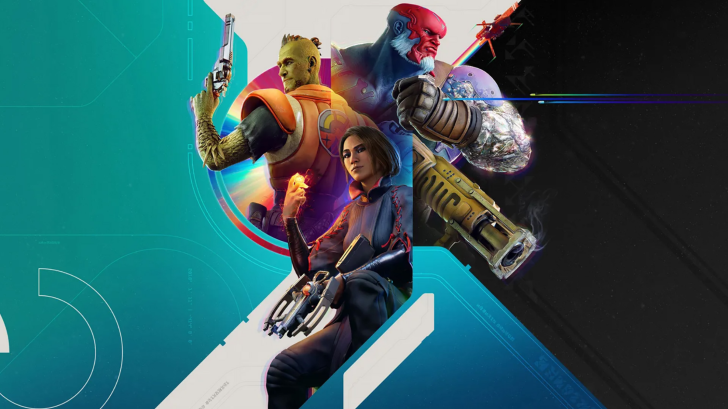
It died almost immediately. Player numbers cratered, criticism piled up, and Sony responded with a drastic move: stop selling the game and schedule a server shutdown that turned a full-priced product into a useless icon on players’ libraries. Many players were forcefully refunded whether they wanted to keep the game or not, reinforcing the feeling that Concord had become an embarrassment that PlayStation wanted to erase as quickly as possible.
But games do not always disappear when publishers flip a switch. In the months that followed, a small group of fans and hobbyist developers decided that if Sony would not support Concord, they would. They began reverse engineering the game’s network behaviour and building custom servers designed to mimic the original infrastructure. Their goal was not to distribute pirated copies, but to give legitimate owners a way to actually play the product they had paid for and supposedly owned.
The rules for joining this underground revival were strict. The team repeatedly stressed that only players with legally obtained copies of Concord were welcome, and that any attempts to share cracked builds or copyrighted files would be banned and removed. Far from the stereotype of shady pirates, these were players trying to walk a thin line: preserve a dead game without handing Sony an easy legal victory.
For a brief moment, it worked. People who still had Concord tied to their accounts could log in, match with others, and experience a game that had been officially pronounced dead. Clips of matches on these custom servers started appearing on YouTube, functioning both as proof of concept and as a small celebration from a fan base that the wider gaming community mostly mocked as nonexistent. The running joke across comment sections was that Concord never had fans to begin with, that you could count them on a couple dozen hands.
Then the DMCA notices arrived. According to the developers and fans tracking the situation, a company called MarkScan – a familiar name for those who follow Sony’s copyright enforcement efforts – began issuing takedowns on YouTube videos showing Concord gameplay running on the custom servers. Technically, the notices were aimed at the footage, not the code or the project itself, but the message was loud and clear: Sony was watching, and Sony was not amused.
Shortly after the takedowns, one of the lead developers behind the custom server project wrote in the Concord Delta Discord that invites would be paused due to worrying legal pressure. With lawyers likely monitoring every move, the team decided that continuing to openly onboard new players was too risky for now. They reaffirmed their commitment to staying within the law as far as possible, repeating that they would delete any posts linking to copyrighted files and that pirated copies were not welcome.
It is a bizarre situation. On one side, you have a multinational platform holder that chose to abandon its own game after just ten days, treating Concord like a failed experiment best buried and forgotten. On the other, you have a handful of players so attached to that failure that they invested time, skill, and money to keep it alive, not to monetise it, but simply to play. The clash between them is not really about this one shooter; it is about who controls the lifespan of digital games and what ownership means when every experience is locked behind online servers and license agreements.
The community reaction reflects that split. Some players delight in trolling, sneering that Sony fanboys will find a way to defend even this, or joking that Concord never had more than a few dozen active users anyway. Others see something more serious and more worrying: a precedent where a game can vanish in days, then face legal pushback when fans try to preserve it for history. Even players who never touched Concord recognise a pattern that has played out in other corners of the industry, where copyright law becomes a blunt instrument used to stamp out preservation efforts that do not align with corporate timelines.
For Sony, the legal justification is simple. Concord is their intellectual property, and they are within their rights to police how and where it appears, especially when footage is tied to unofficial servers. For players, the emotional reality is very different. They bought a product, they watched it die almost instantly, and when they finally found a way to access it again without resorting to piracy, they were met with DMCA notices and a chilling effect on the very project trying to keep the game’s memory alive.
Concord will likely go down as one of PlayStation’s most short-lived and notorious flops, but the fan-made servers and the takedowns aimed at them turn the story into something larger than just a commercial failure. They highlight how fragile digital game ownership really is, how quickly a live service can be wiped from existence, and how aggressively rights holders can move when fans attempt to step into the void. Whether the custom server project finds a quieter, more cautious way to continue, or is scared off entirely, the saga of Concord has already become a case study in what happens when corporate control over online games collides with the passion of the people who still want to play.
1 comment
Kinda wild that the only people who cared enough to keep Concord alive were fans, and they’re the ones getting nervous about lawyers now