Fourteen years after Tim Cook took over from Steve Jobs, Apple finds itself at a strange crossroads. The iPhone is marching toward its twentieth anniversary, Cook is widely rumored to be considering an exit around 2026, and the company that once dictated the future of smartphones is suddenly playing catch-up in the one area everyone cares about in 2025: artificial intelligence. In the middle of that drama, another familiar billionaire is hovering around the edges of the iPhone story, hinting he would happily jump in. 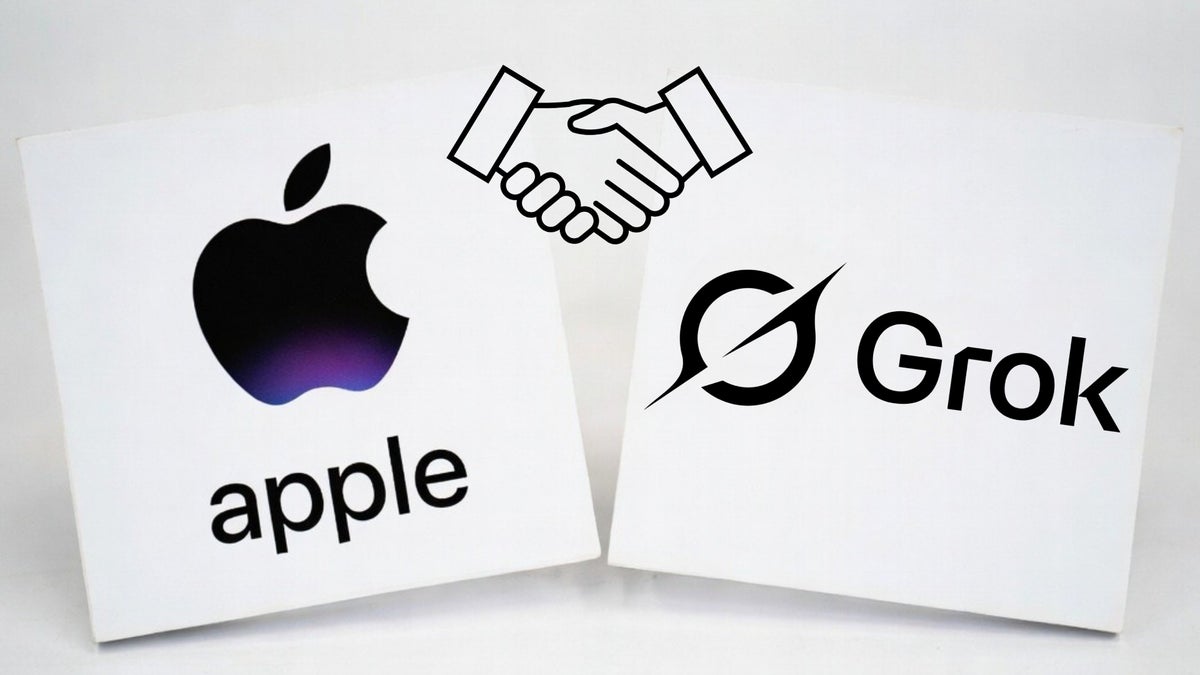
Elon Musk is not about to wear an Apple badge or take Cook’s chair, but he has made it very clear he would love his AI, Grok, to live inside your next iPhone.
To understand why that idea is even on the table, you only have to talk to almost any iPhone owner about Siri. Apple’s assistant was early to the party but then essentially stayed frozen in time while rivals evolved. Alexa learned to juggle complex routines, Google Assistant became a capable search and planning companion, and now generative chatbots can write code, summarize documents and plan holidays. Siri, meanwhile, still frequently responds to nuanced questions with the digital equivalent of a shrug, or an infuriating ‘I found this on the web’ when users were clearly asking it to think, not just search. The gap between what modern AI can do and what Siri actually delivers has become embarrassing.
Enter Elon Musk and xAI. Musk’s new AI company has built Grok, a large language model known for its irreverent tone and willingness to answer edgy questions that more conservative chatbots refuse. A popular account on X, styling itself as a tour guide for Grok, recently floated a provocative idea: it is time for Apple to team up with xAI and finally fix Siri by ripping out the ‘outdated, painfully dumb assistant’ and replacing it with Grok. The post argued that Siri deserves to be not just smart, but superintelligent. Musk’s reply was short and perfectly on brand: ‘I’m down.’ In other words, if Apple ever wants Grok on iPhone, xAI is ready.
The reaction from users was immediate and intense. Enthusiasts imagined an iPhone where Siri morphs into a Grok-powered super-assistant, capable of real conversation, deep reasoning and maybe even a bit of Musk-flavored sarcasm. Some dreamt bigger: why stop at software? If Apple worked with both xAI and Starlink, they argued, future iPhones could offer satellite connectivity that does not depend on traditional carriers, plus a cutting edge chatbot in your pocket. Comments rolled in along the lines of ‘I’d actually buy the next iPhone if it had Grok and Starlink access’ or ‘That kind of synergy might finally keep me in the Apple ecosystem when my ancient iPhone SE dies.’ For a company struggling to make Siri exciting again, that kind of organic hype is not trivial.
But the fantasy comes with a long list of caveats, and plenty of pushback. There are users who do not want Musk anywhere near their phone, full stop. One common sentiment is essentially: now you want to drag that crazy guy into the iPhone ecosystem as well? Others joke that Apple is making their decision easier: they already did not want an iPhone, and slapping Musk-branded AI on top would seal the deal. Beyond memes and eye rolls, there are serious questions about culture and control. Apple is obsessive about privacy, moderation and polished messaging. Musk, by contrast, has repeatedly signaled that he prefers minimal filters, maximum ‘free speech’ and a willingness to offend. Handing Siri’s personality and brain to xAI would mean importing that tension directly into Apple’s most personal product.
That is why, while Musk is publicly volunteering Grok, Apple’s actual AI strategy appears to be heading in a different direction. According to multiple reports, Apple is close to finalizing a landmark deal with Google that would see it pay around one billion dollars per year for access to a custom version of Google’s Gemini model. This enormous system, with roughly 1.2 trillion parameters, would not replace Siri wholesale, but it would sit behind the scenes to handle its most demanding jobs: understanding complex, multi-step requests, planning tasks and generating high quality summaries. Crucially, Apple intends to run this custom Gemini model on its own private cloud servers, keeping user data siloed from Google’s broader infrastructure and maintaining its privacy-first narrative.
In that setup, Siri becomes a kind of conductor. Apple’s in-house models would still handle on-device understanding of personal data and simple tasks, while Gemini in the cloud steps in for heavy lifting when a user asks Siri to, say, digest a long PDF, build an itinerary or reason across several apps at once. Apple already takes a similar approach with its system-wide ChatGPT integration, where Siri decides when to hand a request to a third-party model. Adding Gemini as a second external brain lets Apple quickly close some of the AI gap without waiting years for its own models to catch up. At the same time, Apple preserves the option to swap providers later or phase out partners once its internal tech matures.
That makes an official Apple–xAI tie-up feel unlikely in the near term. From Apple’s perspective, Google is a known quantity, and the two companies already run a giant, if awkward, partnership around search on iPhone. Gemini also has a more conventional brand image than Grok’s deliberately mischief-friendly persona. Regulators, investors and risk-averse customers will find it easier to stomach ‘Siri, powered in part by Google’s AI’ than ‘Siri, now channelling Elon Musk’s unfiltered chatbot.’ Apple wants powerful AI, but it also wants to keep control over tone, safety and the overall user experience. Letting Grok loose inside iOS would mean giving up some of that control.
Still, Musk’s casual ‘I’m down’ reply does matter, because it highlights how hungry people are for a smarter iPhone assistant. Between a possible post-Cook era, the iPhone’s twentieth birthday and a long-delayed Siri reboot, Apple cannot afford to treat AI as a side project anymore. Whether the company leans on Google, continues to experiment with ChatGPT, eventually brings in other partners, or one day even flirts with xAI, the direction is clear: the next decade of iPhone innovation will be defined less by camera bumps and screen sizes, and more by the invisible intelligence wired into every interaction.
For users, the choice may soon come down to which AI brain they trust living in their pocket. Some will happily embrace whatever gives them the most capability, even if that means a Google-shaped or Musk-flavored presence behind Siri’s voice. Others will stick with the least chaotic option, wary of turning their phone into a perpetual experiment. Either way, the era when Siri could stumble along as a glorified voice remote is ending. The only real question is whose technology will be powering the iPhone’s next act: Apple’s, Google’s, Elon Musk’s – or all of the above, carefully hidden behind the same familiar ‘Hey Siri’ wake word.