Apple is reportedly preparing one of the biggest shake ups to its iPhone roadmap in years, and it centers on the upcoming iPhone 18 generation. According to Bloomberg journalist Mark Gurman, Apple is considering a radical change to its release rhythm by splitting the iPhone 18 family into two distinct launch windows, one in the fall of 2026 and another in the spring of 2027. 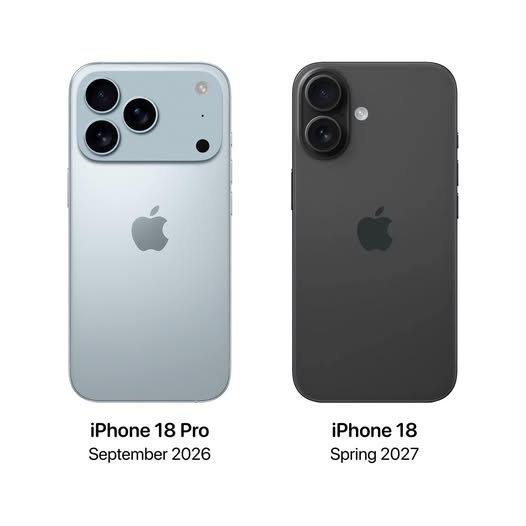
Instead of betting everything on a single blockbuster event, the company could move to a more flexible, season based cadence that stretches buzz around the iPhone for much longer.
Under this plan, the spotlight in fall 2026 would remain firmly on premium hardware. The iPhone 18 Pro and iPhone 18 Pro Max are expected to headline Apple’s traditional autumn keynote, continuing the role the Pro line has played as the technological showcase for the brand. This same stage is also tipped to be where Apple finally unveils the long discussed iPhone Fold, a foldable flagship that would give the company a direct answer to rival bendable phones. Updated Apple Watch models and refreshed Macs could round out the event, turning the fall into a parade of high margin halo products.
Several months later, in spring 2027, the tone would shift toward accessibility and breadth. The standard iPhone 18 is rumored to arrive then, aimed at customers who want the latest chip and software but do not need every Pro level feature. It may be joined by a more budget friendly model positioned as a successor to the iPhone 16e and likely branded iPhone 18e, plus a new iteration of the iPhone Air for users who prioritize a lighter, more minimalist form factor over camera and display extras. Together, these devices would give Apple a strong second wave of momentum well after the holiday rush.
This two phase strategy offers clear operational advantages. Today, Apple’s supply chain, marketing teams, and retail partners all brace for an enormous spike concentrated around a single September window. By splitting the iPhone 18 rollout, Apple could smooth manufacturing peaks, better manage component availability, and react more nimbly to any last minute technical or regulatory issues. On the marketing side, dividing launches between fall and spring keeps the iPhone brand in the headlines across two quarters instead of relying on one huge burst of attention that fades before the next fiscal year truly starts.
The iPhone Air line appears to be a crucial piece of this puzzle. Reports suggest that Apple is treating the relatively low volume Air as a kind of live hardware laboratory for the foldable iPhone. Design experiments around thinness, hinge tolerances, frame rigidity, and new materials can be trialed on the iPhone Air before they are scaled up to a more expensive and risky project like the iPhone Fold. If that is accurate, buyers of the iPhone Air are effectively early adopters of the engineering ideas that will later appear in Apple’s first foldable flagship.
Interestingly, not every step in this process is about adding more features. Earlier leaks indicate that the iPhone Air might stick with a single rear camera, deliberately omitting a secondary ultrawide lens. Apple is said to believe that people shopping in this segment care more about a reliable main camera, strong battery life, and a sleek design than about having every possible focal length. By keeping the camera system simpler, Apple can reduce costs, preserve the slim profile of the device, and still lean on its image processing software to deliver impressive photos and video for everyday use.
If Apple moves ahead with this staggered iPhone 18 schedule, it would mark an important evolution of a strategy that has been building for more than a decade. What started as one flagship iPhone each year has already grown into a multi tier lineup that spans Pro, Max, mini and SE style devices. A split between fall and spring would push that evolution further, carving out distinct seasons for cutting edge Pro models, experimental hardware like the iPhone Fold, and mainstream phones such as the iPhone 18 and iPhone 18e. For consumers, it could mean more choice, better aligned upgrade timing, and a constant stream of new Apple hardware to watch across the calendar.
1 comment
if air is the test mule for the fold, early buyers are basically beta testers with style