For more than a decade, Tim Cook has been the calm counterpoint to the drama of Silicon Valley. Quiet, methodical, and relentlessly focused on execution, he turned Apple into the world’s most valuable public company and one of the most influential brands on the planet. Now, according to multiple reports from major outlets including Reuters and the Financial Times, that era may be approaching its end. 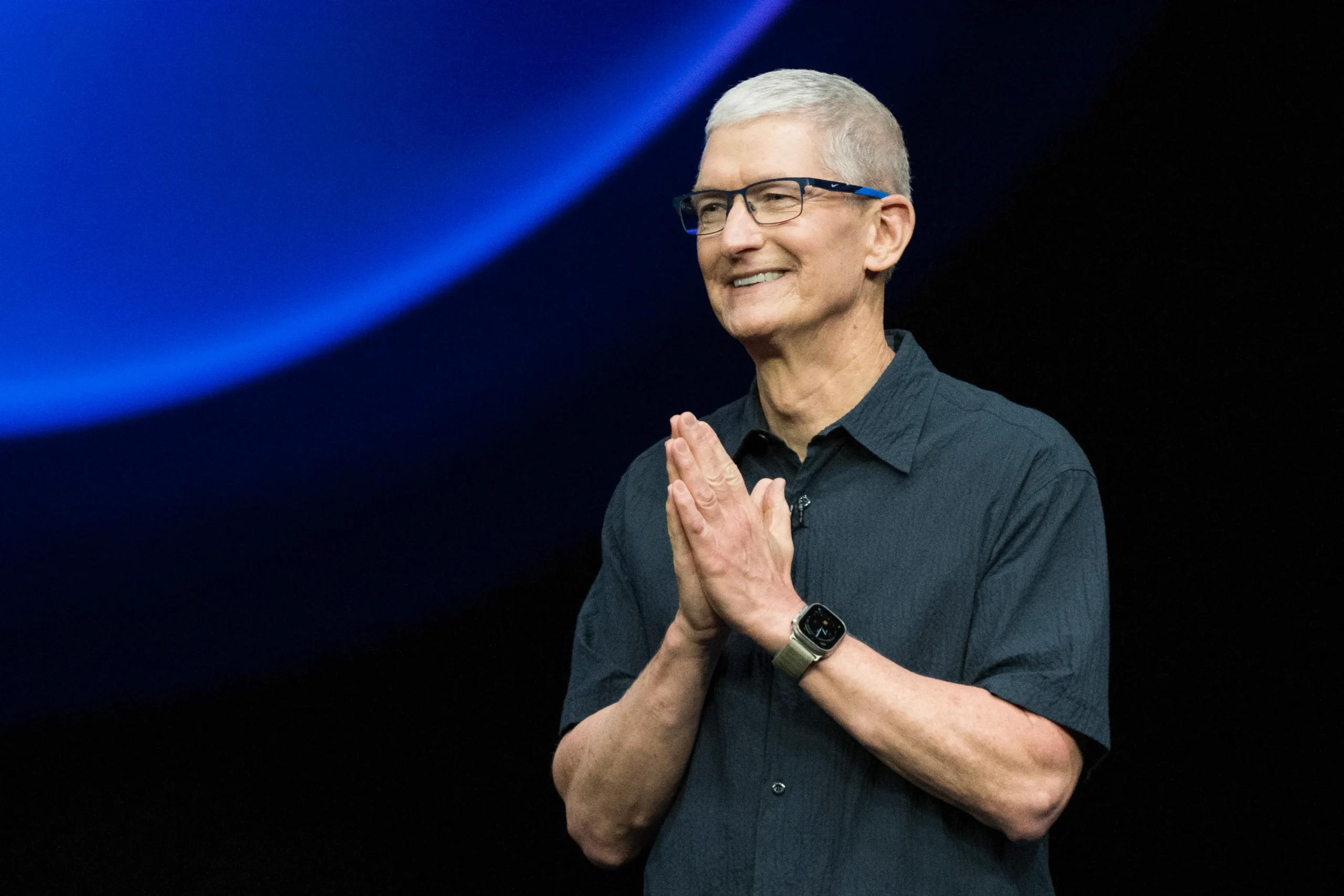
These reports indicate that Cook is preparing to hand over the reins, with Apple’s board already moving through a structured succession process that could see him step down as CEO in 2026, closing one of the most financially successful runs in corporate history.
The Financial Times notes that this search is not a vague, long-term discussion but an active project inside Apple’s boardroom. Still, investors and employees should not expect a flashy reveal overnight. The company is unlikely to announce Cook’s successor before its January 2026 earnings call, the moment when Apple traditionally updates Wall Street on the health of its hardware and services empire. Behind the scenes, however, the timeline appears far more ambitious. Industry watchers expect a new chief executive to be firmly in place before Apple’s annual developer conference in June, allowing the incoming leader to step onto the keynote stage as the public face of the company’s next chapter.
Inside Cupertino, one name is being whispered louder than the rest: John Ternus, Apple’s Senior Vice President of Hardware Engineering. Ternus has spent years embedded at the heart of Apple’s product machine, working on everything from iPhone and iPad to the Mac’s transition to Apple Silicon. If he ultimately takes the top job, it would mark a rare passing of the torch from an operations-oriented CEO to a hands-on product engineer. The symbolism would be obvious. After more than a decade defined by refinement, scale, and financial optimization, Apple would be signaling to the world that it wants to be seen once again as the company that takes big swings and rewrites entire product categories.
If the reports prove accurate, Cook’s time in charge will end up mirroring Steve Jobs’ second stint as CEO in length. In fact, Cook has already quietly overtaken Jobs to become Apple’s longest-serving chief executive. Yet their public reputations could hardly be more different. Jobs is remembered as the mercurial visionary who seemed to summon world-changing devices out of thin air. Cook, by contrast, is often caricatured as the steady accountant who kept the trains running on time. That narrative, while convenient, misses the scale of what actually happened under his leadership: Apple’s market capitalization increased roughly elevenfold, and at its peak the company was worth more than a tenth of the entire US economy.
Critics like to set that roughly 11x increase against the approximately 137x explosion in value during Jobs’ renaissance at Apple, as if those two numbers alone settle the debate over who was the “better” CEO. But market-cap math gets brutally harder the larger a business becomes. Turning a near-bankrupt computer maker into a trillion-dollar titan is a different challenge from taking that titan and pushing it even higher while preserving margins, maintaining an impossibly complex supply chain, and fending off regulators on multiple continents. On those less glamorous but crucial fronts, Cook excelled. Shareholders were well rewarded, Apple’s balance sheet turned into a fortress, and the company’s ability to deliver products at stunning global scale became the envy of the industry.
Where Cook has faced the fiercest criticism is on the question of genuine innovation. For much of his tenure, a vocal band of commentators has argued that Apple settled into an endless refinement cycle: a slightly sharper camera here, a marginally faster chip there, a new color of aluminum or titanium to freshen up the shelf. The overall story, they complain, seldom feels radically new. Since roughly 2015, annual iPhone shipment volumes have hovered in a relatively narrow band between about 200 million and just under 250 million units. That is an almost unimaginable level of scale, but it is not the explosive growth story of the early smartphone era. At the same time, Apple’s services division – from the App Store and iCloud to Apple Music, TV+, and more – has come of age as a giant profit engine, cushioning the hardware plateau while reinforcing the impression that the iPhone era is being optimized rather than reinvented.
The long shadow of Steve Jobs makes all of this scrutiny even harsher. Jobs’ larger-than-life persona continues to expand, now extending into literal currency: the United States Mint is preparing a commemorative one-dollar coin in his honor, a reminder of how completely he has been mythologized in American tech culture. That mythology leaves little space for a quieter, more procedural style of leadership. Cook’s approach – analytical, consensus-driven, allergic to theatrics – was never going to compete with the legend of the black turtleneck and on-stage “one more thing” reveals. Yet it was precisely this calm, process-driven temperament that allowed Apple to industrialize innovation, turning product launches into finely tuned global events and making supply-chain reliability a core competitive advantage.
This is why the prospect of John Ternus taking over feels so symbolically charged. As a hardware engineer steeped in the realities of materials, thermals, and silicon, Ternus represents the part of Apple that still dreams about products first and spreadsheets second. People familiar with Apple’s internal culture speculate that a Ternus era could gently unwind the strategy of nudging customers toward yearly upgrades through small tweaks and tightly gated features – a pattern frustrated users sometimes describe as little more than an elaborate way to squeeze wallets. Instead, he could champion bolder bets: genuinely new form factors, deeper integration between Apple’s custom chips and emerging on-device AI capabilities, and hardware that once again challenges expectations of what a “phone,” a “computer,” or a “headset” can be.
If Apple does unveil a new CEO before the June developer conference, that keynote will instantly be read as a manifesto for the next decade. Under fresh leadership, the company will be under intense pressure to prove it can move beyond the comfortable treadmill of iteration. Any successor – especially one with Ternus’ hardware pedigree – is likely to lean heavily on themes of innovation and reinvention: spatial and mixed-reality computing, smarter everyday devices powered by AI, health and wellness technologies woven into wearables, and more ambitious sustainability goals built directly into product design. The message to developers and consumers alike would be that Apple is not done opening new chapters; it is preparing to write something that feels genuinely different from the polished sequels of the Cook years.
None of this erases the magnitude of what Tim Cook has accomplished. He steered Apple through geopolitical tensions, a global pandemic, supply-chain shocks, and the inevitable maturation of the smartphone market, all while delivering record-breaking profits and creating vast shareholder wealth. But leadership changes at a company this influential are never just about whose name appears on the CEO line. They are about how the story of the company’s future is framed. If Cook is indeed preparing to exit, and if John Ternus – or someone with a similarly product-first mindset – steps into the role, it could mark the end of Apple’s long-running reputation for safe, incremental updates and the start of a more experimental, risk-embracing era. After years spent perfecting the same blockbuster franchise, Apple may finally be ready to take another swing at reinventing the future.
2 comments
Jobs gets a coin, Cook gets all the blame lol. people forget who built the supply chain beast
Hot take: services was Cook’s real invention. Next CEO has to figure out what’s after the iPhone era