Welcome back to The Flyback, the slightly nerdy corner of the watch world where microbrands sit next to six-figure independents and somehow the conversation still makes sense. The past few weeks haven’t given us a tidal wave of news, but they have delivered a handful of genuinely interesting pieces – from an affordable solar field watch out of Kansas City to a central floating tourbillon playing wizard sports in the middle of your dial. 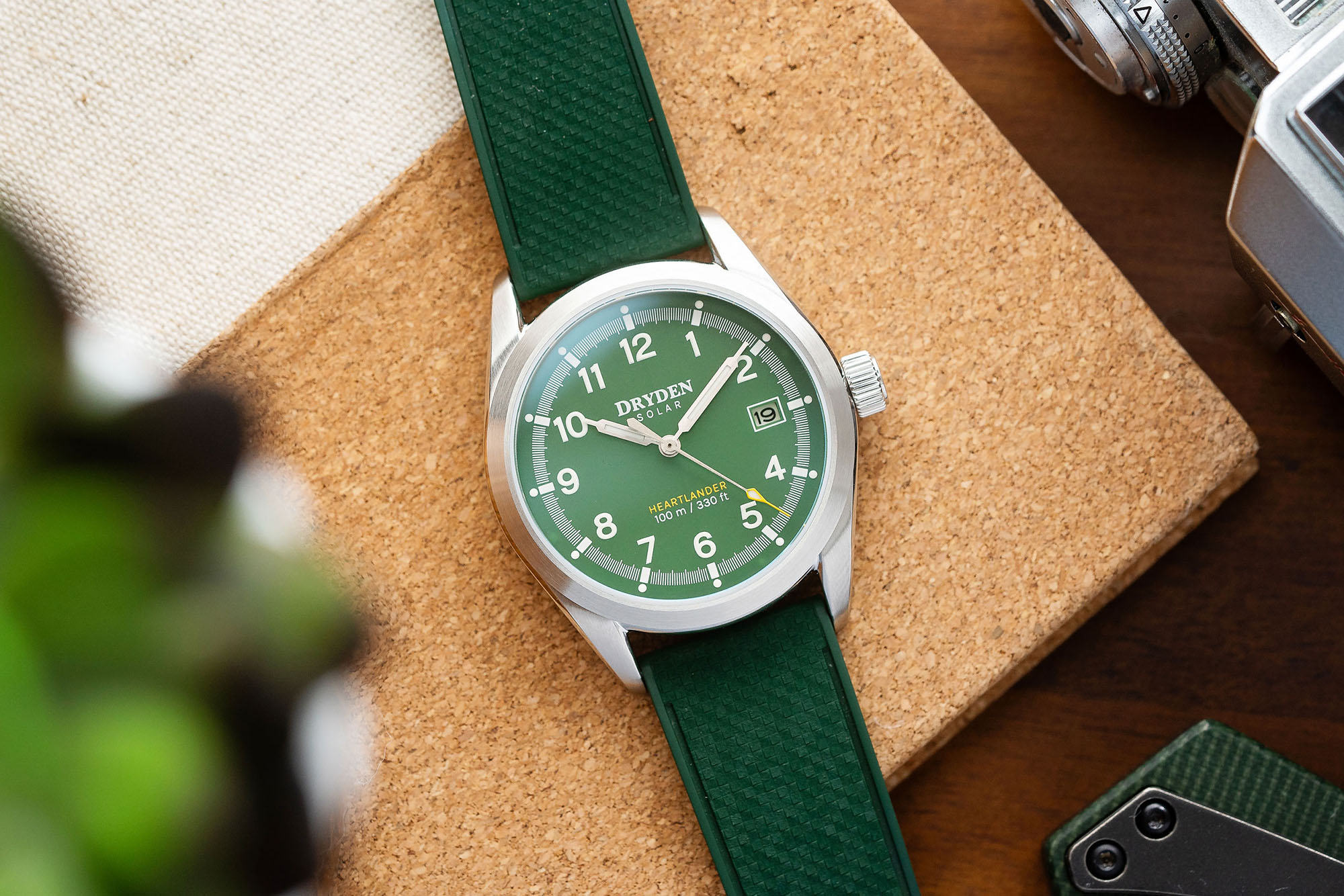
If you’ve been feeling like recent releases were a bit flat, this roundup is here to prove there are still sparks of creativity all over the industry.
In this edition we look at Dryden’s new Heartlander Solar, a practical everyday watch that quietly nails the enthusiast checklist; an ultra-limited Erwin Sattler Regulateur 1920 that quite literally builds a wristwatch around a century-old movement; Czapek & Cie’s Time Jumper, a guichet-style jump hour that hides its drama under a hinged lid; Benrus getting its groove back with a compact but chunky super-compressor style diver; Todd Snyder and Unimatic teaming up on a toolish GMT with earthy tones; and finally Kross Studio doing what Kross Studio does best: turning a gigantic pop-culture universe – this time Harry Potter – into an over-the-top mechanical spectacle.
Dryden Heartlander Solar – Everyday value done the right way
Let’s start with the watch that almost no one will object to: the Dryden Heartlander Solar. Dryden is a Kansas City-based microbrand that has quietly been building a reputation for thoughtful, no-nonsense design. The original automatic Heartlander was already a solid all-rounder; the new solar version keeps everything that worked and swaps the engine for a low-maintenance solar movement.
The case remains a sweet-spot 38 mm in diameter, executed in stainless steel with that familiar field-watch versatility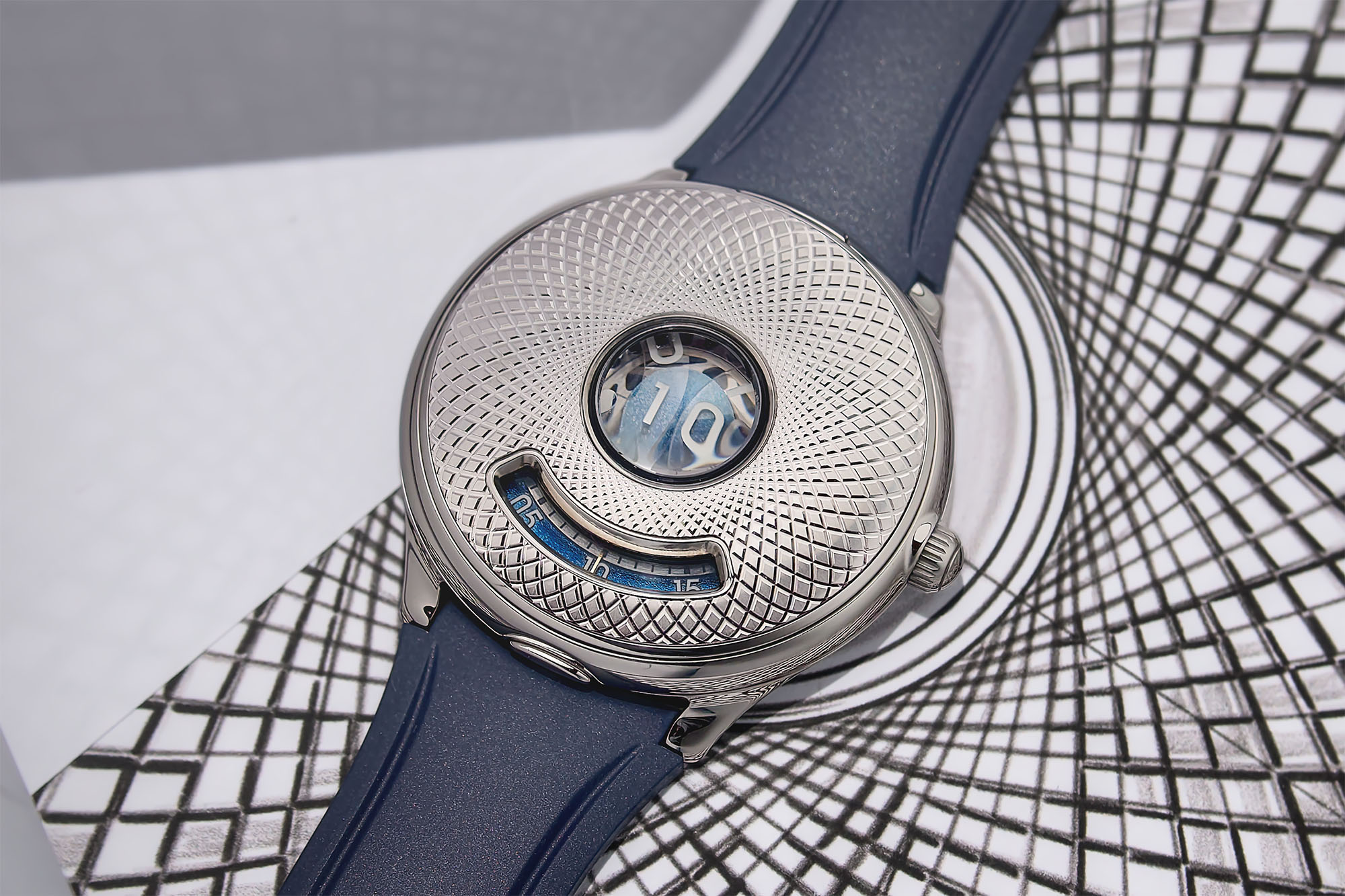
. On the wrist it still feels like a go-anywhere, do-anything piece, but the Solar shaves things down to about 10.8 mm thick – roughly 0.4 mm thinner than its automatic sibling. It may not sound like much on paper, yet in daily wear that small reduction helps the watch slide under cuffs and makes it even more comfortable as a grab-and-go option.
Dial options cover the core basics: blue, gray, or black, plus a stealthier black version paired with a black DLC-coated case for an extra $10. All versions are rated to 100 m of water resistance, protected by a sapphire crystal and a proper screw-down crown. In other words, this is a watch you can forget to baby – it’s built for weekend hikes, office days, and getting caught in the rain.
Dryden ships each Heartlander Solar on a Tropic-style FKM rubber strap that feels like a deliberate nod to vintage tool watches while remaining thoroughly modern in comfort and durability. Prefer steel? You can also spec it on a bracelet. 
Pricing stays firmly in the sensible zone: $279 USD on rubber, $379 USD on bracelet. For a solar-powered, 38 mm, 100 m-rated field watch with this level of finishing and versatility, that’s squarely in the “how is this still under $400?” category.
Erwin Sattler Regulateur 1920 – A century-old heart in a modern rose-gold case
If Dryden is the practical daily choice, the Erwin Sattler Regulateur 1920 is pure horological fantasy. Limited to just 60 pieces, this German-made watch is essentially a love letter to early regulator clocks and pocket watches. Instead of building a new movement from scratch, Erwin Sattler sourced historic hand-wound regulator calibers from the 1920s, then handed them over to master craftsman Jochen Benzinger for a full transformation.
The 49 mm rose-gold case is unapologetically large, but it needs the space: inside is the Sattler Calibre ES06, a skeletonized and hand-filigreed movement that reveals layer upon layer of engraving and open-working. Benzinger’s touch is everywhere, from the carefully cut bridges to the elaborate patterns that catch the light whenever you move your wrist. This is the kind of watch that demands slow, deliberate inspection – you don’t just check the time; you fall into the movement.
Technically, the ES06 is built on a Lépine-style architecture, which positions the winding mechanism at a 90-degree angle to the balance wheel. On the wrist, that translates into a crown placed at 6 o’clock instead of the more common 3 o’clock position, reinforcing the pocket-watch-turned-wristwatch vibe. The movement offers a 36-hour power reserve, features a Breguet hairspring for refined chronometry, and includes details like a triple-screwed minute chaton that underscore the old-school watchmaking language.
On the front, a solid silver dial is decorated with hand-executed guilloché, again by Benzinger. Sub-dials are laid out in classic regulator style – separate indications for hours, minutes, and seconds – and a set of blued steel hands ties the whole look together. A hand-stitched alligator strap and a rose-gold folding clasp complete the package. At €54,450 EUR this is obviously not a rational purchase, but if the idea of wearing a carefully restored piece of 1920s horology on your wrist makes your heart beat faster, that price tag will make sense to exactly 60 collectors.
Czapek & Cie Time Jumper – Stealthy guichet drama
To mark 10 years since the rebirth of Czapek & Cie, the brand has chosen something a little playful: the Time Jumper. On paper it’s a guichet-style watch – that is, it shows the time through apertures rather than traditional hands – but Czapek adds a twist with a hinged cover that can hide or reveal the dial.
The 40.5 mm case can be had either in steel or in a precious metal configuration, yet interestingly the steel model might be the connoisseur’s pick. It balances weight, modernity, and price in a way that feels aligned with the concept. When the hinged cover is closed, you’re left with a piece that looks almost like a minimalist pocket watch lid translated to the wrist, decorated with guilloché engraving that feels properly high-end.
Open the cover and the charm of the display becomes clear. At the center sits a jump-hour indication, where two sapphire discs work together to show the current hour through an aperture. Down near the bottom is a graceful arc that displays the minutes. Together they give you an almost digital way of reading time, yet everything is driven mechanically by the in-house automatic calibre 10.01.
The irony, of course, is that keeping the cover open slightly breaks the magic of owning a guichet watch; close it, and you’re rewarded with this secretive way of reading the time through small windows. In steel, pricing is around CHF 42,000; in gold, it jumps to roughly CHF 64,000. It’s a serious piece, but also one that doesn’t take itself too seriously, which is refreshing in this price bracket.
Benrus Ultra-Deep – A compact super-compressor with bold proportions
Benrus has had a complicated modern history, but the brand appears to be finding its footing again with a series of vintage-inspired pieces. The Ultra-Deep is the latest, a super-compressor style diver that channels mid-century tool-watch charm while embracing some very modern quirks.
First, the basics: the watch measures 36.5 mm across, which will delight anyone who thinks contemporary dive watches have grown too large. It has the familiar two-crown layout associated with compressor and compressor-style divers – one crown to wind and set the time, the other to operate the internal rotating bezel used for timing dives. Most modern watches in this category aren’t true mechanical compressors in the historic sense, and the Ultra-Deep likely isn’t either, but aesthetically it delivers exactly what fans expect.
Where things get interesting is in the thickness. At 13.8 mm, the case is fairly tall for its modest diameter, giving the watch a slightly chunky, almost stacked silhouette on the wrist. That’s further emphasized by a set of hands that some observers will find a bit incongruous with the rest of the design. It’s not a deal-breaker, but it does give the watch a quirky character that you’ll either grow to love or never quite warm up to.
Inside beats the automatic Soprod P024, a reliable workhorse movement that helps keep the price in check. At $1,195 USD, the Ultra-Deep sits comfortably in the premium-but-attainable bracket, aimed squarely at enthusiasts who appreciate compact dimensions and vintage flavor, even if the proportions are deliberately a little bold.
Todd Snyder x Unimatic Modello Quattro U4 GMT – Fashion collab, tool-watch soul
Todd Snyder has quietly become one of the more reliable names when it comes to watch collaborations, and the new project with Unimatic continues that trend. The Modello Quattro U4 GMT created for this partnership recalls Snyder’s earlier work with Weiss, leaning into earthy, muted tones that feel more weekend road trip than red-carpet runway.
The watch itself stays true to Unimatic’s design language: blocky, utilitarian, and built to survive more than you’re likely to throw at it. The case measures 40 mm and carries a hefty 300 m water-resistance rating, reinforcing the idea that this is a proper tool watch first and a fashion statement second. Unimatic has never pretended to make hyper-slim watches; what it does instead is deliver solidity and purpose.
Inside, you’ll find the automatic Seiko NH34A movement providing the GMT function. It’s not a high-horology choice, but it’s robust, easily serviced, and well understood in the community. On the sand-colored dial variant especially, the pairing of GMT layout with Unimatic’s stark design makes for a watch that looks like it would be equally at home on the tarmac, in the city, or on a dusty trail somewhere far away from cell service.
Despite being born from a fashion-brand collab, the U4 GMT feels refreshingly purposeful. Legibility is strong, the bezel begs to be used, and nothing about the design feels like it was compromised just to chase trends. At $988 USD, it lands in that sweet spot where you get a distinctive design, real functionality, and a story to go with it.
Kross Studio Harry Potter Central Floating Tourbillon – Wizarding world on your wrist
No modern watch roundup would be complete without at least one absolutely wild, conversation-stopping piece, and Kross Studio is more than happy to oblige. After riffing on Star Wars, Batman, and even Space Jam, the brand has turned its attention to the Wizarding World with the Harry Potter Central Floating Tourbillon.
On paper, the concept might feel a bit late to the party – peak Harry Potter mania is arguably a decade behind us – but the reality is that the Potterverse still commands a massive, dedicated fanbase. Kross Studio leans into that with a 42 mm watch that looks more classically restrained than some of its earlier collaborations, at least at first glance.
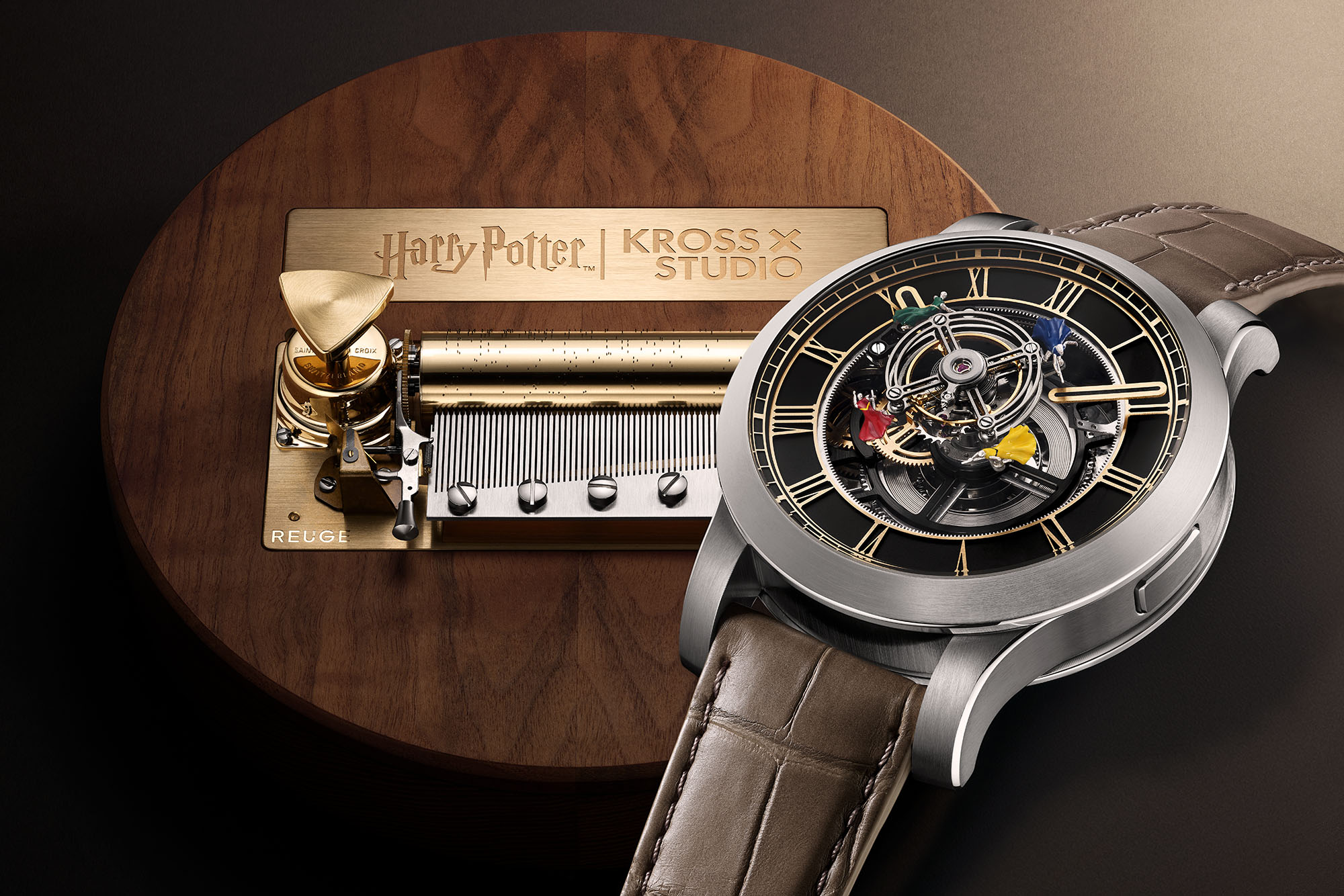
The round case is nicely finished, framing a dial with Roman numerals that wouldn’t look out of place on a traditional luxury watch. But at the center sits the true showstopper: a central floating tourbillon. Suspended above the dial, the tourbillon cage becomes a miniature arena where four broom-mounted wizards appear to be playing an endless game of Quidditch, orbiting as the escapement does its work. It’s playful, deeply thematic, and technically impressive all at once.
As with other Kross Studio creations, the watch is accompanied by an elaborate presentation, including a themed music box that pushes the whole experience from “very expensive watch” into “movable art object tied to a beloved franchise.” The price reflects that ambition: CHF 120,000. This is not subtle wealth; it’s mechanical fan fiction for collectors who love both haute horlogerie and Hogwarts.
A snapshot of today’s watch landscape
Look at this group together and you get a neat snapshot of where watchmaking is right now. Brands like Dryden and Unimatic are proving that enthusiasts can get robust, thoughtfully designed watches with real character for well under $1,000. Heritage-driven names such as Benrus and Erwin Sattler are mining their pasts – or in Sattler’s case, literally reviving old movements – to create pieces that speak to collectors who crave history and craft. And at the very top, Czapek & Cie and Kross Studio are experimenting with form, display, and storytelling in ways that keep high horology from becoming stale.
Not every release has to be a revolution, and not every revolution has to cost six figures. Sometimes innovation looks like swapping in a solar movement so your field watch is always ready. Sometimes it looks like a tiny tourbillon filled with flying wizards. Either way, the fun of this hobby lies in the range – and this Flyback proves there’s still plenty to get excited about if you know where to look.
3 comments
great write up, feels like actual opinions not just copy-paste press releases 👍
wish more brands did solar like Dryden instead of stuffing random fashion quartz inside shiny cases
unimatic x todd snyder looks so clean, even if it probably wears like a little tank on the wrist