Valve is taking another shot at the living-room PC with a new Steam Machine, and this time the company is far better positioned than it was a decade ago. 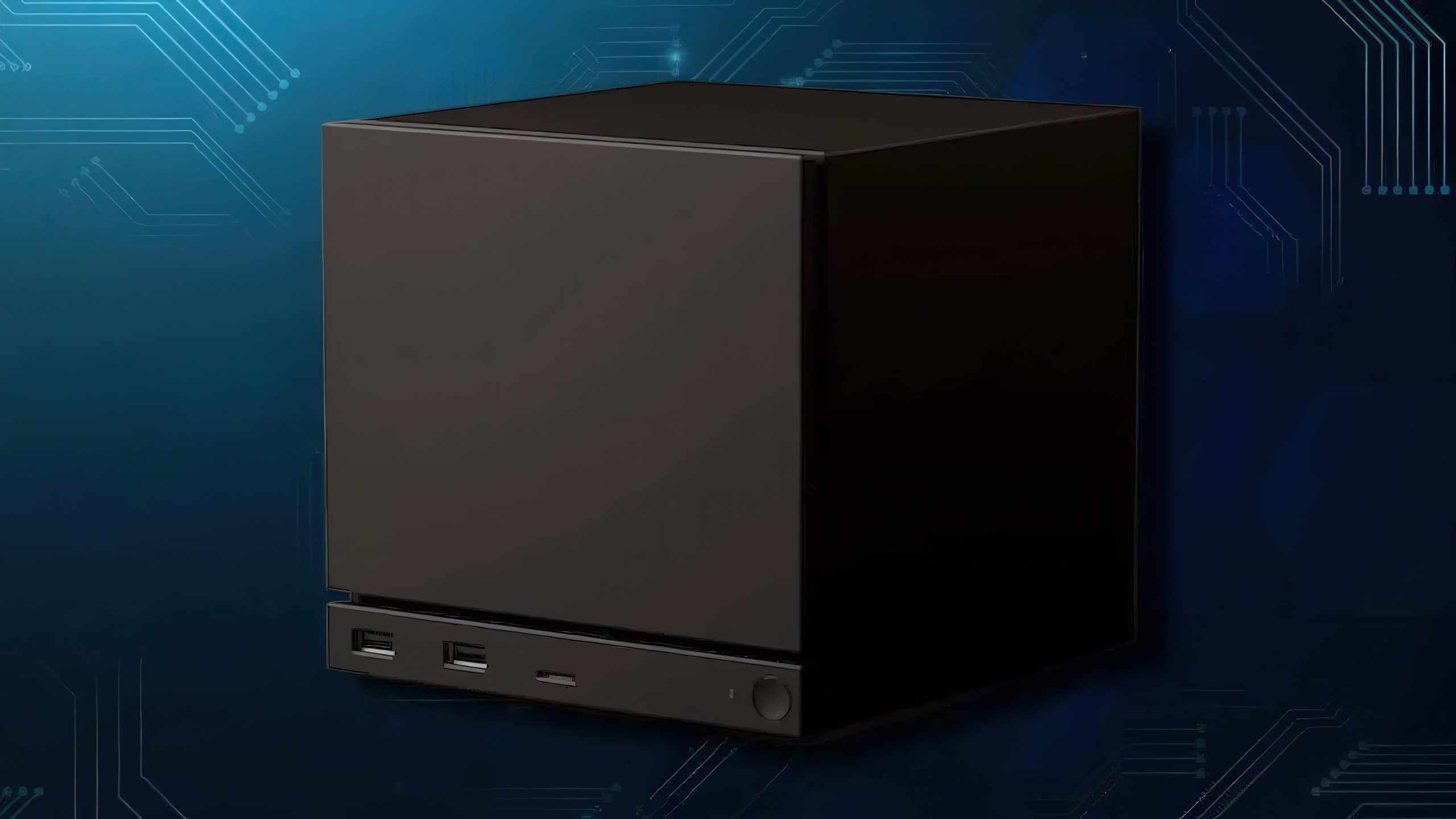
After proving it can ship successful hardware with the Steam Deck handheld and the Valve Index VR headset, the company is now building a compact, console-style box that aims to make your existing Steam library feel as simple to use as a plug-and-play console.
Unlike the first wave of Steam Machines, which were fragmented across different PC manufacturers and often expensive, this new device is a single, clearly defined platform designed and marketed by Valve itself. The promise is straightforward: a small, quiet box that hooks up to your TV, boots directly into SteamOS, and just runs your games without endless tweaking of drivers, launchers, or graphics settings.
Built to Match or Beat 70% of Gaming PCs
In a video interview with Adam Savage, Valve hardware engineer Yazan Aldehayyat explained how the team approached performance targets for the Steam Machine. Their first requirement was simple: the hardware needed to be capable of running essentially your entire Steam library without you constantly worrying whether the box can actually handle the games you own. That meant prioritising a smooth, predictable experience over chasing ultra-high-end benchmark numbers that only a fraction of PC gamers ever see.
To decide where to land, Valve leaned heavily on its own Steam hardware survey, which continuously tracks what kind of CPUs, GPUs, and RAM configurations players actually use at home. According to Aldehayyat, the new Steam Machine is designed to be equal to or faster than roughly 70% of those real-world rigs. In practice, that should put the box somewhere between an Xbox Series S and a PlayStation 5 in raw performance, with 1080p and 1440p gaming as the realistic sweet spot rather than native 4K.
There are still caveats. The system is expected to ship with 8 GB of VRAM, which means you should not anticipate maxed-out textures and ray tracing everywhere. Demanding triple-A games will still require sensible settings choices, just as they do on mid-range PCs. But considering that a huge portion of Steam’s most-played titles are competitive games, indies, and AA releases that are optimised for a wide hardware base, hitting that better-than-70-percent mark should be enough to make the machine feel capable rather than compromised.
Price, Value, and the Steam Store Advantage
From the start, Valve framed this box as an entry-level device. Affordability is not just a marketing bullet point; it is a key part of the design. Aldehayyat described performance and price as two points of a triangle the team used to converge on the final specification: powerful enough not to feel like a toy, but inexpensive enough to sit in living rooms next to consoles instead of next to thousand-dollar gaming PCs.
That value story does not stop at the hardware. One of the biggest arguments in favour of a Steam Machine over a traditional console like the PlayStation 5 is software pricing. On Sony’s platform, major third-party releases routinely launch at premium prices, and discounts can be slow or modest. On Steam, by contrast, aggressive seasonal sales, regional pricing, and legitimate key resellers routinely slash prices for games like Silent Hill, Hades II, Doom, or the latest cinematic action titles. For many players, the idea of paying full price for every big third-party release on PS5 while the same titles drop to 30–50 percent off on Steam within months is starting to feel increasingly hard to justify.
Combine that with Valve’s growing support for subscription-style offerings and the possibility of services like PC Game Pass coexisting on the same hardware, and you begin to see where this hybrid box fits. Even if the PlayStation 5 holds a small edge in pure GPU horsepower, a SteamOS machine that offers cheaper games and a vastly larger, PC-like library could still be the better long-term deal for anyone who actually buys a lot of software.
Off-the-Shelf Chip, Custom-Tuned Software
Interestingly, Valve did not commission exotic custom silicon for this project. Aldehayyat confirmed that the company is using an off-the-shelf chip rather than a bespoke APU designed solely for the Steam Machine. On paper, that sounds unremarkable, but there are real benefits: lower development risk, easier sourcing, and simpler long-term support for both Valve and game developers.
The magic, instead, happens on the firmware and software side. Valve is tailoring SteamOS, drivers, and power management specifically around this hardware configuration. By controlling the full stack, from bootloader to user interface, the company can squeeze out more consistent performance, faster suspend-and-resume, and controller-friendly navigation that feels closer to a console than a traditional desktop PC. For developers, targeting a known baseline specification can also make optimisation far more predictable than the usual chaos of the PC ecosystem.
Part of a Bigger Hybrid Console Shift
The new Steam Machine is also arriving at a fascinating moment for the broader industry. Microsoft is widely expected to push its own next-generation Xbox hardware further in a hybrid direction, blurring the line between a console under your TV and a Windows-based gaming PC. The long-standing wall between the Xbox ecosystem on console and on PC already looks thin, and many expect offerings like Game Pass Ultimate to unify things even further.
Valve’s box approaches the same problem from the opposite side. Instead of a console company trying to look more like a PC, Steam Machine is a PC company wrapping itself in console clothing. You plug it in, sign into Steam, and immediately see years’ worth of purchased games, early access indies, and quirky experimental titles right alongside the big triple-A launches. Backwards compatibility is not a bullet point; it is simply how PC libraries work.
For players who already own a substantial Steam library, that matters. The Steam Machine is less about starting a new ecosystem and more about making the one you already have easier to enjoy on a couch, with a controller, at a fixed and predictable performance level. It is a different vision of what a hybrid console can be.
What to Watch Before the 2026 Launch
Valve currently plans to launch the Steam Machine in early 2026, and between now and then the big missing piece is price. The hardware specification described so far sounds well balanced for 1080p couch gaming, but if Valve wants to steal mindshare from the PS5, from any Switch successor, and from whatever Xbox does next, the sticker price will matter as much as the teraflops. Storage configurations, potential tiers, and regional pricing will all play a huge role in whether this becomes an impulse buy or a niche enthusiast toy.
There are other open questions as well. How quiet will the box be under sustained load? Will Valve allow easy user upgrades or stick to a console-style sealed design? How tightly will the machine be integrated with services like Steam Remote Play, family sharing, or potential cloud streaming options? Each of these details can tilt the overall value proposition in subtle but important ways.
Still, viewed purely on paper, the concept is compelling: performance calibrated to where most real PC gamers actually are, a mature operating system tuned for that specific hardware, and access to arguably the best deals in gaming thanks to Steam sales, keys, and deep back catalogues. If Valve sticks the landing on cost and availability, this second attempt at a Steam Machine might finally deliver what the first generation could not: a small, affordable box that feels like a console but quietly behaves like a PC, giving players the best of both worlds.
2 comments
Xbox still sucks tbh but if Valve and MS start fighting for my backlog with cheap subs and sales, I am just gonna sit here with popcorn and enjoy the chaos 😈
Paying 80 bucks for every third party game on PS5 when the same stuff hits like minus 50 percent on Steam in a few months is wild, Sony really milking ppl now