Apple has been dragged back into the spotlight in one of the most closely watched battles in the wearable tech world, and this time the bill is anything but symbolic. A federal jury has ordered the company to pay 634 million dollars to medical technology firm Masimo after finding that Apple infringed a key patent related to blood oxygen monitoring, a feature that has become central to the marketing of recent Apple Watch generations. The verdict does not just revolve around money; it raises deep questions about how big tech companies integrate medical style features into consumer gadgets, what counts as genuine innovation, and how far patent law can reach into everyday devices on our wrists.
At the heart of the case is the blood oxygen monitoring experience on Apple Watch, especially the workout mode and heart rate related alerts that, according to the jury, infringed Masimo intellectual property. 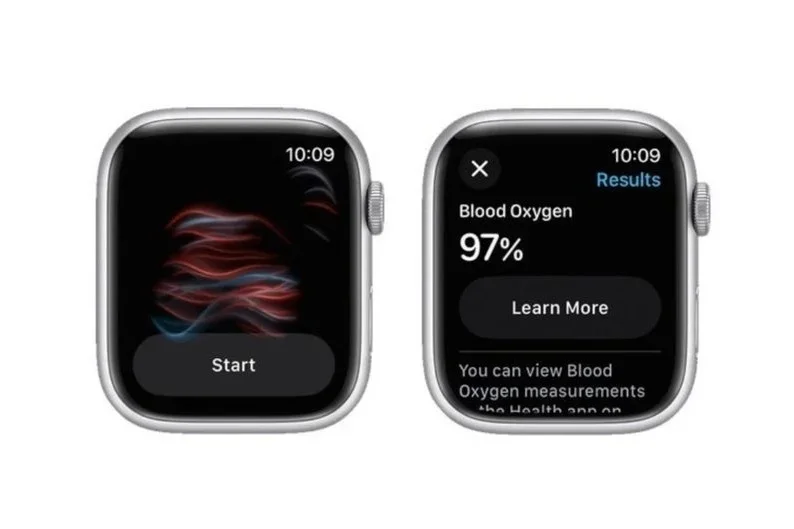
Masimo, a long established player in hospital grade pulse oximeters, argued that Apple borrowed its patented approach for measuring and analyzing oxygen saturation data, then repackaged it in a sleek wearable without paying for the underlying technology. Apple, for its part, has strongly denied wrongdoing and already signaled that it will appeal, insisting that the contested patent was narrow, old, and has since expired.
The patent in question expired in 2022 and, as Apple emphasized after the verdict, relates to what it describes as historic patient monitoring technology developed decades ago. Apple points out that Masimo has sued the company repeatedly during the past six years, asserting more than 25 different patents across various courts, many of which were later found invalid. From Apple perspective, this latest ruling is just the newest chapter in a long running campaign by Masimo to carve out a share of the booming smartwatch health market by leveraging its patent portfolio rather than competing only through products.
Masimo sees things very differently. The company hailed the jury decision as a significant win for innovation and for the principle that intellectual property rights still matter, even when the alleged infringer is one of the most powerful corporations on the planet. For Masimo, the verdict reinforces the idea that medical grade know how cannot simply be absorbed into consumer tech without proper licensing, and that rigorous research in hospitals and clinics deserves the same protections as flashy consumer design.
This courtroom victory does not exist in a vacuum. It comes against the backdrop of a separate, high profile clash at the International Trade Commission in the United States. In January 2024, the ITC found that certain Apple Watch models infringed Masimo patents and imposed an import ban on affected devices. To keep selling its latest wearables in the US, Apple then took the dramatic step of disabling the blood oxygen feature on Apple Watch Series 9 and Apple Watch Ultra 2 units sold in the American market. Later, when Series 10 joined the lineup, the same restriction applied there as well.
That move was striking for consumers. A health sensor that had been heavily promoted as a marquee feature simply vanished overnight for many users via software, even though the underlying hardware remained present inside the watch casing. People who bought these devices expecting full functionality suddenly faced an interface where the familiar blood oxygen tile no longer worked, while buyers in other regions could continue using it normally. It was a vivid example of how patent rulings can reach all the way into end user experience.
Apple, unsurprisingly, did not accept that this would be the final word. The company engineered a revised implementation of the pulse oximeter aimed at avoiding Masimo patent claims. In the original design, the Apple Watch collected the sensor data, processed it on the watch itself, ran calculations, and then displayed the blood oxygen percentage directly on the watch screen in near real time. The redesign keeps the watch as the hardware that gathers raw data, but offloads the heavy lifting elsewhere.
Under the updated system, the Apple Watch still shines light through the skin and records how much is absorbed, but instead of performing the full algorithmic analysis locally, it sends that information to a paired iPhone. The phone then handles the key calculations and analysis steps before surfacing the final blood oxygen value. Instead of appearing as a dedicated interface on the watch, the final reading now lives in the Health app on the iPhone, within the respiratory section. Apple believes this separation of roles fundamentally changes the technical architecture and avoids the specific claims covered by Masimo patent.
The revised implementation was rolled out as part of watchOS 11.6.1 and iOS 18.6.1 for Apple Watch Series 9, Series 10, and Apple Watch Ultra 2. Apple Watch Series 11, released in September, arrived with the redesigned system already baked in from day one. At first glance it looked like Apple had threaded the needle: the company told the world that US Customs and Border Protection had signed off on the changes, a signal that the new design was not covered by the original import ban.
However, the story did not end there. On Friday, the ITC announced that it would open new proceedings to examine this revised blood oxygen feature. Because the redesigned version was not part of the original investigation, the agency now wants to decide whether shifting the core processing to the iPhone truly sidesteps Masimo intellectual property or is simply a clever attempt to keep essentially the same functionality alive under a slightly different technical wrapper. The key legal question is whether the combination of watch plus phone still amounts to the same patented system described in Masimo claims.
This debate can feel abstract, but the underlying health feature is very real to millions of users. A pulse oximeter measures the percentage of oxygenated hemoglobin in the bloodstream, essentially indicating how efficiently the lungs are transferring oxygen into the blood. In healthy adults, values are typically between 95 and 100 percent. Persistent readings below 90 percent can signal potentially serious medical issues that may require attention. For athletes, people living at high altitude, or those managing chronic respiratory or cardiac conditions under doctor guidance, quick access to blood oxygen trends can be more than a gimmick.
That said, regulators have repeatedly stressed that the Apple Watch is not a replacement for professional medical equipment or a doctor visit. The feature is marketed as a wellness and fitness tool, not as a medical device for diagnosis. That positioning gives Apple more flexibility in product design, but when the algorithms behind the pretty graphs overlap with decades of medical research protected by patents, consumer wellness suddenly bumps into the hard edges of intellectual property law.
If the ITC ultimately concludes that even the redesigned system still infringes Masimo patent, Apple will face a difficult set of choices. One option would be to again disable the blood oxygen feature entirely on affected models in the United States, as it did before. That would almost certainly frustrate customers who paid premium prices for devices advertised as advanced health companions. It might also tarnish the reputation of the Apple Watch as the most capable health focused smartwatch if rival brands can keep offering similar sensors without interruption.
Another alternative would be yet another technical rework, in search of a third design that delivers useful blood oxygen insights while steering safely around Masimo patent claims. But the more Apple twists and reshapes the feature, the more likely it is that the experience becomes clunky or less accurate, undermining the selling point that made it attractive in the first place. Truly novel algorithms take time, testing, and regulatory scrutiny, and there is no guarantee that a quick engineering fix would satisfy either users or regulators.
Then there is the option that many observers see as the most straightforward: Apple could strike a licensing deal with Masimo. In such an arrangement, Apple would pay Masimo for the right to use elements of its pulse oximetry technology in Apple Watch models covered by the patents. Existing customers would keep their features, Apple would retain the marketing power of its blood oxygen sensor without further disruptions, and Masimo would receive ongoing revenue and recognition for its innovations. That path might feel like a retreat for a company that prides itself on in house engineering, but in practical terms it could deliver the rare outcome where Apple, Masimo, and consumers all benefit.
Beyond the two companies, the case signals something bigger for the entire wearables and digital health ecosystem. As smartwatches, rings, and fitness bands creep deeper into territory once dominated by hospital equipment, the line between consumer gadget and medical device is blurring. Sensor makers, chip designers, algorithm developers, and big tech brands are colliding in the same space. Patent battles like this one are likely to shape what future features look like, which companies thrive, and how quickly everyday users gain access to cutting edge health metrics on their wrists and in their pockets.
For now, Apple continues to fight on multiple fronts: appealing the 634 million dollar jury verdict, defending its revised Apple Watch blood oxygen system at the ITC, and working to reassure customers that their devices remain valuable even while the legal dust is still swirling. Masimo, buoyed by the jury win, is pushing its message that genuine medical innovation deserves to be respected and paid for. Regardless of the final legal outcome, the Apple versus Masimo saga has already become a defining example of how intellectual property, health technology, and mainstream consumer electronics are colliding in the modern era.