Steam Machine Returns Just As Xbox Bets Big On A PC Console Future
For years, the games industry has talked about a future where the walls between console and PC quietly crumble. This week, Valve and Microsoft stopped talking and started moving. Valve has officially revived the Steam Machine concept with a sleek new living room box, while Microsoft continues to tease a next generation Xbox that is, in everything but name, a Windows PC disguised as a console. Somewhere between those two visions sits Phil Spencer, congratulating Valve in public while preparing his own hardware to walk into the same battlefield.
On the surface, Spencer’s message to Valve looked simple and gracious. The head of Xbox applauded Valve’s new hardware push and praised any effort that gives players more ways to play across devices. Beneath the politeness, though, sits a brutal reality: both companies are now chasing the same prize, the living room PC that feels like a console, and Valve appears to have stepped onto the stage first.
Valve’s New Steam Machine: A Living Room PC With Console Ambitions
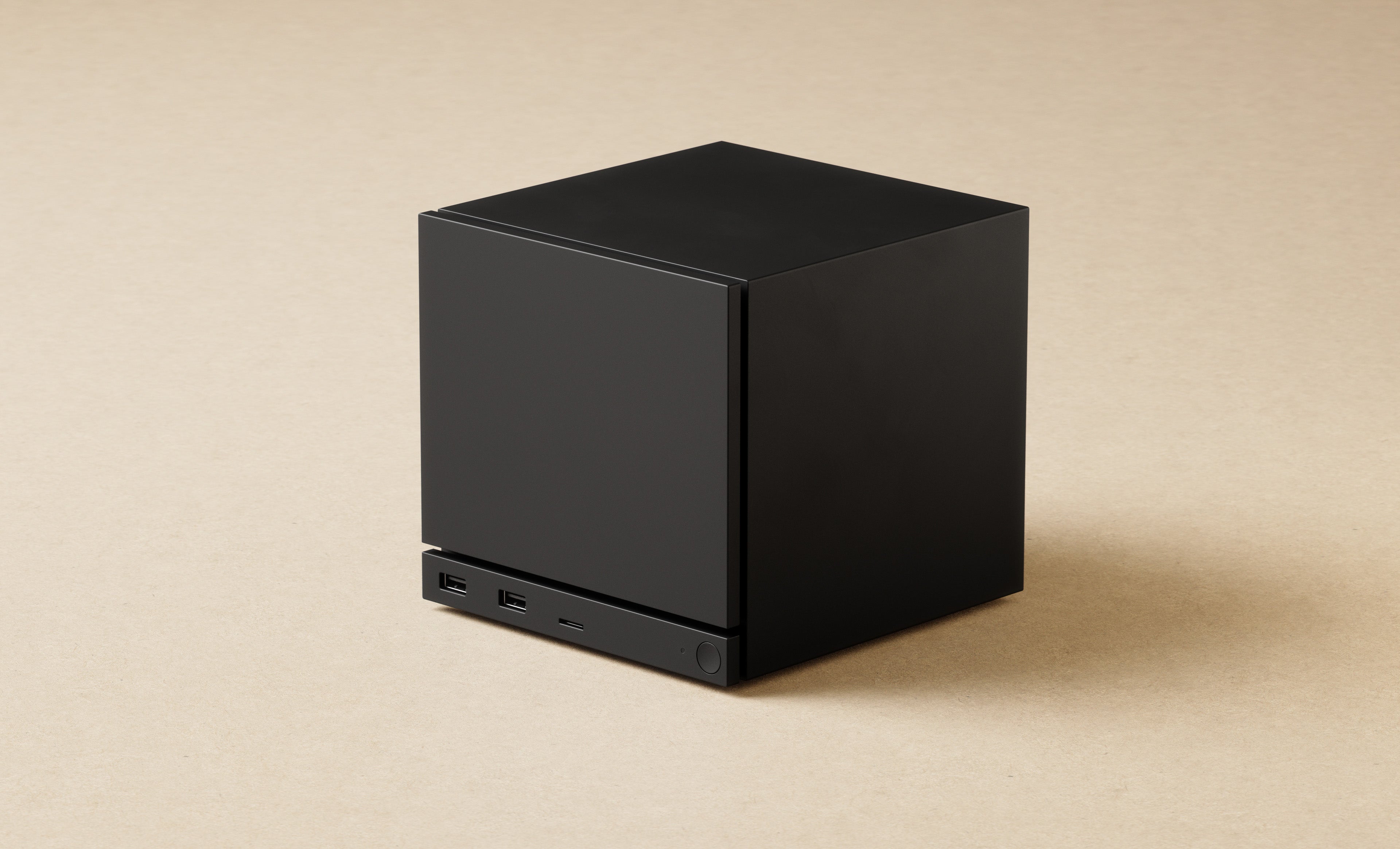
Valve’s new Steam Machine is not being pitched as a traditional console at all, at least not by Valve itself. It is, in their own words, just another gaming PC in the vast Steam ecosystem, one that happens to be designed to sit quietly under a TV rather than roar under a desk. A compact cube-like case, a custom SteamOS build, and a focus on plug in, sign in, play are clearly meant to make PC gaming feel approachable for people who normally buy a console simply because it is easier.
This new machine launches alongside an updated Steam Controller and the Steam Frame virtual reality headset, signaling that Valve does not just want to be the place where you buy games, but a company that shapes how and where you play them. The message is obvious: PC gaming does not belong only at the desk anymore. It can be on the couch, in your hands, and inside your headset, and Valve wants Steam to be the thread that ties all of those experiences together.
Interestingly, Valve is not framing the Steam Machine as a rival to Xbox or PlayStation. In interviews, engineers Pierre Loup Griffais and Yazan Aldehayyat stress that, for them, this is simply a PC. If you are already happy with your existing gaming rig, perfect. If you want a small, quiet box in the living room that boots straight into Steam, this is just another option. No war declaration, no direct shots fired, just a calm statement: we are a PC company, and we are giving people more ways to play PC games.
Phil Spencer’s Public Welcome And Xbox’s Open Platform Story
Phil Spencer chose to lean into that PC first framing. In his congratulatory tweet, he emphasized that gaming always moves forward when developers and players have more ways to play and create on open platforms. He painted a future where console, PC, handhelds, cloud, and TV are not competing silos but connected options. Unsurprisingly, he wrapped that idea around Xbox’s long running message of choice and access.
Spencer also reminded everyone that Microsoft is one of the largest publishers on Steam. That point matters. For Xbox today, Steam is not a competitor in the old school, brand versus brand sense. It is one of the biggest storefronts for games that Microsoft now owns, especially after swallowing Activision Blizzard. The more screens that can access Steam, the more places those games can be sold, regardless of which logo sits on the plastic box.
Yet the subtext is hard to ignore. Xbox’s next generation device is heavily rumored to be a console PC hybrid that will happily boot into Windows and run PC games from Steam, Battle net, Riot’s launcher, and more. If that vision is accurate, Spencer is welcoming a Steam Machine that may beat his own Windows box to market with a similar pitch: the simplicity of a console, the library of a PC.
A Next Gen Xbox That Barely Pretends Not To Be A PC
Reports from Windows focused outlets suggest that Microsoft’s upcoming Xbox will be the most PC like console the company has ever made. The idea is that you can stay inside the curated Xbox environment if you want, complete with store, Game Pass, and classic console UX, or you can effectively tab out into Windows and turn the machine into a regular PC. In that mode, Steam, Epic, Battle net, and Riot are just apps. So, too, are tools like Discord or even productivity software if you insist on torturing yourself with Excel on your couch.
The potential twist is huge: because so many PlayStation exclusives eventually ship on PC through Steam, this hybrid Xbox could, in theory, become the first console where you can play Sony’s biggest games without buying Sony hardware. God of War, Spider Man, Ghost of Tsushima, and whatever arrives on PC next would all be within reach, as long as they have a Steam version and the Xbox can access that storefront freely.
This is not just about games, though. It is about identity. If an Xbox acts like a PC, sells PC games, and runs Windows, is it still a console, or just a prebuilt gaming desktop with a controller in the box? Microsoft seems happy to blur the line. For them, what matters is that you are inside Windows and that you are buying games and subscriptions in their ecosystem, even if those purchases happen via someone else’s store.
Satya Nadella’s Big Picture: Windows As The Real Gaming Platform
That broader strategy was laid out bluntly by Microsoft CEO Satya Nadella. He has repeatedly framed Windows itself as the biggest gaming business under the Microsoft umbrella. In his view, Steam is a thriving marketplace that sits on top of that foundation, and Microsoft now stands as one of the largest publishers in that marketplace thanks to its acquisition spree. The company’s ambition, he argues, is to be everywhere players are, much as Office spread to every device and platform that would host it.
That is why Nadella talks about gaming on console, PC, mobile, cloud, and TV in the same breath. The Xbox brand is no longer just a plastic box under a television it is a service layer that follows you from device to device. The company wants you to see Xbox as the label on your library and your subscription, not just the name etched on the front of a console shell.
He also bristles at the idea that console and PC are fundamentally separate worlds. Historically, the Xbox was born from a desire to build a PC that was tightly optimized for gaming and easy to develop for. Nadella seems eager to circle back to that origin story, to create hardware that lets Microsoft do system level innovation on both console and Windows at the same time, blurring the boundary in a way that feels deliberate instead of accidental.
Valve’s Calm PC First Philosophy Versus Microsoft’s Big Platform Gamble
Contrast that noisy platform ambition with Valve’s quieter hardware story. Griffais and Aldehayyat insist that the Steam Machine is not some grand assault on the living room from a new would be console maker. It is simply a new form factor for PC gaming, one more box among gaming laptops, desktops, and handhelds like the Steam Deck.
From Valve’s perspective, the big shift is cultural rather than technological. More and more players want the flexibility of a PC like experience even on closed platforms. Mod support, graphics settings, multiple storefronts, and ownership that is not tied to a single device resonate with people who are tired of every console having its own walled garden. If other companies are embracing those PC style freedoms, Valve is happy. It validates a philosophy they have been pushing for years.
In practice, though, the overlap is obvious. The Steam Machine is designed to sit exactly where a traditional console sits next to the TV, near the soundbar, under the streaming box. It is designed to turn on quickly, get out of the way, and offer a clean, simple route into games, just like a console. Even if Valve refuses to call it a competitor, it will inevitably be compared to whatever Microsoft and Sony release next.
Price, Power, And The Linux Question
The biggest unknowns around Steam Machine right now are the ones that matter most to players: how powerful it will be and how much it will cost. Valve is hinting at a price that feels competitive with mainstream consoles and gaming handhelds, and early whispers suggest an experience more powerful than a Steam Deck but nowhere near a maxed out desktop rig. That would make sense: a living room box that targets a comfortable 1080p or 1440p experience, leans heavily on upscaling like FSR, and focuses on quiet, cool operation rather than brute force.
Some PC fans in the community are already pouring cold water on the hype. They point out that if the machine sticks to a modest GPU with limited VRAM and relies on Linux, it may struggle with always online games that depend on aggressive anti cheat systems built for Windows. The Steam Deck has already shown those limits, with several popular multiplayer titles still refusing to play nicely with Proton. In that light, skeptics argue that calling the Steam Machine a console killer is premature at best.
Others shrug and say nothing stops anyone from buying a budget gaming PC today and hooking it to a TV. For those players, the Steam Machine is essentially a neat prefab option for people who do not want to build or configure anything. Convenience, UX polish, and industrial design are its real selling points, not raw spec sheets.
Xbox’s Premium Strategy And The Shadow Of ASUS ROG Ally X
While Valve tries to position Steam Machine as an approachable option in the wider PC ecosystem, Xbox leadership is preparing something that sounds far more high end. Xbox president Sarah Bond has repeatedly described the next console as a premium device, a curated experience that sits at the top of the hardware stack. She has even gestured toward the pricey ASUS ROG Ally X handheld as an early glimpse of the direction Microsoft wants to go, pairing strong specs with a Windows based experience tuned for gaming.
Read between the lines and the picture emerges clearly. Steam Machine is the entry level living room PC, the box for people who want a tidy, affordable home for their Steam library. The next Xbox aims to be the luxury model a hybrid that offers console level simplicity and performance, but can morph into a Windows PC when you need more flexibility. Different devices for different budgets and expectations, but absolutely on a collision course in the same living room space.
That positioning comes with risks. A premium Windows based Xbox sounds powerful, but many players already worry about Microsoft drifting toward a future where their console is stuffed with ads, dashboards full of promotions, and a subscription stack that feels more like a cable bill than a hobby. Game Pass, once hailed as the best deal in gaming, now draws criticism from people who feel like they are paying a monthly fee for the mere chance of a big new release rather than a steady flow of must play titles.
Public Perception: Phil Spencer, Brand Fatigue, And Industry Memes
The response to Spencer’s tweet congratulating Valve captured the mood perfectly. Yes, there were sensible replies about open platforms, friendly competition, and excitement about having more devices to choose from. There were also a lot of jokes: people riffing on Xbox’s infamous marketing lines, poking fun at how often Spencer and the Xbox PR team feel compelled to speak up, even on announcements that do not directly concern them.
Some responses went straight for the man rather than the message, joking about Spencer looking increasingly exhausted after years of corporate firefighting and tough hardware cycles. Others rolled their eyes at any attempt to spin Xbox as a dominant force on Steam, pointing to charts where the brand ranks far lower than fans might assume when it comes to total games published or average user reviews.
Underneath the memes is a deeper fatigue. A portion of the audience feels that Microsoft has squandered a whole generation of potential with missteps, studio closures, controversial acquisitions, and a reliance on services over memorable first party games. For those players, it hardly matters what shape the next Xbox takes. They will buy a PS6, stick with their PC, or grab a Steam Machine, and only look at Xbox again if it proves itself through software, not slogans.
Silent Sony, Busy Microsoft, And Valve In The Middle
The contrast in public communication styles is striking. Sony and Nintendo traditionally maintain a tight, quiet message, speaking mainly through showcases and carefully scripted interviews. Microsoft, by comparison, feels constantly online, issuing statements, podcasts, and social posts on almost every twist and turn in the industry. Some fans appreciate that transparency, but others wish Xbox would talk less and ship more.
In that context, Spencer congratulating Valve reads two ways. On one hand, it is genuinely classy to acknowledge a rival’s success, especially when both companies benefit from a thriving PC platform. On the other, it inevitably looks like Xbox trying to keep itself in the conversation even when someone else is having their big day.
There is also a practical undercurrent that people often overlook. Valve and Microsoft are not distant rivals screaming across an ocean. Their headquarters are a short drive apart in Washington state. Engineers, executives, and partners bump into each other at local events, restaurants, and industry gatherings. It is hard to imagine that either side was truly blindsided by the other’s hardware plans. The more believable story is that both knew roughly what the other was building, and each decided to occupy a different slice of the market: Valve with an affordable entry point, Microsoft with a premium hybrid box.
The Question Everyone Is Really Asking: Do We Still Need Consoles
As PC like consoles and console like PCs collide, a growing slice of the audience is asking a blunt question: if everything is just becoming a PC anyway, why bother with a console at all. If a Steam Machine gives you couch friendly access to most of the games you care about, and a gaming rig on your desk delivers higher frame rates and better image quality, then a third device starts to feel redundant, especially when hardware prices keep climbing.
That does not mean consoles vanish. There will always be people who want a simple, fixed box with clear expectations and minimal tinkering. Parents buying a Christmas present, players who do not want to think about drivers or settings, and folks living in smaller spaces might still lean toward a console shape even if it is basically a PC inside. But the psychological gap between those options is shrinking, and companies like Microsoft and Valve are deliberately erasing what is left.
The emerging reality might be that consoles survive not as separate tribes, but as convenient configurations in a much larger PC style ecosystem. In that world, Steam Machine, Xbox, and perhaps even future Sony hardware all sit on a spectrum of devices that share more DNA than they admit, differentiated less by architecture and more by philosophy, price, and services.
What Comes Next For Steam, Xbox, And Players
For now, there are still many unknowns. Valve has not locked down a final price or a firm release date beyond a broad 2026 window, and the company is being careful not to overpromise. Microsoft, meanwhile, is talking in tone and principle rather than hard specs and launch timelines. If the rumors are accurate, both devices will likely land around 2027, when the next wave of traditional consoles is expected to arrive, including Sony’s PS6.
If that happens, players will face a more complex choice than ever. Do you want Valve’s streamlined Steam box, Microsoft’s premium Windows powered hybrid, a classic PlayStation style console built around exclusives, or do you skip all of them and double down on a self built PC. The right answer will depend on how much you care about open storefronts, first party libraries, subscription value, and the balance between price and power.
What is clear already is that the old console war story is dying. This is not a simple fight between green, blue, and red brands. It is a messy convergence of PC and console cultures, of storefront politics, and of companies that sometimes collaborate in one corner of the industry while competing fiercely in another. Phil Spencer’s friendly nod to Valve is part of that puzzle: an acknowledgment that, in 2025 and beyond, even your rivals are also your partners.
For players, that tension might be a blessing. More devices chasing your attention means more competition on features, services, and price. Whether Steam Machine ends up as a curiosity, a surprise hit, or the first domino that pushes Xbox even further into PC territory, one thing is certain: the living room has never looked more like a battleground for the future of PC gaming.
1 comment
Sony watching this from the shadows saying nothing like always, and honestly, their PR strategy kinda slaps. Talk less, ship games more