Battlefield 6 is lining up what may be its most important comeback moment yet. After a launch that pulled in huge sales but struggled to keep players engaged, Battlefield Studios is preparing a massive two step update for Season 1 that zeroes in on the fundamentals of gunplay, visibility, and map flow. The California Resistance mid season patch on November 18 and the Winter Offensive drop on December 9 are being framed not as small hotfixes, but as a reset of how the game feels in your hands and in your ears.
At the centre of this push are two systems that have dominated community discussions since release: aim assist and weapon bloom. 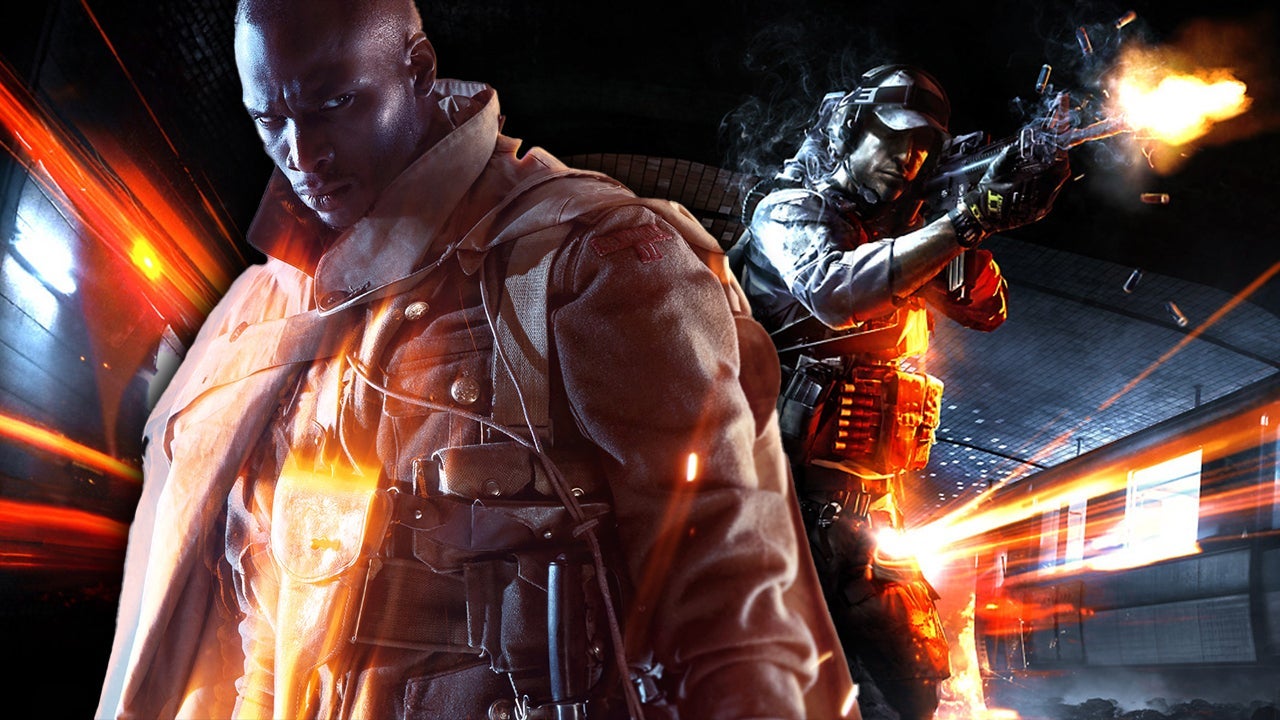
Both are being heavily reworked, with the studio openly acknowledging that the balance had drifted too far away from what players experienced during the open beta. That beta, with its tight map and snappy aim behaviour, convinced many players that the full game would build on that solid base. Instead, a lot of fans now feel they bought into a promise that never fully materialised. With player counts sliding and servers feeling emptier week after week, this update is clearly aimed at winning back trust.
Aim assist goes back toward the beta feel
On controllers especially, Battlefield 6 has struggled to land on an aim assist model that feels both helpful and predictable. Since launch, slight tweaks and hidden changes have left many players feeling that their crosshair behaviour changes from patch to patch, making it hard to build muscle memory. The new update largely rewinds those experiments. Battlefield Studios says that the tuning for infantry aim assist and slowdown is being brought back in line with the open beta values, where many players reported that gunfights felt snappy yet fair.
The studio explains that the goal is to make aiming smoother and more consistent across all situations. That means more reliable slowdown when you pass over targets, less of the sticky feeling that sometimes pulled your aim away from the opponent you wanted to track, and better behaviour when multiple enemies are bunched together. By resetting the baseline, the developers want players to log in after the patch, test the new feel for a while, and only then adjust their personal settings. It is a quiet admission that previous updates overcomplicated a system that needed stability more than constant tinkering.
Weapon bloom and dispersion toned down for sustained fire
There is another mechanic that has kept Battlefield 6 locked in heated debates on forums and social media: weapon dispersion, often talked about as bloom. In practice, it means that bullets spread out more the longer you hold the trigger, regardless of how steady your aim is. When tuned well, it encourages short controlled bursts and rewards skill. When tuned poorly, it can make gunfights feel like a coin flip. Players have repeatedly complained that they lose duels they appeared to track perfectly, especially at medium and long range.
The California Resistance update introduces a global tuning pass that reduces how quickly dispersion and recoil build up during sustained fire. This change applies to the full arsenal, from assault rifles to light machine guns, with most weapons also getting subtle recoil refinements. The promise from the developers is that rifles should now feel smoother, more responsive, and more predictable at distance. Instead of watching carefully lined up shots veer wildly away, players should be able to trust that staying on target actually matters again.
It is a crucial move for a game that sells itself on large scale firefights across open spaces. When the sandbox encourages flanking, positioning, and coordinated pushes, the gunplay has to support that fantasy. The current tuning has too often encouraged players to sit back, spam shots, and hope that random spread does the work for them. Reducing bloom while keeping recoil readable could push the meta back toward thoughtful engagement ranges and smarter use of cover.
Visibility, lighting and the ongoing audio problem
Gunfeel is not the only part of the experience that is being sharpened. Lighting and visibility updates are also on the way, with the studio targeting problem areas where enemy soldiers blend into backgrounds too easily. High contrast edges, more readable silhouettes, and smarter use of environmental lights should make it easier to quickly pick out foes in busy urban or forest scenes. Visibility has always been a tricky balance in Battlefield, but with so many complaints about being deleted by targets you never saw, some extra clarity is overdue.
That said, many players argue that visibility is only half the story. Footstep audio remains one of the most heavily criticised aspects of Battlefield 6, and the new roadmap only lightly touches on audio performance under the REDSEC umbrella. Right now, footsteps are inconsistent in volume and direction, sometimes vanishing entirely in the chaos. For a game that emphasises flanking, verticality, and close quarters captures, unreliable audio makes it much harder to read the battlefield. Community sentiment is clear: lighting changes are welcome, but meaningful footstep improvements will be essential if the team truly wants gunfights to feel fair.
Challenges, clarity and rewarding objective play
Alongside the mechanical tweaks, the November 18 update continues the work of making challenges less confusing and less grindy. Requirements for weekly and seasonal tasks will be clarified so players know exactly what they need to do, which modes count, and how progress is tracked. Misunderstood challenges have been a constant friction point, with players feeling their time is being wasted when objectives suddenly fail to register.
There is also a growing chorus asking the studio to look beyond pure challenge completion and rethink the core reward structure. Battlefield has historically been at its best when squads push flags, revive teammates, resupply allies, and defend objectives under pressure. In Battlefield 6, many players feel that stat padding and kill farming often overshadow team play. Scoreboards, ribbons, and progression can indirectly encourage hanging back for a clean kill death ratio instead of diving into contested zones.
While the current roadmap does not yet promise a full rework of scoring, the focus on challenge clarity is at least a step in the right direction. If future updates go further and significantly boost rewards for capturing, defending, and supporting the squad, Battlefield 6 could reclaim the identity that made past entries memorable. A shooter this focused on large scale warfare simply cannot afford to treat objective players like background extras.
Portal, Fort Lyndon and the map size debate
Portal, the powerful community toolset built into Battlefield 6, continues to quietly carry part of the game on its back. Players have used it to recreate classic experiences, design chaotic modes, and even build the kind of large, free flowing maps that many wish were available in the core rotation. The upcoming update expands what creators can do with Fort Lyndon, giving them more building blocks to design custom modes and layouts that better match their tastes.
Map size and pacing remain hot topics for the live game as well. The studio openly acknowledges that it has seen extensive feedback about matches feeling either too empty or too cluttered, depending on the layout. Battlefield is at its best when maps offer multiple viable routes, overlapping combat ranges, and constant yet readable action. The arrival of Eastwood in the California Resistance chapter is meant to showcase that philosophy, with Winter Offensive bringing targeted adjustments to existing Breakthrough and Rush maps.
The developers also say they are studying community made Portal creations to learn what players gravitate toward. If the most popular custom experiences lean into more open spaces with dense frontline pockets, or smaller arenas with predictable lanes, that information will ideally feed future map design. In other words, Portal is not just a playground, but also an ongoing experiment that can influence core Battlefield 6 updates.
Vehicles, AA frustration and upcoming balance passes
Vehicle balance is another area scheduled for changes in the December 9 Winter Offensive update. Tanks, transports, and air vehicles have all attracted criticism either for being too fragile in some modes or too dominant in others. The studio plans to refine health values, damage profiles, and availability to create a more dynamic tug of war between infantry and armour.
One very specific pain point keeps popping up in community threads: the mobile anti air interface. When firing its guns, players report a distracting flash that makes it almost impossible to comfortably track targets. It might sound like a small visual issue, but over long sessions it becomes a genuine strain. If Battlefield Studios is serious about cleaning up the vehicle sandbox, fixing that kind of daily frustration needs to sit alongside headline changes like armour plating adjustments and tank spawn logic.
REDSEC, battle royale experiments and solo ideas
On the REDSEC side of the experience, the team is reviewing several key systems, from audio and armour to casual battle royale modes. The idea of a more relaxed, drop in battle royale experience that sits alongside the core modes has clear appeal, especially for players who want shorter sessions with higher stakes. The studio is even exploring what a solo focused option could look like and how it might fit into Battlefield 6 without cannibalising the main sandbox.
Nothing in this area is locked in yet, but simply acknowledging that solo friendly battle royale is on the table is likely to reignite debate. For some fans, Battlefield is first and foremost about squads, vehicles, and objective play. For others, it is a chance to test individual skill in tense last player standing scenarios. If REDSEC continues to evolve, the challenge will be allowing both groups to coexist without diluting the identity of either side of the game.
Player sentiment, trust, and the road to Season 2
Underneath all the patch notes and roadmap slides is a more emotional reality. Many early adopters feel they were misled by a compact, promising beta that did not accurately reflect the final product. They tried the full game, realised that content variety and core systems were rougher than expected, and quietly moved on. The result has been a game that sold impressively out of the gate, then bled players faster than almost any Battlefield entry before it.
The studio response is to emphasise that this is only the beginning of a longer recovery path. California Resistance on November 18 and Winter Offensive on December 9 are being framed as the first big course correction. Beyond those, Season 2 is set to launch in early 2026, with continued work on user interface and menus, player statistics, social features, matchmaking, hit registration and netcode, and the broader vehicle experience. It is a long list, and no single update will solve every issue, but it is at least a clearer acknowledgement of what the community cares about.
Whether this will be enough to bring back lapsed players is another question. Some will only return when they see friends talking positively about the game again. Others will wait for proof that core problems like footsteps, server performance, and rewards for objective play have truly been fixed. Still, for those who stuck around through the rough launch, or kept an eye on the game from a distance, this pair of updates might be the turning point that finally brings Battlefield 6 closer to the experience many believed they were buying on day one.
For now, one thing is clear. With aim assist rolled back toward the beloved beta tuning, weapon bloom dialled down, visibility sharpened, maps adjusted, and vehicles on the balance table, Battlefield 6 is finally addressing the fundamentals. If Battlefield Studios can match those mechanical changes with smarter progression systems and a stronger focus on team play, Season 1 could be remembered not as a rocky experiment, but as the moment the game finally found its footing.
1 comment
We all joked they would fix this stuff in Battlefield 7 instead, so seeing them actually roll back aim assist and bloom now is kinda surprising. Please do not mess it up again next patch