According to a swirl of new reports out of Korea, Samsung’s upcoming Galaxy S26 may have gone through a quiet but radical redesign for one reason above all others: price. On paper, the changes look strange. The phone was allegedly planned as a super-slim 6.9 mm flagship with a generous 4,900 mAh battery, yet insiders now claim the retail version will ship at 7.24 mm thick with a noticeably smaller 4,300 mAh cell. 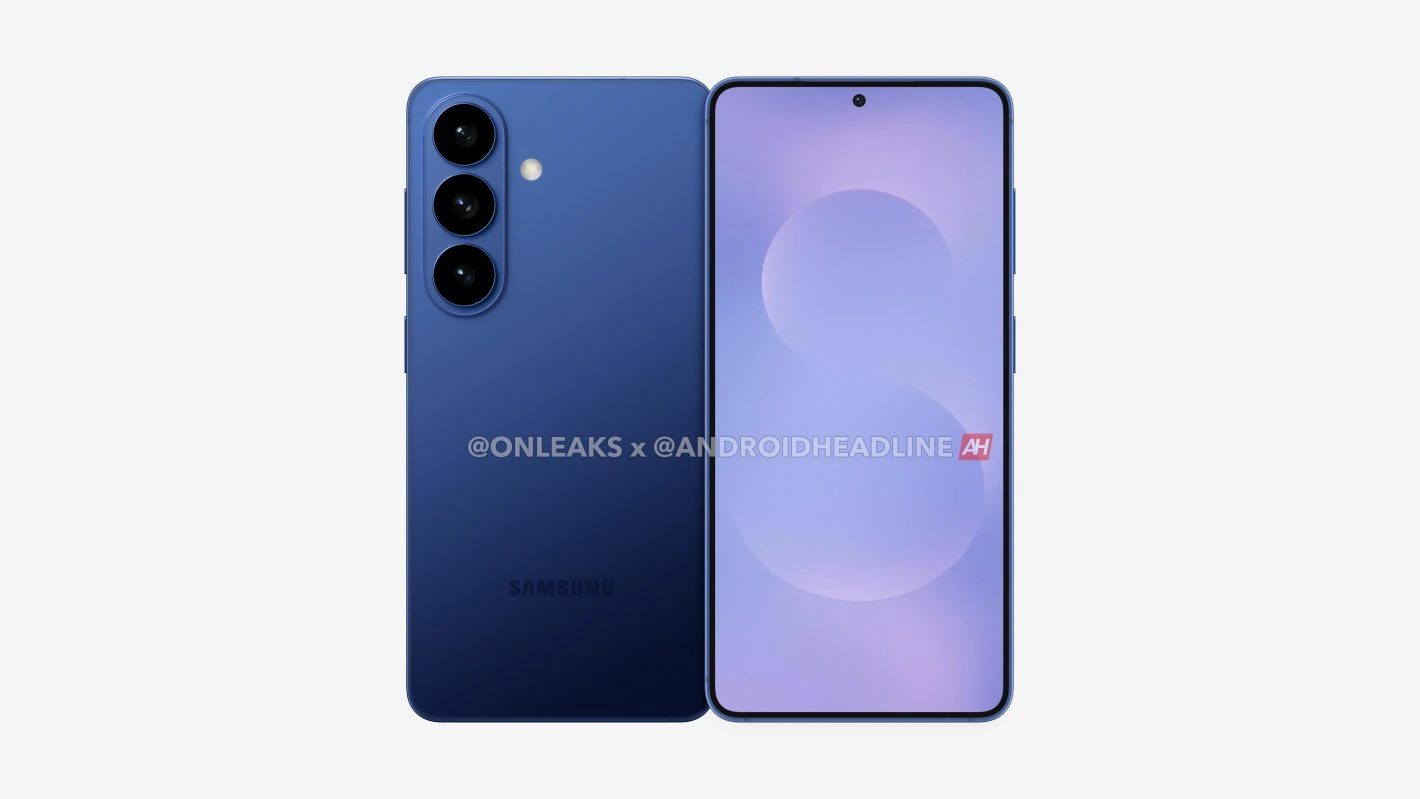
For a company that loves to talk about engineering finesse, that sounds like moving backwards.
The explanation, however, has little to do with engineering and everything to do with Apple. Samsung reportedly expected Apple to bump the iPhone 17’s starting price, giving the Korean giant room to launch a sleeker Galaxy S26 with a bigger battery at a higher tag without looking greedy. Instead, Apple is said to have held the iPhone 17 line at the familiar $799 in the US. That one decision seems to have sent Samsung back to the drawing board, forcing it to shave component costs to hit the same price point.
If these reports are accurate, Samsung basically faced a brutal choice: keep the original 6.9 mm / 4,900 mAh design and risk pricing the S26 above Apple’s iPhone 17, or sacrifice some of those upgrades to stay locked at the psychologically important $799. The company appears to have chosen price alignment over spec bragging rights, trimming battery capacity and relaxing its obsession with thinness so the vanilla S26 can go toe-to-toe with Apple on the shelf.
For a lot of longtime Galaxy fans, that logic feels upside-down. They watched Apple pack more value into the iPhone 16 and, reportedly, the iPhone 17 generation without raising the sticker, while Samsung barely moved the needle from the Galaxy S24 to S25. Now, instead of finally pushing the base model forward with a bigger battery and more refined design, the S26 may actually be a step back in some areas just to avoid a price hike. It is not hard to see why some users are calling Samsung’s leadership out as out of touch, even accusing management of slowly strangling the smartphone division with short-term thinking.
There is also the everyday practicality angle. A thicker phone is not inherently bad – extra millimeters can improve grip, heat dissipation, and drop durability. But pairing a thicker frame with a smaller battery flies in the face of what many buyers want. People who prefer the vanilla Galaxy over the Ultra usually want something relatively compact, light, and easy to use one-handed, yet still capable of lasting the whole day. Pushing the S26 closer to “mini-tablet” territory while cutting battery capacity feels like the worst of both worlds to those fans who were hoping for a truly portable flagship.
The rest of the Galaxy S26 family is said to be following a different script. The Galaxy S26+ reportedly keeps both its thickness and battery capacity roughly in line with the S25+, suggesting Samsung sees that model as already balanced enough. The real engineering flex appears reserved for the Galaxy S26 Ultra: rumor has it the Ultra will squeeze the same 5,000 mAh battery found in the S25 Ultra into a body that is about 0.3 mm thinner. On top of that, the S26 Ultra is expected to debut Samsung Display’s new “Flex Magic Pixel” technology, which lets users electronically enable a privacy screen effect without adding a separate matte or privacy film on top of the glass.
Performance-focused users also have another concern: chip choice and efficiency. Many enthusiasts want Samsung to keep leaning into Apple-level power efficiency while avoiding unnecessary weight and bulk on the base model. They are already pleading for a global Snapdragon variant fabricated by TSMC, rather than a split between Snapdragon and Exynos, precisely because they associate TSMC silicon with better thermals and battery life. If Samsung is cutting capacity on the S26, then getting every last percent of efficiency from the chipset becomes even more critical.
And then there is the value equation beyond the sticker price. If Apple really ships the iPhone 17 with 256 GB of base storage while Samsung sticks the S26 at 128 GB for the same $799, the Galaxy may actually be more expensive in real-world terms. Storage matters: between bigger apps, high-resolution photos, and 4K (or even 8K) video, 128 GB fills up fast. A lot of buyers will look past the marketing and simply ask, “Why does this phone with half the storage cost the same as that one?” In that scenario, Samsung’s attempt to match Apple on price could still end up feeling like a bad deal.
Ultimately, all of this remains unofficial until Samsung takes the stage and shows the final Galaxy S26 lineup. Still, the reports highlight a tension that every big phone maker is struggling with: rising component costs, fierce competition from Apple, and buyers who now expect better specs and stable prices. If Samsung really is thickening the S26 and shrinking its battery purely to avoid stepping above $799, it will need to compensate with smarter chips, longer software support, better cameras, or meaningful new experiences like Flex Magic Pixel to win back enthusiast trust. Otherwise, the loudest critics might be right when they say the company is saving a few dollars today at the cost of long-term loyalty tomorrow.