Valve is getting ready to take another shot at the living-room PC with a new generation of Steam Machine, and this time the company sounds much more confident. The original Steam Machines promised console-like simplicity with PC flexibility, but they arrived in a world where Linux gaming was still a niche, the catalogue was tiny, and developers had little incentive to support yet another platform. In 2025, the landscape looks very different: Proton is mature, SteamOS has been heavily optimized thanks to the success of the Steam Deck, and Valve believes the software stack has finally caught up to the hardware.
In an interview with Rock Paper Shotgun, Valve engineer Yazan Aldehayyat openly admitted that the first wave of Steam Machines ran into a brutal reality: there simply were not enough games that worked well on SteamOS. 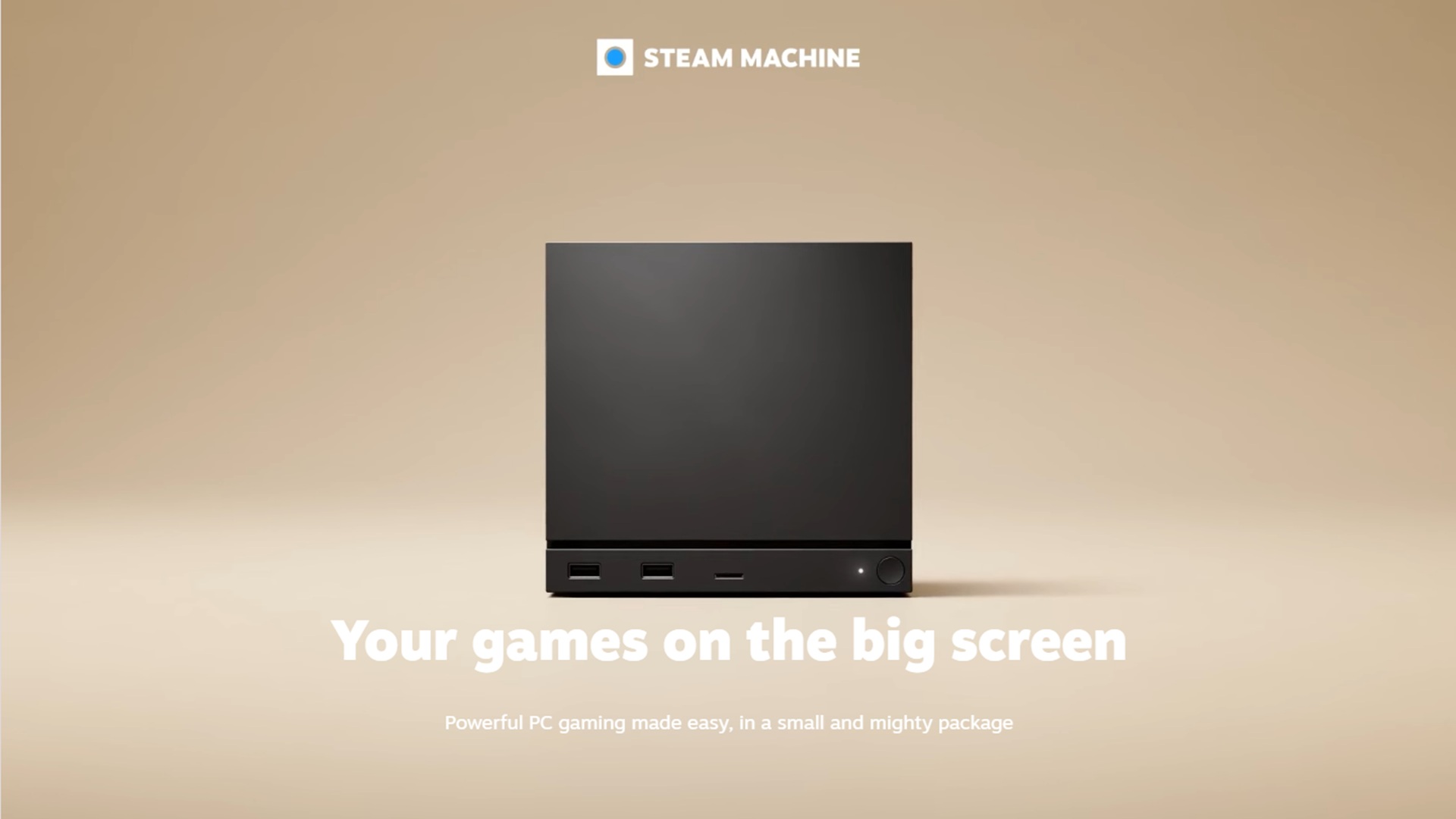
Most PC titles were built only for Windows, and while tools like Wine existed, they were difficult for players and developers alike. Getting a big, popular game to run smoothly on Linux often meant a lot of extra engineering effort for a tiny audience. The promise of a console-like experience was there, but when players booted the machine and found that large chunks of their library just did not work, enthusiasm evaporated fast.
That experience shaped Valve’s new strategy. Aldehayyat notes that the company learned it had to make life easier not just for players, but for developers. The result is Proton, Valve’s compatibility layer that lets Windows games run on Linux with minimal or no extra work from the studio. Instead of begging developers for dedicated Linux ports, Valve built a technology layer that quietly handles the heavy lifting. Co-creator Pierre-Loup Griffais has repeatedly highlighted that Proton and SteamOS have matured in parallel with the Steam Deck: every bug fixed for the handheld, every performance optimization, every new graphics feature essentially feeds back into a future Steam Machine by default.
That evolution solves the biggest problem the old boxes faced: the catalogue. From day one, the new Steam Machine is expected to tap into the enormous library already running on Steam Deck and modern SteamOS builds. Where the original systems felt like a strange experimental branch of the Steam ecosystem, the new machine looks more like an extension of what already works. The interface aims for console-like simplicity – pick up a controller, sit down on the couch, and navigate a big-screen UI instead of a traditional desktop – but behind the scenes you are still on a PC, with cloud saves, mods (where supported), and the familiar Steam ecosystem.
Hardware-wise, Valve is not pretending this box is a monster capable of brute-forcing every modern game at max settings. The current specifications place it somewhere between an Xbox Series S and a PlayStation 5 in raw performance. On paper, Valve is targeting up to 4K at 60 Hz output, but that does not mean Cyberpunk 2077 at ultra settings will magically stick to 60 fps. Early impressions suggest demanding titles may need a mix of dynamic resolution scaling, clever presets, and more modest expectations. The 8 GB of VRAM is already raising eyebrows in the enthusiast crowd, with some users dismissing the GPU configuration – often summarized as “28 CU” in community leaks and discussions – as underpowered for a box that dares to talk about 4K. That criticism is not entirely unfair: as textures, ray tracing and next-gen effects continue to grow, memory becomes a hard ceiling.
Yet Valve’s bet is that smart software will matter as much as raw specs. SteamOS has been tuned heavily for the Steam Deck, and the new Steam Machine benefits from the same low-level work: reduced overhead, better scheduling for modern CPUs, and ongoing improvements to Vulkan and graphics drivers. Valve says it has done “a tonne of work on desktop performance, ray tracing, and all that stuff,” and the goal is for those optimizations to flow directly into the living-room box. On top of that, developers have already shown they are willing to support Valve’s ecosystem when the audience is there. Baldur’s Gate 3, Cronos: The New Dawn and many other titles have received native or highly optimized builds for Steam Deck, with presets that understand the device’s strengths and weaknesses. If the new Steam Machine can approach the Deck’s popularity, it is easy to imagine dedicated presets or even Steam Machine–specific builds that squeeze more out of the hardware than raw specs suggest.
There is also a psychological difference this time. The original Steam Machines felt like a risky side project partnered with third-party manufacturers; the Deck, by contrast, proved that Valve can ship its own hardware, support it over time, and steadily improve the software stack instead of forgetting about it after launch. Players have now seen Proton evolve from an experimental layer into something that can handle blockbuster releases on day one. That track record matters when you are asking people to trust another Linux-based gaming device. A mid-range machine that consistently delivers a smooth 1080p or 1440p experience – even if it occasionally dips at 4K – could be more than enough for the audience Valve is targeting.
Still, with the library problem largely fixed and the software side in far better shape, one big question remains: price. The new Steam Machine is scheduled to arrive early next year, but Valve has not yet confirmed how much it will cost. Aldehayyat has hinted that pricing will be “very competitive,” which it needs to be. Console buyers are already trained to look at Xbox and PlayStation bundles, while PC fans are constantly weighing the cost of a prebuilt system against building their own rig. If Valve can land the Steam Machine in a sweet spot – cheaper than a full gaming PC, competitive with a console, and powerful enough to comfortably handle modern games at sensible settings – then it could finally achieve what the original Steam Machines never did: make Linux gaming in the living room feel like a natural, mainstream choice instead of an experiment.
For now, cautious optimism is justified. The hardware is not the dream machine some enthusiasts hoped for, and the “28 CU” complaints about GPU muscle and 8 GB of VRAM will not magically disappear. But Valve’s renewed focus on software, Proton compatibility, and a massive out-of-the-box game library mean the new Steam Machine is starting the race on much firmer ground than its predecessors. Whether it ultimately becomes a staple under the TV or another interesting footnote in PC gaming history will depend on how well Valve balances performance, price, and the expectations of a community that has become used to both console simplicity and PC-level ambition.
2 comments
First Steam Machines died cuz you booted them up and half your games just said nope. If that’s fixed now, Valve actually has a shot
Steam Deck proved Valve can support hardware long term. If they treat this box the same way, I’m in, even if I’m stuck at 1440p not 4K