Intel’s artificial intelligence story has been a roller coaster of bold promises, slipped schedules and half-delivered roadmaps. Now CEO Lip-Bu Tan is stepping onto the track himself. After a period of visible turbulence in Intel’s AI leadership, capped by the unexpected departure of AI chief Sachin Katti to OpenAI, Tan has told employees he is taking direct control of the company’s AI strategy and roadmap execution. 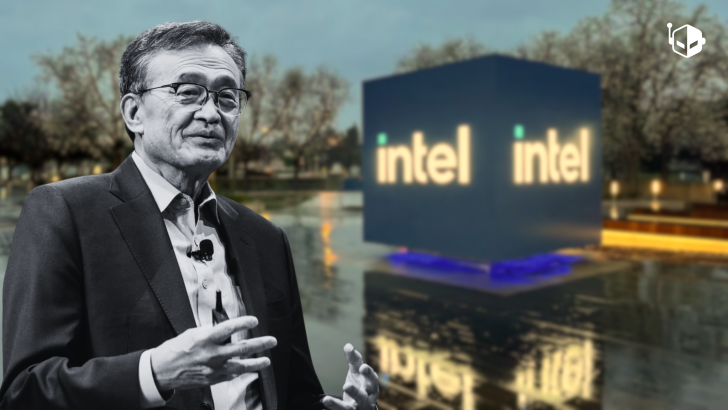
For a company that has been mocked for years as the king of “roadmaps on slides” rather than shipping silicon, this is more than a cosmetic reshuffle – it is a high-stakes bet that one leader, with a turnaround pedigree, can force Intel’s sprawling AI efforts into a coherent, competitive plan.
Inside the company, Tan reportedly acknowledged the “considerable change” AI teams have been through in recent months and promised to work directly with leadership to refine strategy and, crucially, ensure consistent execution of Intel’s advanced technology roadmap. That wording is not accidental. Consistency has been Intel’s Achilles heel in AI and data center over the past decade: architectures renamed mid-cycle, products delayed, and slideshows that aged badly as competitors shipped what Intel had only teased.
The leadership shake-up is dramatic. With Katti gone and other senior figures exiting, Intel has sharply trimmed the hierarchy around its AI division. Instead of multiple layers between engineering teams and the top floor, Tan is positioning himself at the center of decision-making. Supporters see this as a necessary move: when everything is on fire, you want the person with the fire hose, not another committee. Critics, including many in the enthusiast community, worry it could turn into a one-man bottleneck and yet another excuse for more glossy presentations rather than hard silicon.
That community skepticism matters because Intel’s reputation problem is as much cultural as technical. For years, rival fans have joked that Intel’s strongest product is the S++ PowerPoint deck: immaculate roadmaps, polished marketing, and then… a quiet delay notice. Jokes about “roadmaps for the roadmap slides” and endless engineering samples that never quite reach volume have become memes. Tan’s decision to take direct control is, in part, a response to that perception. If he can turn those slides into a predictable cadence of real AI hardware, Intel’s image shifts from punchline to contender.
There are, to be fair, signs that the underlying technology is not the problem. Under Katti, Intel started to articulate a clearer AI narrative, with initiatives like the “Crescent Island” AI accelerator and an annual product cadence meant to finally align data center, edge and client AI offerings. On the client side, chips like the Intel Core Ultra X7 358H – already popping up in early benchmarks as an AI PC workhorse – hint at a roadmap where NPUs, GPUs and CPUs work together to accelerate AI workloads instead of bolting them on as an afterthought. The question is not whether Intel can design interesting parts; it is whether those parts arrive on time, at scale, with competitive performance-per-watt and software support.
Tan’s track record gives some reason for optimism. His previous leadership at Cadence is often cited as an example of a successful turnaround in a complex, engineering-driven business. He understands ecosystems, not just chips: design tools, developer relations, and long-term roadmaps that customers can actually trust. Bringing that mindset to Intel’s AI division could mean fewer fragmented side projects and more unified platforms, where data center accelerators, Ethernet, packaging, and client AI all plug into a single story instead of competing for internal oxygen.
At the same time, the external pressure has never been higher. Nvidia, under Jensen Huang, defines the current AI era with GPUs and CUDA. AMD, led by Lisa Su, has carved out a position as the efficient alternative with increasingly capable accelerators and CPUs. Many observers are already framing the next chapter as “Lip-Bu vs Lisa Su,” with Huang looming over both as the incumbent champion. Intel is no longer defending an automatic first place; it is climbing from the bottom, trying to prove it can still innovate when it is the underdog instead of the default choice.
There are real risks in concentrating AI strategy in the CEO’s office. If Tan’s team cannot translate his vision into crisp roadmaps with realistic dates, Intel could end up with even more internal churn. Engineers are weary of sudden resets; customers are tired of betting on timelines that slip. To succeed, Tan will have to do more than approve slide decks. He will need to empower teams to ship, kill zombie projects quickly, and align software, drivers and toolchains so that deploying on Intel AI actually feels easier instead of more complicated than using the competition.
For now, the move sends a clear signal: Intel knows its AI story is not convincing enough, and it is willing to put the CEO’s name directly on the fix. Over the next 12 to 24 months, the proof will show up not in memos but in silicon: shipping Crescent Island-class accelerators, robust AI PC chips like the Core Ultra X7 358H in real laptops, and a roadmap that stays stable long enough for customers to build around. If Lip-Bu Tan can turn Intel’s infamous slideware into a reliable, execution-focused AI platform, this moment will be remembered as the start of a genuine comeback. If not, the jokes about “roadmaps for roadmap slides” will only get louder.