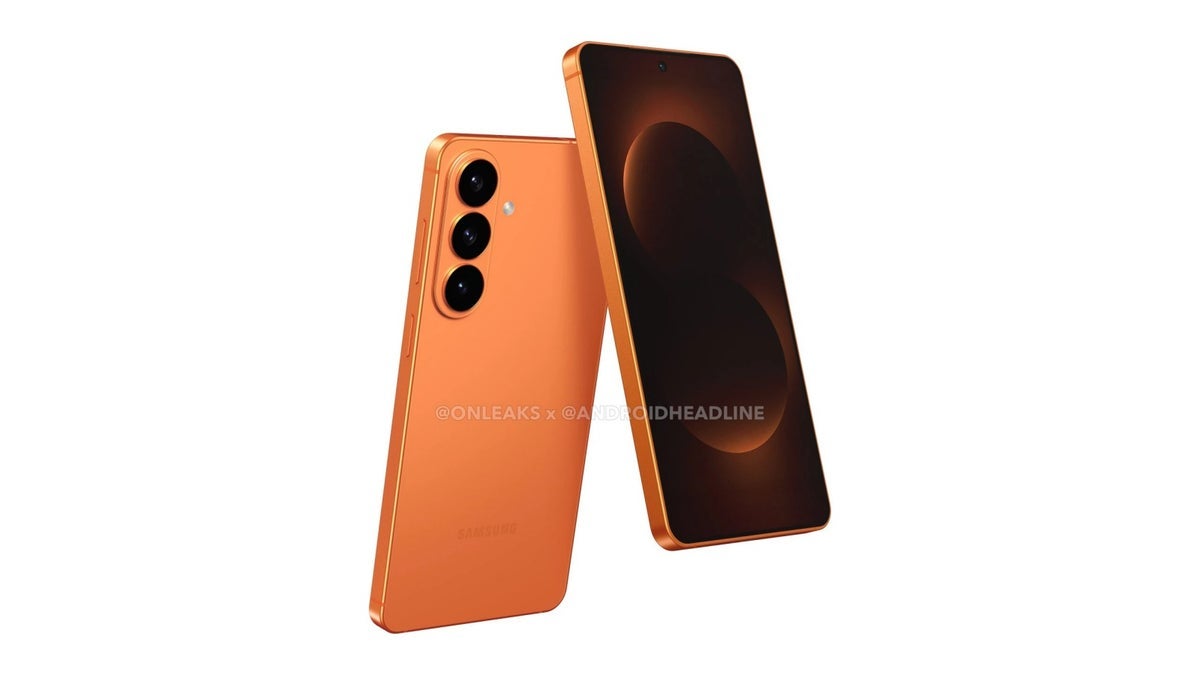
Galaxy S26 price leaks suggest Samsung may sacrifice thinness to save your wallet
The next big launch in Samsung’s flagship calendar is already looming on the horizon. The Galaxy S26 family is widely expected to arrive around January or February next year, and while Samsung’s engineers are still putting the finishing touches on the phones, leakers are busy sketching out what we should expect. The hottest question right now is not the camera setup or the chipset, but something far more down to earth: how much the Galaxy S26 will cost and whether Samsung can afford not to raise prices in a world where every component seems to be getting more expensive.
A new leak hints at unchanged Galaxy S26 prices
According to tipster @jukanlosreve on X, Samsung is currently trying to keep the Galaxy S26 family at the same price levels as the Galaxy S25 line. That would mean a starting price of 799 dollars for the base model in the United States, mirroring this year’s flagship and matching what Apple is reportedly targeting for the entry level iPhone 17. Earlier industry chatter suggested that rising costs for processors, camera modules, storage and even logistics would push Samsung to bump prices, but this latest report claims the company is fighting hard to avoid that scenario.
The key detail in the leak is not that prices are magically immune to inflation, but that Samsung has allegedly changed its internal priorities. Instead of chasing record breaking thinness and ultra premium design tricks, the brand is said to be focusing on keeping the sticker price palatable. Flagship phones are already expensive enough, and Samsung appears to believe that holding the line at 799 dollars could be a bigger competitive advantage than releasing the absolute slimmest device in the room.
From ultra thin dreams to more practical compromises
If the leak is accurate, Samsung’s designers got surprisingly close to delivering a dramatic design overhaul. Insiders reportedly claim that a Galaxy S26 prototype measuring just 6.9 mm in thickness was nearly finalized, shaving around 0.3 mm off its predecessor. That might sound tiny on paper, but at this level even fractions of a millimeter require serious reengineering of the frame, internals and thermal management. The company apparently chose to abandon this ultra thin direction relatively late in development, preferring a slightly thicker and less radical design that is cheaper to manufacture at scale.
The trade off does not end with the metal and glass shell. The same leak says Samsung had ambitious battery plans for the Galaxy S26. Early targets allegedly called for a jump from the 4,000 mAh cell inside the Galaxy S25 to a hefty 4,900 mAh pack, which would have been a headline upgrade for endurance. Instead, the company is now expected to settle on a 4,300 mAh battery for the standard S26. That is still a respectable bump on paper, but it no longer sounds like the revolution some enthusiasts had hoped for when early whispers of a near five thousand milliamp hour cell started going around.
Why battery and price matter more than a paper thin profile
On the surface, dropping a thinner body and dialing back battery ambitions may sound disappointing. However, it speaks to a growing realization across the industry: most people care far more about how long their phone lasts and how much it costs than about winning a thickness contest. Daily life for a modern flagship involves bright displays, 5G radios, camera heavy social use and gaming sessions that can melt through battery percentage bars. An extra few hundred milliamp hours often makes more real world difference than shaving tenths of a millimeter from the frame.
Samsung has also learned from the reaction to this year’s ultra slim experiments. Devices like the Galaxy S25 Edge and Apple’s iPhone Air grabbed attention with their impossibly sleek silhouettes, but they also sparked complaints about smaller batteries and aggressive thermal tuning. Beautiful phones that need a power bank by mid afternoon can end up as shelf queens rather than daily drivers. If interest in these super slim models has indeed been softer than expected, it would not be surprising to see Samsung pivot back toward slightly chunkier but more practical flagships.
Thin phone trend faces a reality check
The broader smartphone market has spent the last year obsessed with thinness. Nearly every major manufacturer has showcased a model that shaves off a little more depth, hoping to stand out in a landscape where performance and camera quality are already extremely high across the board. Marketing campaigns have celebrated side profiles and glamour shots as much as benchmarks. For a while, it seemed inevitable that the Galaxy S26 series would follow the same script and chase the thinnest possible chassis.
Yet design trends always collide with physics sooner or later. To build a significantly slimmer flagship while cramming in higher capacity batteries, larger camera sensors and more advanced cooling, brands need breakthroughs in materials and battery chemistry. The rumor that Samsung could make the S26 both thinner and almost one thousand milliamp hours larger in capacity raised eyebrows precisely because it sounded like the kind of leap that would normally require next generation tech, such as silicon carbon batteries, to become reality. The latest leak suggesting a more modest 4,300 mAh pack makes far more sense from an engineering standpoint.
Take the leak with caution, but the direction looks plausible
It is worth stressing that @jukanlosreve is not considered one of the most bulletproof sources in the leak community. Until official announcements land on stage at a Samsung event, all of this remains speculation. Internal roadmaps change, prototypes get scrapped and pricing can be adjusted at the last minute depending on currency fluctuations and negotiations with carriers. Still, the general direction described by the leak fits what we are seeing from consumers and competitors: less obsession with unrealistic thinness, more attention on value and endurance.
Earlier rumors even suggested that the Galaxy S26 lineup could be reshuffled, with an Edge model replacing the Plus and a Pro variant taking over from the vanilla version. For now, those dramatic changes look less certain, but they show how fluid Samsung’s planning has been. The only safe bet is that the company wants a clear, easy to understand story when the S26 finally launches: a modern flagship that feels worth the asking price, not a fragile design showcase that forces too many compromises.
What a 799 dollar S26 would mean for buyers
If Samsung does manage to hold the base Galaxy S26 at 799 dollars, it could be one of the strongest selling points of the series. Our impressions of the Galaxy S25 at that same price were already positive, especially given that it packed a dedicated telephoto camera and a surprisingly complete feature set for a non Ultra model. Matching that ticket while improving performance and endurance, even without radical battery gains, would keep Samsung in a strong position against rivals that are quietly inching prices upward.
Keeping prices flat is not just about headline numbers, either. In many markets, that 799 dollar figure translates into monthly carrier payments, trade in values and promotional bundles that are easier for shoppers to swallow. With cost of living pressure still high in many regions, a new Galaxy S26 that feels more capable but does not climb into a new price tier could be an easy upgrade path for owners of older S series phones who skipped recent generations because of cost.
Maybe the thin era was never meant to last
For design fans, the idea that the ultra thin era might be fading could be bittersweet. There is no denying that a razor slim phone looks fantastic on a desk or in a product photo. The way light catches those sharp, minimal edges can make any tech lover’s heart flutter a little. Pocketability and comfort in hand also benefit from shaving off excess bulk, especially for people with smaller hands or tight jeans pockets.
But once the honeymoon phase ends, the trade offs become obvious. A phone that is almost weightless but gasps for power by late afternoon quickly stops feeling premium and starts feeling like a problem. Many users quietly vote with their wallets for devices that last longer, even if they are a millimeter thicker or a few grams heavier. Judging by the reportedly muted demand for some of the most extreme slim flagships from Samsung and Apple, the market may be signaling that the pendulum is swinging back toward practicality.
Battery, price and balance: the new flagship priorities
In that context, the rumored Galaxy S26 strategy sounds refreshingly grounded. A slightly thicker phone with a sensible 4,300 mAh battery and a familiar 799 dollar starting price might not dominate headlines the way a 6.9 mm, 4,900 mAh unicorn would, but it is likely to age better in buyers’ pockets. For many people, the dream flagship is not the one that looks wildest in a press render, but the one that still has 30 percent charge left at night and did not require an extra loan to purchase.
There is still a lot we do not know about the Galaxy S26 series: camera upgrades, chipset choices, AI features and possible charging improvements could all end up defining the phones more than thickness or exact battery numbers. With months to go before launch, more leaks will undoubtedly appear, and some may even contradict what we are hearing now. For the moment, though, the picture that emerges is of Samsung quietly rebalancing its priorities. If that means a steadier price tag and better everyday usability rather than another round of design gymnastics, many users will be perfectly happy with the trade.