Valve is returning to the hardware spotlight with one of its most ambitious devices yet: the Steam Frame VR headset. Positioned as both a powerful PC VR viewer and a fully standalone gaming machine, the Steam Frame sits alongside Valve’s other experimental hardware efforts such as the Steam Machine and the Steam Controller, while borrowing lessons from the hugely successful Steam Deck. 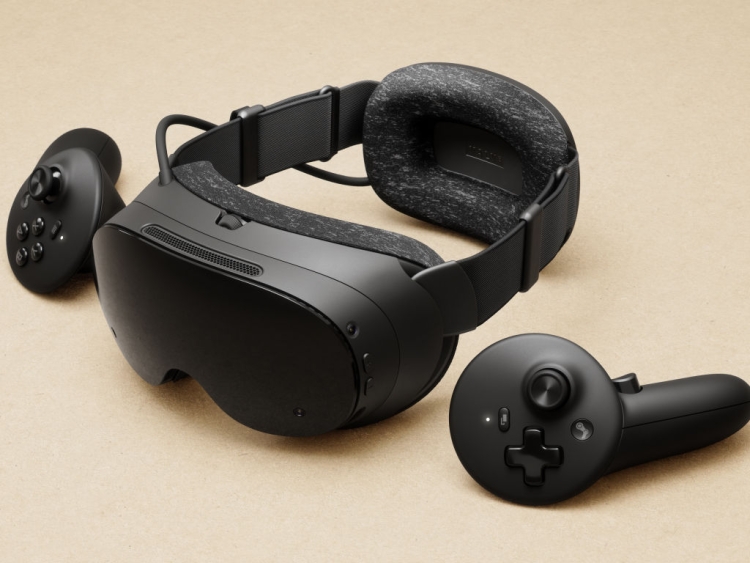
On paper, it looks like Valve’s clearest attempt so far to define what the next generation of PC-centric virtual reality should feel like.
At its core, the Steam Frame is a hybrid device. Plug in the included wireless adapter to your gaming PC, Steam Machine, or Steam Deck, and the headset becomes a high-end streaming display that pulls games directly from your existing hardware. Thanks to dual radios in the adapter, one connection is reserved for low-latency game streaming while the other remains free for your regular Wi-Fi traffic, reducing congestion and helping to keep your frame times stable even when your home network is busy.
Unlike many earlier VR headsets that were essentially just high-resolution monitors strapped to your face, the Steam Frame goes much further. Inside the visor is a Qualcomm Snapdragon 8 Gen 3 chipset paired with 16GB of LPDDR5X memory, effectively turning the headset into a compact SteamOS PC. Storage options include 256GB or 1TB of UFS internal storage, and users can expand it further with a microSD card. A 21.6Wh battery powers the whole system, allowing the headset to run games natively without any wired or wireless connection to another device.
This standalone mode is one of the Steam Frame’s biggest differentiators. Instead of being limited to a curated mobile catalog, Valve wants you to access a large portion of your existing Steam library. To make that happen, the headset uses an emulator called Flex, which dynamically translates traditional x86 PC games to run on the ARM64 architecture of the Snapdragon chip. While there are inevitably performance and compatibility caveats with this kind of on-the-fly translation, Valve plans to ease the burden over time by offering preconverted builds of popular x86 titles so they can run natively on the headset without heavy emulation overhead.
Visual fidelity is another major focus. The Steam Frame uses dual 2160×2160 LCD panels, one for each eye, with refresh rates that can vary between 72Hz and 144Hz depending on the title and performance profile. That resolution sits firmly in the high-end PC VR range, aiming to deliver crisp text, readable UI elements, and sharp environmental details. To handle the large data requirements of such high resolutions over a wireless link, Valve employs foveated streaming: only the region of the image you are actively looking at is transmitted at full quality, while the rest of the frame is rendered at lower detail to save bandwidth and processing power.
This intelligent prioritization is made possible by a pair of inward-facing eye tracking cameras embedded in the headset. These sensors follow your gaze in real time, constantly updating where the foveated sweet spot should be. Beyond streaming efficiency, eye tracking can also enable more natural UI interactions and experimental gameplay mechanics where characters react to where you are looking, although Valve has not yet detailed specific implementations.
On the outside of the Steam Frame, four high-resolution monochrome cameras form the backbone of its inside-out tracking system. These sensors watch your environment, controllers, and headset movement, eliminating the need for external base stations. Infrared LEDs integrated into the design help the cameras maintain accurate tracking even in dim rooms, making late-night gaming sessions more practical. For audio, the headset uses built-in stereo speakers tuned to force-cancel each other’s vibrations, which should reduce rattling and keep the headset more comfortable during long sessions while still providing an open-ear soundstage.
Valve is pairing the headset with a split controller layout that feels familiar to anyone who has used a modern gamepad. Each side mirrors a traditional controller half, with analog sticks, face buttons, and triggers arranged to work in both VR and flat-screen modes. Under the hood, these controllers feature Valve’s second-generation magnetic joysticks, a refinement over the design introduced on the new Steam Controller. The aim is to combat stick drift and provide smoother, more reliable input over time. Power comes from a single AA battery in each controller, with Valve claiming around 40 hours of use per cell, which should cover many gaming sessions before you need to swap or recharge.
Because the Steam Frame is effectively a tiny PC and VR headset in one, its potential goes beyond traditional Steam games. Valve says Android titles will run natively on the Snapdragon 8 Gen 3, opening the door to mobile games, media apps, and streaming clients without the need to juggle multiple devices. That flexibility could make the headset attractive not only to PC enthusiasts, but also to users who want a single portable screen for everything from indie games to cloud streaming and productivity.
To smooth the launch, Valve will release a Steam Frame developer kit ahead of the consumer rollout. This early hardware should give studios and tinkerers time to optimize performance, experiment with eye-tracked interaction, and test how well their titles behave under the Flex emulator. Over the long term, the combination of preconverted game builds, continuous SteamOS updates, and feedback from developers may determine whether the Steam Frame becomes a staple of PC VR setups or remains another intriguing, niche Valve experiment.
Valve currently plans to ship the Steam Frame VR headset in early 2026, with final pricing still under wraps. Positioned between PC-bound headsets and fully closed standalone ecosystems, the device tries to blend the openness of Steam with the convenience of all-in-one VR. If Valve can deliver on its promises for streaming reliability, x86-to-ARM64 compatibility, and long-term software support, the Steam Frame could end up being the most flexible way to experience VR and traditional gaming from the Steam library in the coming years.
2 comments
Hope they nailed the comfort this time, my neck still remembers early VR headsets 😅
AA batteries in 2026 is wild but tbh 40h per controller is kinda nice