Valve has finally lifted the curtain on its next big hardware push, confirming that the company is not just making another handheld but a full living-room PC. Announced alongside the Steam Frame VR headset and a new Steam Controller, the compact Steam Machine is scheduled to arrive in early 2026 and has already earned a bunch of nicknames from fans, from GabeCube to Steam Cube. Under the memes, though, sits a very deliberate engineering story: Valve started the entire project not with specs or aesthetics, but with the one thing most console makers treat as an afterthought – cooling.
Instead of sketching a cute cube and cramming parts into it, Valve’s engineers began with a simple question: how much heat will this box have to throw out while people are playing modern games in real living rooms? Once they had a target thermal load, they could estimate how much air had to move through the chassis, which in turn dictated fan size, airflow paths, and ultimately the outer shell. 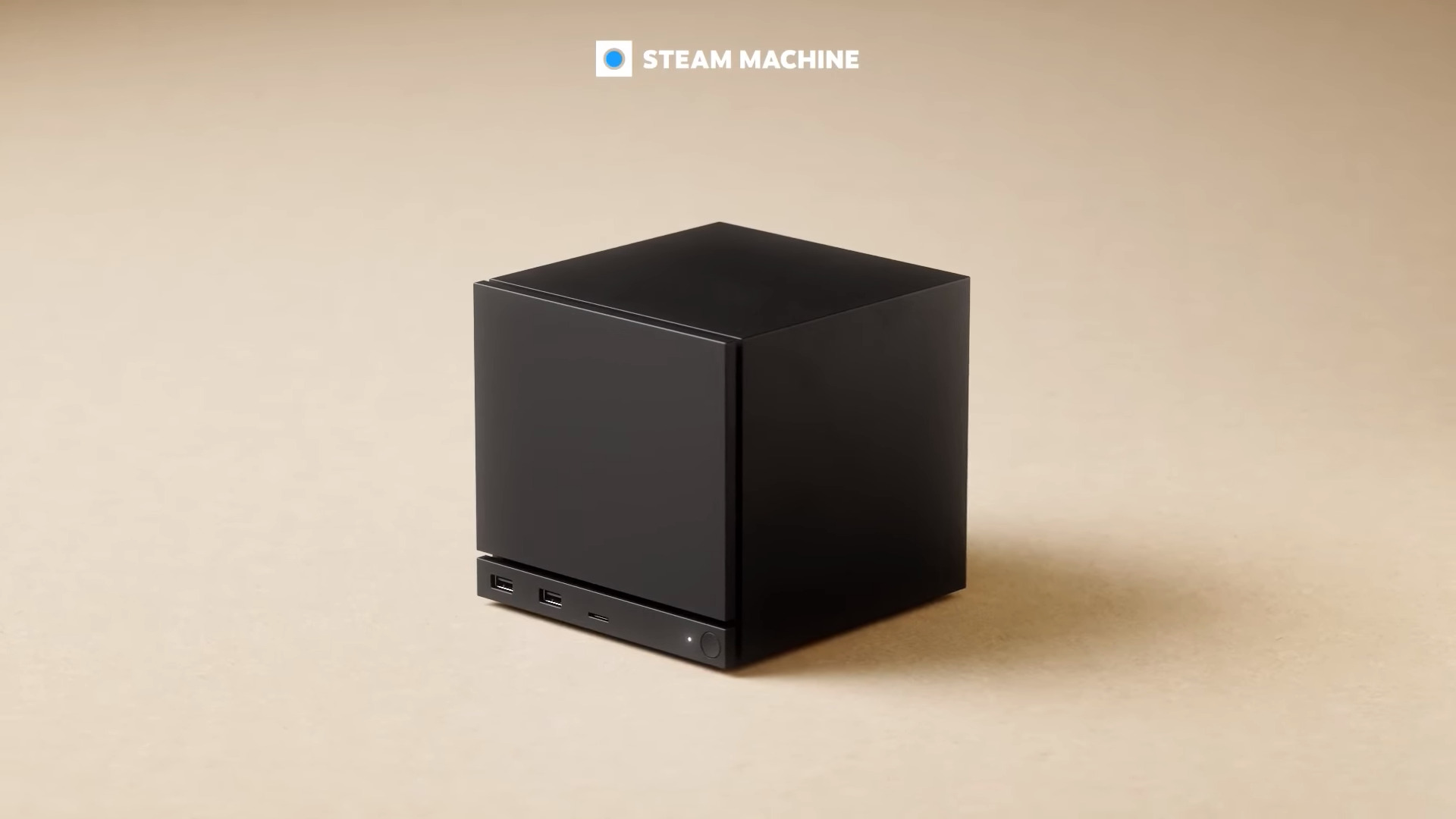
Lock in the fan, and the case almost designs itself around it. That cooling-first approach is why the Steam Machine looks deceptively minimal from the outside while hiding a very purpose-built interior.
Living rooms might look cozy, but from a thermal point of view they are brutal. Consoles are shoved into tight TV cabinets, sandwiched between soundbars, set-top boxes, routers, and hulking OLED TVs radiating heat. In some homes there is literally a fireplace warming the same air the console is trying to use for cooling. Valve is well aware that it cannot control how much dust is in your cabinet or whether a cat is napping on top of the box, but it can design a system that has generous ventilation, short and direct airflow routes, and a fan tuned to keep components within safe temperatures even when conditions are far from ideal.
The result is a console-like PC that aims to leap past the Steam Deck in performance without ballooning into a noisy mini-tower. Valve wants something that feels as immediate as a console – suspend, resume, couch gaming, Big Picture-style UI – while still leveraging the openness of Steam. That means the Steam Machine cannot be just another tiny HTPC box; it has to deliver stable framerates in modern games, manage acoustics for the living room, and survive long play sessions in cramped spaces. Designing from the cooling system outward gave Valve a realistic envelope for CPU, GPU, and power draw before anyone started dreaming up marketing slogans.
Of course, the PC crowd has already started scrutinizing the early spec sheets and leaks. Many players fixate on the rumored GPU configuration and its memory. The moment people saw 8 GB of video memory mentioned, comments flooded in complaining that most recent AAA titles want 12 GB or more if you insist on max settings at 1440p and above. That is the eternal tension between console-style design and enthusiast PCs: some folks sit there with overclocked rigs, fat GPUs, and 2 TB NVMe drives boasting that their monster machines are ten times more powerful than any tiny cube Valve could ship.
Valve clearly is not chasing that segment. The Steam Machine is aiming for a curated, consistent experience, where game settings are tuned to work well with the hardware and the thermal envelope instead of chasing benchmark glory. You will not beat a water-cooled desktop with a giant triple-slot GPU, but you will get something worlds more convenient to move, plug in, and live with. The company proved with Steam Deck that many players are happier with a well-balanced device than with a spec sheet war they can never truly win. The Steam Machine is the same philosophy translated from handheld to living-room box.
Visually, the cube jokes are not entirely unfair. At roughly 152 mm tall, 162.4 mm deep, and 156 mm wide, Valve’s box sits in the same size class as Nintendo’s legendary GameCube, which measured 110 mm by 161 mm by 150 mm. In other words, it is only a handful of millimetres larger, yet it is designed to run contemporary PC games instead of early-2000s discs. That contrast says more about how far technology has come than any synthetic benchmark ever could. Still, the design language is distinct: clean lines, modern vents, and a silhouette closer to a small piece of AV equipment than to a toy-like cube with a handle.
Inside, the cooling-first mindset is likely visible in separate thermal zones for CPU and GPU, carefully shaped ducts, and short runs between intake and exhaust. A compact device can quickly turn into a hair dryer if airflow is poorly planned, so the focus on minimizing turbulence and obstruction is not just engineering vanity – it directly affects fan noise and lifespan. Expect dust filters that are actually reachable, a layout that avoids baking the SSD next to the hottest parts, and fan curves tuned for a living room where people watch movies as often as they play games.
This hardware strategy slots neatly into Valve’s broader ecosystem. Steam Big Picture has long tried to turn PC libraries into couch-friendly experiences. With Steam Deck, Valve learned how to optimize games, drivers, and Proton settings for a specific configuration. The Steam Machine looks like the natural next step: a small, console-like PC that lives permanently under the TV, benefits from that same optimization work, and can also act as a companion to Deck or desktop depending on your setup. For those curious about VR, the fact that it debuts alongside the Steam Frame headset suggests Valve is thinking about the box as a hub for both flatscreen and virtual reality gaming.
As always with Valve, there is room for skepticism. Some people are disappointed that the raw specs are not chasing the latest high-end GPUs; others simply dislike the cube aesthetic and wish the company had gone for a slimmer, console-style slab. On the other hand, plenty of players seem charmed by the form factor and already call it GabeCube with genuine affection. Whether you love or hate the nickname, it is a reminder that design is about personality as much as thermals and fan curves.
What is hard to argue with is the ambition of designing a modern gaming PC not from the outside in, but from the heat outwards. Two and a half decades after the GameCube, Valve is shipping a similarly sized box that can run sprawling open-worlds and demanding shooters while sitting quietly next to a soundbar. If the company’s thermal math pays off in real-world living rooms – in dusty cabinets, near radiators, surrounded by other hot gadgets – then the Steam Machine could become the rare PC that genuinely deserves its spot at the center of the home entertainment setup, memes and monster PCs be damned.