RTX 5090 Melting Connector Fix: How Thicker 16-Pin Pins Are Changing the Game
The story of melting 16-pin power connectors on high-end NVIDIA GPUs just refuses to die. From the RTX 40 series and now into the RTX 50 series, enthusiasts have been sharing images of scorched plastic, browned pins, and vaporized adapters. For many PC builders, it feels like the same fire hazard has been smoldering for years. But a recent repair from a specialist in China hints at a very practical way forward: stop tweaking the plastic shell and start rethinking the pins themselves.
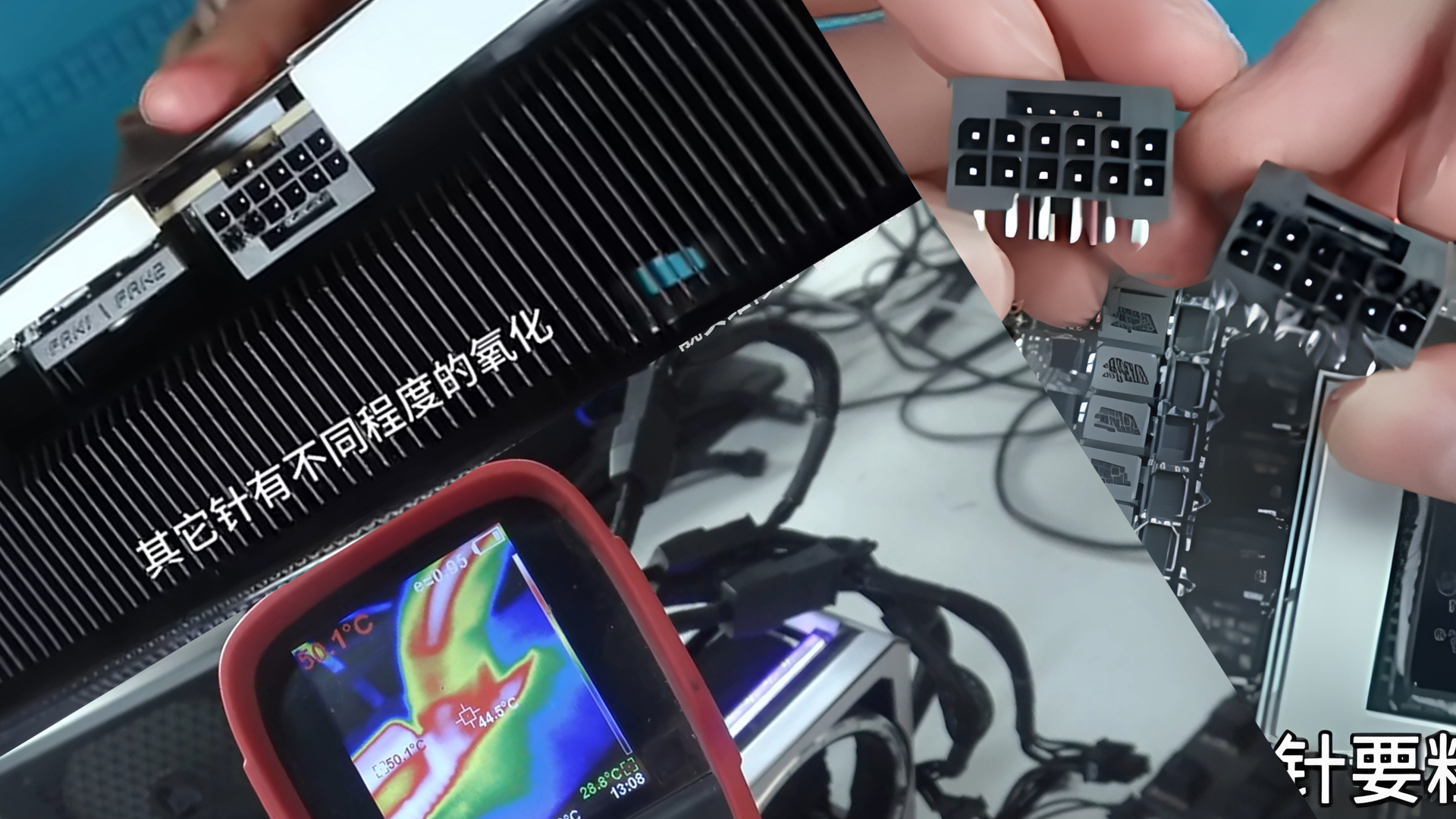
A female repair technician in China recently documented her work on a burned ROG Astral RTX 5090. The GPU arrived with the now-familiar sight of a melted 16-pin connector. Instead of simply swapping in the same fragile design, she replaced the original connector with a variant that uses noticeably thicker pins. The result wasn’t just cosmetic – it had a direct impact on temperatures and reliability.
Why the 16-Pin Keeps Melting
The 16-pin (12VHPWR/12V-2×6) connector is designed to carry serious power. On a card like the RTX 5090, you can be looking at around 600W under heavy load. That translates to roughly 9.2A per pin and about 55A total across the connector. In theory, that’s within spec. In practice, it’s a disaster waiting to happen if every single pin is not making solid, clean contact.
If a few pins don’t sit properly in the socket – maybe the plug isn’t fully inserted, the cable is bent sharply, or the connector tolerance is off – the current doesn’t just disappear. It gets redistributed across the remaining pins that are making contact. Those pins suddenly have to handle more than their share of the load, leading to dramatically higher temperatures, localized hotspots, and eventually a softened or melted connector housing. That’s how users end up with GPUs that smell like burnt plastic and cables that look like they’ve been hit with a soldering iron.
Manufacturers Tried Everything Except the Obvious
Board partners and cable makers have already tried several band-aid fixes: color-coded connectors to help users plug them in correctly, beefier adapters, more warning labels, and updated housings. None of that changes a basic reality: if the metal interface between card and cable is too delicate and too sensitive to minor misalignment, the system will remain fragile.
This is why the Chinese technician’s approach stands out. Instead of fiddling with external training wheels, she went after the heart of the problem – pin geometry.
Thicker Pins, Lower Temperatures
On the ROG Astral RTX 5090 she repaired, the original 16-pin connector was completely toasted. She desoldered the damaged socket and installed a replacement with visibly thicker metal pins. According to her measurements, after the repair the GPU was stress-tested at 600W full load, and the connector area hovered at around 45°C. That is a huge improvement when you remember that some problematic 16-pin implementations have been measured at temperatures exceeding 100°C and in extreme cases approaching 150°C.
The physics behind this are straightforward. Thicker pins have a larger cross-sectional area, which reduces their electrical resistance. Lower resistance means less heat generation for the same amount of current. On top of that, a physically more robust pin often creates better mechanical contact with the mating connector. That reduces micro-gaps, arcing, and the tiny points of high resistance that can snowball into a melt event.
Adapters Still a Risk, Even With Better Pins
Interestingly, the technician notes that this thicker-pin connector design has already prevented melting issues on many GPUs in her workshop and even behaves more safely when used with an adapter. That’s important, because a lot of the horror stories in the community have involved chunky 3x 8-pin to 16-pin adapters that ship in the box with certain graphics cards.
However, she still does not recommend using adapters unless you absolutely have to, and that’s a reasonable stance. Every extra plug, adapter, or extension is another failure point, another place where contact can be imperfect. A native, high-quality 16-pin cable from a modern PSU, mated to a connector with thicker pins on the GPU itself, is simply the cleanest and safest configuration.
Less “User Error”, More Engineering
One of the most frustrating parts of this saga for enthusiasts has been the constant drumbeat of “user error” whenever a connector melts. Yes, improper insertion and aggressive cable bending can make things worse. But when a design is so unforgiving that a slightly imperfect plug-in can destroy a four-figure GPU, that’s not just on the user – that’s on the standard.
By making the pins thicker and the contact more robust, manufacturers can make the connector much more tolerant of real-world usage. That means fewer mystery failures, fewer RMA headaches, and fewer photos of charred RTX cards circulating online. The technician’s experience suggests that once the thicker-pin connector is in place, the incidence of melting drops dramatically.
Time for GPU Makers to Catch Up
Right now, it looks like the 16-pin connector is here to stay for the RTX 50 series, including top-tier cards like the RTX 5090. That makes it even more urgent for GPU vendors and PSU manufacturers to embrace improved, thicker-pin designs instead of clinging to fragile early implementations.
Enthusiasts shouldn’t have to choose between cutting-edge performance and basic electrical safety, nor should they feel forced to stick with older 8-pin based GPUs just because they trust them more. The fix demonstrated on that ROG Astral RTX 5090 shows that better connectors are possible today – it’s just a matter of making them the default, not a backroom repair trick.
Until then, careful cable routing, fully seated connectors, and avoiding cheap adapters remain essential. But if the industry takes the hint from this repair specialist and rolls out thicker-pin 16-pin connectors across the board, we might finally see the end of the melting-connector era.
1 comment
God bless the oldschool 8pin designs, my card runs hot but at least the plug isn’t trying to become lava lol