NCSoft is gearing up for one of its most important MMORPG launches in years. During the company’s Q3 2025 financial report, the publisher confirmed that Aion 2 is targeting a global launch in the second half of 2026, setting the sequel up as a flagship release in its upcoming portfolio. 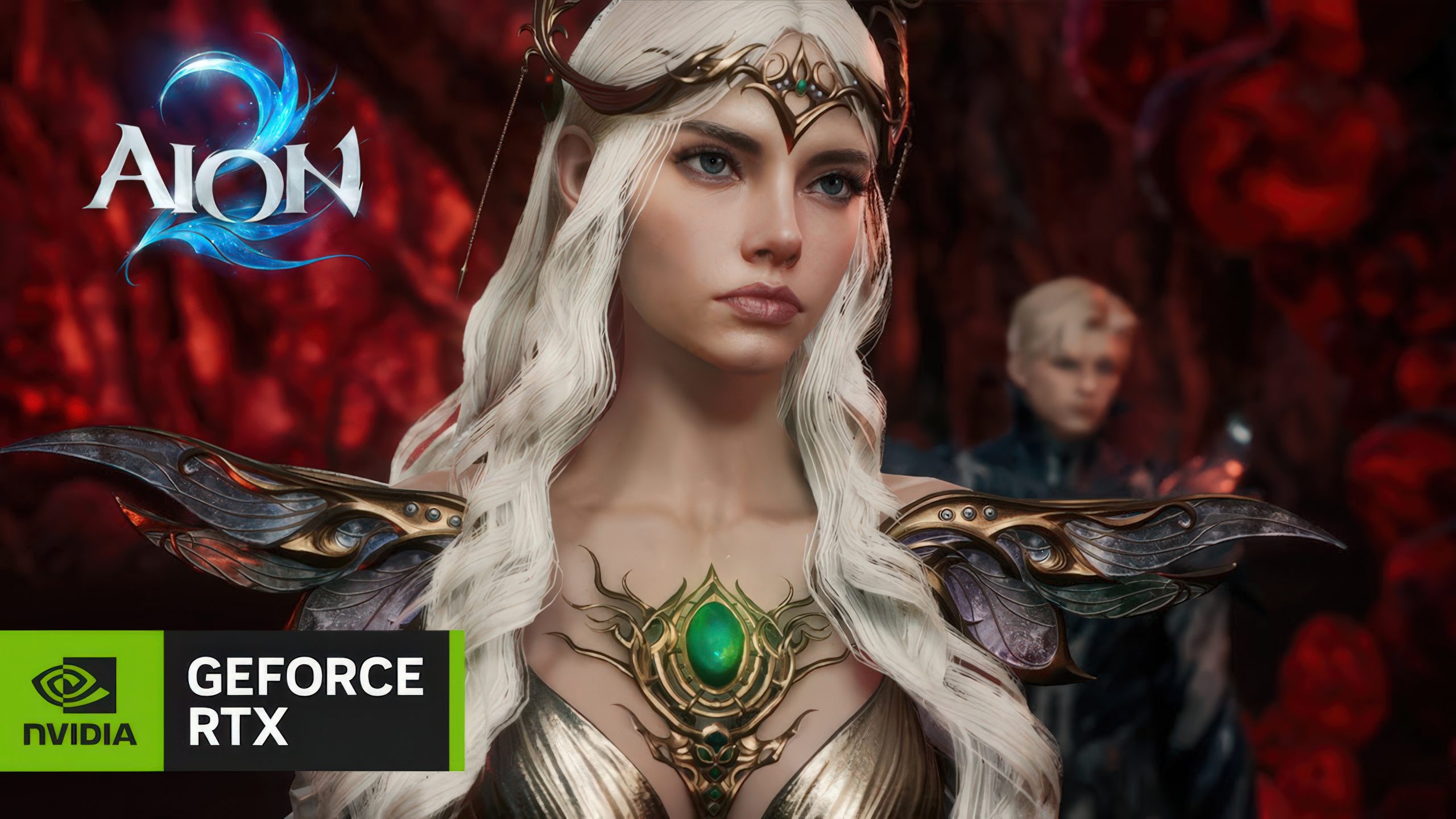
Before the worldwide rollout, the game will arrive first in South Korea and Taiwan on both PC and mobile, effectively serving as a live test bed for the rest of the world and a statement of intent after the mixed reception to Throne and Liberty.
Aion 2 is pitched as a true successor to the original 2009 classic rather than a loose spin-off. The story unfolds roughly 200 years after the events of the first game, once again throwing players into the eternal conflict between the Elyos and Asmodians but in a very different era. Old legends have faded into myth, political alliances have shifted, and the world of Atreia has been reshaped by time, creating a narrative bridge that lets veterans feel at home while giving newcomers a clean entry point into the saga.
The scale of that world is one of Aion 2’s biggest talking points. NCSoft estimates a game map of around 1,200 square kilometers, a huge playground for exploration by MMORPG standards. That space is carved into distinct biomes: dusty frontier settlements where law barely exists, icy mountain ranges that stretch into the clouds, winding rivers that cut through forests, and secret laboratories hidden behind locked doors and strange technology. The world is designed with verticality in mind, encouraging players to look up as much as they look forward, with vantage points, hidden paths, and PvP ambush spots perched above the main routes.
Traversal has always been central to Aion’s identity, and Aion 2 doubles down on that legacy. Just like in the original game, flight is not only a flashy feature but a core part of both exploration and combat. Wings and aerial mounts let players dive from cliffs, glide over enemy lines, and engage in midair skirmishes that blur the line between action game and traditional tab-target MMO. At the same time, long-time fans still joke about how in old Aion you could step into water and practically drown in under a minute. Those memories have turned into a meme within the community, and many players are hoping that Aion 2 will modernize basic movement and environmental interactions so that wandering off the beaten path feels exciting instead of punishing.
On the gameplay side, NCSoft is promising a familiar but expanded mix of PvE and PvP content. At launch, Aion 2 is set to feature eight playable classes, each designed to fill classic roles while adding more flexibility in build customization. More than 200 dungeons are planned, split between solo instances for players who like to progress at their own pace and group content that leans into coordinated play and optimized party compositions. PvP remains a pillar: large-scale faction warfare between Elyos and Asmodians will return, alongside structured arenas in 1v1, 4v4, and 8v8 formats for players who prefer clearly defined rules and rankings. Systems such as player housing are also part of the package, giving those who enjoy social play and decorating their own space reasons to log in beyond pure combat.
The most closely watched promise, however, is not tied to wings, dungeons, or even story, but to money. On its investor call, NCSoft explicitly stated that Aion 2 will feature less aggressive monetization than Throne and Liberty, with the goal of securing a broader and more stable player base over time. For many MMO fans, that comment is doing as much work as any trailer. Throne and Liberty became a cautionary tale in how fast goodwill can evaporate when players feel pushed into spending. With Aion 2, NCSoft is signaling a shift toward a model that, at least on paper, leans more on cosmetics, convenience and battle passes than on raw power locked behind paywalls. Whether reality matches the rhetoric will be one of the defining questions of the launch, especially for players who have been burned by mobile-style monetization in the past.
From a technology standpoint, Aion 2 is being built in Epic’s Unreal Engine 5 and will support NVIDIA DLSS 4 Multi Frame Generation, a combination that should help it deliver modern visuals without completely sacrificing performance on mid-range PCs. Cross-platform play with mobile adds another layer of complexity, forcing NCSoft to balance fidelity and readability so that combat remains readable on a small screen and satisfying on a high-end monitor. Character models and visual effects are already a hot topic in community discussions; some players half-jokingly admit they are as interested in sculpting beautiful or over-the-top avatars as they are in mastering rotations and raid mechanics. NCSoft’s challenge is to deliver the kind of stylized fantasy look its fans expect without leaning so hard into fan-service that it overshadows systems design.
Aion 2 is not arriving alone. NCSoft has framed 2026 as a pivotal year with multiple launches across different genres. Cinder City, first shown at Gamescom 2025, is an open world third-person shooter with MMO-like elements coming to PC and consoles. It trades swords and magic for guns and neon-soaked streets, aiming at players who like persistent worlds but prefer to pull the trigger rather than cast a spell. Limit Zero Breakers, developed by VIC GAME STUDIOS, is a free-to-play anime-style cooperative action RPG planned for PC via Steam and mobile devices. Players take on the role of Breakers travelling on a powerful airship through a fragmented, corrupted world in search of the legendary Library of the Gods, chaining stylish attacks against giant monsters in instanced dungeons. Time Takers rounds out the line-up as a third-person team-based shooter for PC and consoles built around Time Energy, a resource that can be spent to revive allies or invest in powerful skill upgrades mid-match, giving every match a layer of tactical decision-making beyond pure aim.
Hovering over all of these projects is a yet-to-be-revealed title scheduled to be unveiled at G-Star 2025. According to persistent rumors, this mystery project may be the long-whispered Horizon MMO, based on the universe of Guerrilla Games’ hit series. Earlier in the year, talk surfaced that the project had been quietly canceled, but more recent speculation suggests that might not be the case after all. If the announcement does turn out to be a Horizon-based online game, it could easily steal the spotlight from everything else on NCSoft’s slate and reshape how players look at the company’s long-term strategy.
For now, though, Aion 2 carries the heaviest expectations. It has to satisfy nostalgic veterans who remember gliding through the skies of Atreia more than a decade ago, while also convincing a modern audience used to slick interfaces, generous quality-of-life features, and fair monetization. Cross-platform design, large-scale faction wars, deep dungeon content, and a more restrained business model all have to come together in a coherent package. Players are already joking about logging in mainly to admire their characters, or about finally being able to step into a river without sinking like a stone, but beneath the memes is a serious question: has NCSoft truly learned from its past, and can Aion 2 become the kind of long-lived, community-driven MMO that defines the next chapter of the studio’s history rather than repeating the mistakes of the last one?