The foldable phone era is about to add a third bend. After years of experimenting with single-hinge designs, Samsung is finally ready to put a triple-folding phone into consumers’ hands with the Galaxy Z TriFold, arriving in early December. First shown quietly behind glass at the “K-Tech Showcase” in Gyeongju on October 28, the Z TriFold skipped the usual fireworks of a global Unpacked event. 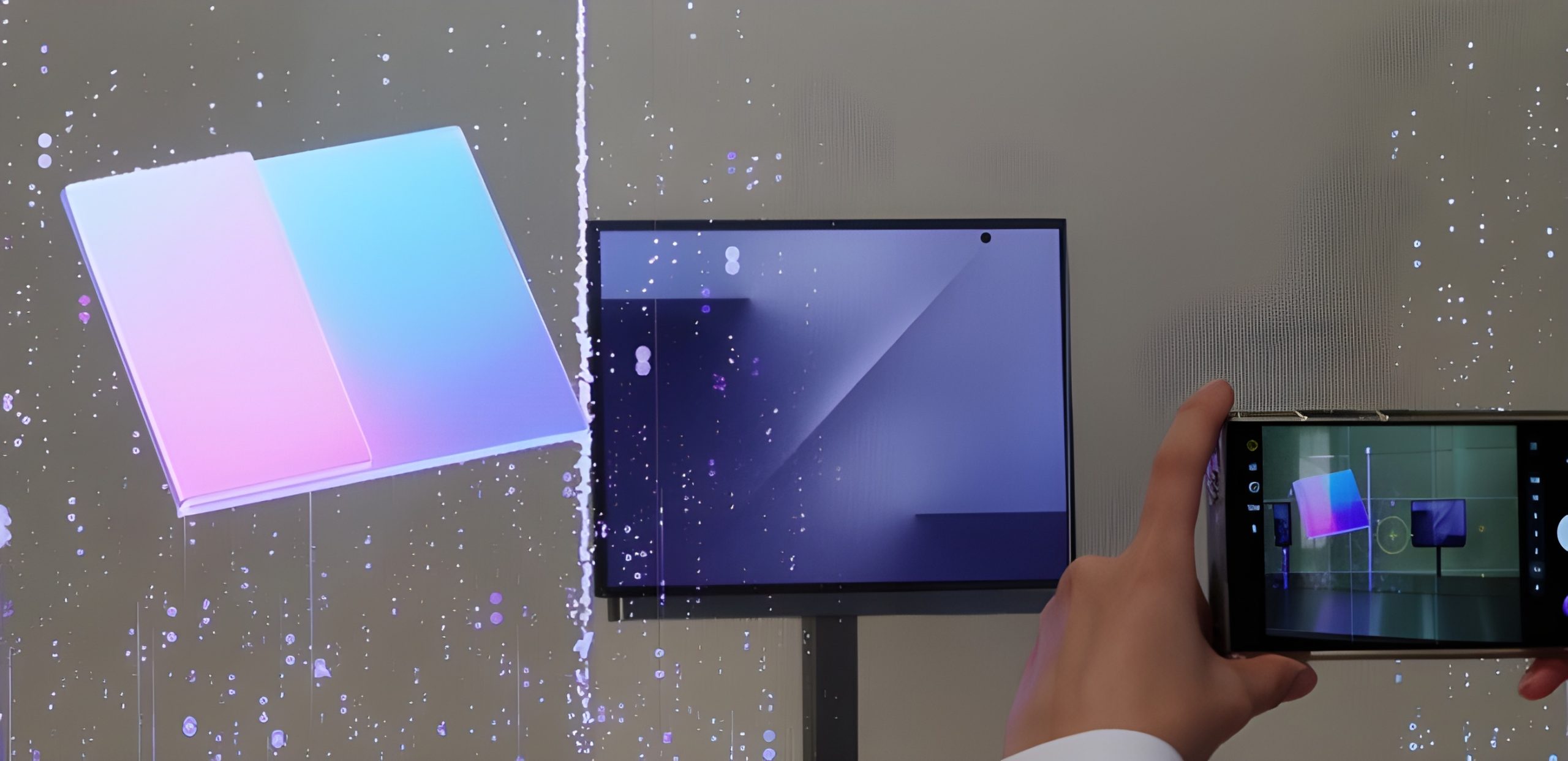
Instead, Samsung opted for a low-key, almost secretive debut – a move that fits the cautious way it plans to launch this radically different device.
According to Korean reports, Samsung will make the Galaxy Z TriFold available for purchase from 05 December, just a little over a month after that showcase. However, anyone dreaming of walking into a store and casually picking one up might be in for a rude surprise. Samsung has reportedly prepared components for an initial batch of only around 20,000 to 30,000 units. That is already an increase over the 10,000 units it originally told suppliers to expect back in July, but by Samsung’s usual standards, it is still a drop in the ocean.
What makes this launch even more intriguing is that, since those discussions in mid-summer, Samsung is said to have had virtually no significant follow-up conversations with key suppliers about ramping up Galaxy Z TriFold production. In other words, there is no clear sign that additional waves of devices are coming quickly after the first run. For a company that can ship hundreds of thousands of phones in a single month without breaking a sweat, a 20k–30k run is effectively a controlled experiment rather than a mass-market push.
To put this into perspective, consider the Galaxy S25 Edge – a device that is widely remembered as underperforming within Samsung’s flagship lineup. Even that so-called disappointment managed around 650,000 sales in its first month alone. The Z TriFold, in contrast, is starting out in numbers that would barely register on Samsung’s usual sales charts. The difference, of course, lies in price and risk. With expectations around a starting price close to the $2,000 mark, the Galaxy Z TriFold is positioned as a bleeding-edge showcase rather than a mainstream upgrade. Samsung clearly wants proof that real customers, not just tech enthusiasts in comment sections, are willing to pay laptop money for a phone that folds not once, but twice.
Despite this conservative production plan, Samsung’s broader ambitions in the foldable segment are anything but modest. For next year, the company is reportedly aiming for total foldable sales of around 6.7 million units, spread across three pillars: the Galaxy Z TriFold, the Galaxy Z Fold 8, and the Galaxy Z Flip 8. Interestingly, the sales targets for the Fold 8 and Flip 8 are being nudged up by roughly 10% compared with their predecessors. That means Samsung is not treating the TriFold as a sideshow; it sees the entire foldable family as a growth engine and expects the more conventional Fold and Flip lines to keep doing the heavy lifting while the TriFold acts as a halo product.
The Flip 8, in particular, is getting a structural diet. Samsung is said to be targeting more than a 10% reduction in both thickness and weight, slimming the device down to roughly 12 mm when folded and around 169 grams on the scale. That kind of refinement matters in everyday use: a thinner, lighter clamshell makes pocketable foldables feel less like a compromise and more like a natural evolution of traditional smartphones.
The Galaxy Z TriFold, meanwhile, is where Samsung is stretching its engineering muscles. The phone uses a triple-folding architecture with two hinges, one of which has a tighter radius. This tighter hinge allows the inner displays to fold inward and layer over one another, protecting the most delicate panels by keeping them safely inside when the device is closed. It is a different philosophy than Huawei’s Mate XT, which mixes inward- and outward-folding segments. By keeping everything folding inward, Samsung avoids leaving any piece of flexible OLED permanently exposed to the outside world, which should help with durability and scratch resistance over time.
When fully open, the Galaxy Z TriFold turns into a 10-inch OLED canvas – a sizeable upgrade over the roughly 8-inch inner display found on the previous Galaxy Fold 7 generation. In tablet mode, that extra real estate could be the difference between merely tolerable multitasking and genuinely comfortable side-by-side apps, full-page document editing, or immersive media consumption. Folded down, users still get a 6.5-inch outer display that behaves like a regular smartphone screen, ensuring you do not need to unfold the entire contraption every time you want to reply to a message or quickly scroll through social feeds. The bezels, at least on early hardware, remain relatively thick, reminding you that this is still a first-generation product in a brand-new category rather than a fully polished final form.
On the back, Samsung is packing a photography setup that refuses to treat the TriFold as a mere tech demo. The main camera is a 200-megapixel sensor with support for up to 100x zoom, paired with a 12-megapixel ultrawide lens and a 10-megapixel telephoto module offering 3x optical zoom. In theory, this gives the TriFold both range and flexibility, letting it compete with Samsung’s better camera phones even while delivering a shape-shifting form factor. Powering all of this is a trio of batteries – potentially using silicon-carbon technology – with a combined capacity north of 5,000mAh, designed to keep that 10-inch OLED and the multiple folds alive through heavy use.
Under the hood, the Galaxy Z TriFold runs on Qualcomm’s Snapdragon 8 Elite Gen 5 SoC, ensuring flagship-grade performance no matter how many apps you are juggling across its various screen configurations. The entire package is wrapped in a titanium shell, another signal that Samsung is treating durability and perceived premium quality as non-negotiable pillars for this device. Triple hinges, three batteries, a tablet-sized OLED and a camera stack like this would normally make a device both heavy and fragile; titanium is Samsung’s answer to that engineering challenge.
The real open question is not whether Samsung can build the Galaxy Z TriFold, but whether the market is ready to embrace it. With Apple still keeping its distance from foldables, there is a sense that Samsung and a handful of Chinese rivals are effectively beta-testing the future of mobile hardware in public. For some enthusiasts, the Z TriFold will be irresistible precisely because it is rare, expensive and experimental. For most people, however, the combination of a ~$2,000 price tag and extremely limited availability will make it more of a tech showcase than a realistic purchase. If those 20,000 to 30,000 units sell out instantly, Samsung will have hard proof that there is serious appetite for triple-fold devices. If they linger on shelves, the company can quietly treat this as a one-off experiment without having flooded the channel.
Either way, early December marks an important moment for the foldable category. The Galaxy Z TriFold is not just another iteration of a familiar design; it is Samsung’s bet that phones can stretch into tablets, then shrink back into something pocketable, all in a single device. Whether that bet pays off or not, the rest of the industry – and more than a few nervous engineers in Cupertino – will be watching closely.
1 comment
if samsung nails durability here, apple is gonna have to stop stretching the same slab design every year fr