For years, smart rings have mostly been treated as tiny fitness trackers or discreet sleep monitors. With the Galaxy Ring, Samsung clearly wants to go far beyond that. According to new clues hidden in the Galaxy Ring Manager app, the company is quietly preparing something much more ambitious: turning the ring on your finger into a powerful controller for Galaxy XR and future Galaxy smart glasses. 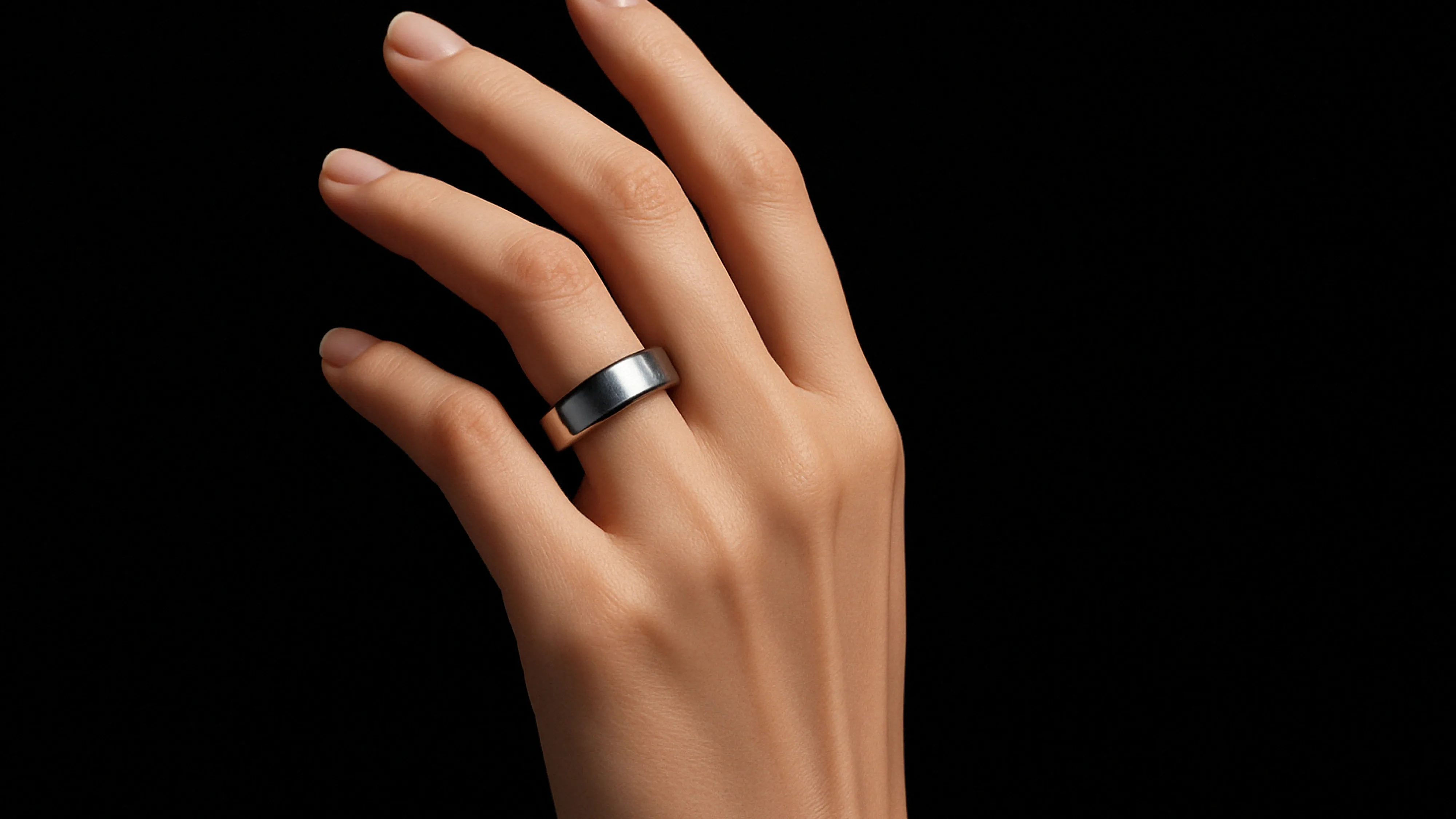
If this happens, the Galaxy Ring could shift from being just another wearable to becoming the primary way you interact with Samsung’s next generation of immersive devices.
Code strings discovered in the app explicitly reference a feature called ring gesture for glasses. That wording is not accidental. It strongly suggests Samsung is working on linking hand or finger movements picked up by the Galaxy Ring to actions on its upcoming smart glasses, sometimes referred to as Galaxy Glasses, as well as the Galaxy XR headset. While Samsung has already announced that its mixed reality headset is built on Android XR, the ring integration would give the company a unique twist: instead of forcing users to rely solely on cameras or chunky controllers, you could simply move or tap your fingers to navigate interfaces and trigger actions.
What makes this especially important is that, unlike the Galaxy XR headset, Samsung’s first smart glasses are not expected to include full-blown hand-tracking via cameras. Early reports say the glasses will be more lightweight and likely closer to everyday eyewear than to a heavy mixed reality visor. That is great for comfort and style, but it also creates a problem: how do you control them in a way that feels natural? A tiny touchpad on the side of the frame works in a pinch, but it is awkward, limited, and forces you to constantly reach up to your face. A smart ring that silently captures taps, twists, and subtle gestures solves that problem elegantly.
Samsung is already experimenting with Galaxy Ring gestures on phones, letting you do things like silence alarms or trigger the camera shutter with a quick motion. It is not hard to imagine that exact idea expanding into the world of XR. Picture raising your hand slightly and pinching your fingers together to select an item in a floating interface, or rotating your hand to scroll a page on your virtual display. The ring could even support different gesture sets depending on whether you are using the Galaxy XR headset, smart glasses, or your Galaxy phone, offering layers of shortcuts that make the entire ecosystem feel responsive and deeply connected.
Of course, Samsung’s ambitions go beyond just XR. A patent already describes a Galaxy Ring being used as a universal controller for a wide range of devices: phones, tablets, laptops, and possibly even TVs or smart home gear. In that scenario, the ring becomes a small, always-available remote that is literally attached to you. Tap to answer a call while wearing your smart glasses, swipe to switch slides during a presentation displayed on your laptop, or subtly flick your finger to pause music playing from your tablet. Instead of carrying extra controllers, the ring becomes the bridge between you and every screen in Samsung’s ecosystem.
Timelines are beginning to take shape as well. Reports suggest that Samsung may launch its first smart glasses as early as 2026, focusing on notification overlays and companion features rather than full augmented reality projections. A more advanced generation, reportedly targeted for 2027, is expected to include a proper AR display. In both generations, the Galaxy Ring could play a key role: first as a simple, convenient input device for basic interactions, and later as a precise gesture interface that makes complex AR experiences feel less intimidating and more intuitive.
All of this is happening in an XR market that is still trying to figure itself out. Even after the launch of high-profile products like Apple Vision Pro and bold marketing phrases such as spatial computing, extended reality has not become the default way people interact with technology. Headsets remain expensive, bulky, and sometimes socially awkward to wear in public. Smart glasses, on the other hand, are more discreet but usually limited in what they can do. A clever input method like a smart ring will not magically fix all of that, but it can remove one of the biggest friction points: the question of how you actually control this futuristic hardware without feeling like you are performing a strange demo every time.
There is also a human, almost emotional angle to using a ring as an interface. Rings have been personal and symbolic objects for centuries, associated with commitment, status, and style. Turning a ring into the key that unlocks your digital world makes the technology feel less like a gadget and more like a natural extension of yourself. Instead of waving your hands in exaggerated motions for cameras to see, you could rely on subtle, private gestures that only the ring and your devices understand. That is a very different vibe from strapping on plastic controllers and pointing at virtual buttons in mid-air.
Even if you are not into XR right now, it is easy to see the appeal of what Samsung is trying to build. The idea of a Galaxy ecosystem where your phone, ring, watch, earbuds, headset, and glasses seamlessly talk to each other is exactly the kind of long-term vision big tech companies chase. The Galaxy Ring acting as a central controller for that experience feels surprisingly natural. If Samsung can execute this well – turning those ring gesture for glasses strings into robust, reliable features – the Galaxy Ring might end up being remembered not just as a health gadget, but as one of the most important input devices of the next decade.
Whether or not XR becomes the next big thing, a ring that can silently control your digital life sounds like the kind of sci-fi idea people actually want to use. Subtle, powerful, and deeply integrated into your daily routine, the Galaxy Ring could make immersive tech feel less like a tech demo and more like a normal, everyday interaction. And if that is what finally nudges more people toward smart glasses and XR devices, Samsung’s little ring might have a much bigger impact than anyone expected.
1 comment
watch samsung make this awesome and then 3rd party apps ignore it completely 😅