Jensen Huang, the CEO of NVIDIA, has issued a stark warning about the growing competition from Huawei in the AI space, describing the Chinese tech giant as a formidable rival with impressive advancements. For NVIDIA, Huawei’s rapid rise poses a significant challenge, particularly in the domestic market where Huawei has revolutionized AI infrastructure and computing capabilities. 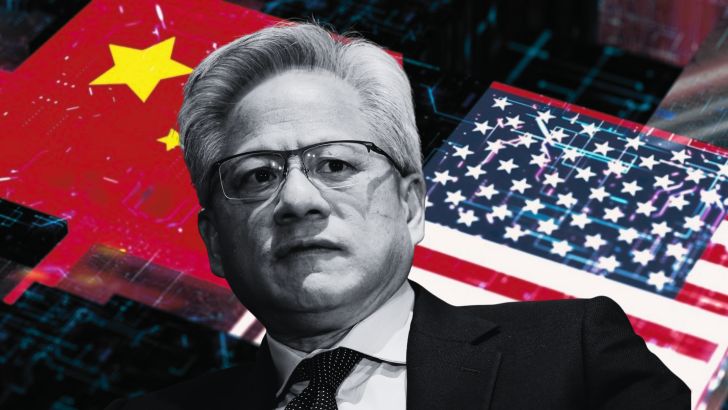
With Huawei’s aggressive push into AI, it’s clear that this competition is not one to be underestimated.
China’s participation in the global AI race has seen Huawei at the forefront, developing hardware solutions that rival NVIDIA’s offerings. The company has been working diligently to build alternatives to NVIDIA’s highly sought-after chips, and its recent AI-related announcements indicate that it is moving quickly to close the gap. NVIDIA’s CEO, Jensen Huang, has openly acknowledged this growing competition, revealing that he takes Huawei’s advancements very seriously. Speaking during the APAC 2025 Q&A session, Huang addressed the issue head-on, expressing both caution and resolve.
During the session, when asked about the rising competition from Chinese companies like Huawei, Huang made it clear that NVIDIA remains the global leader in AI infrastructure technology, a title it holds by a wide margin. However, he also emphasized that to underestimate companies like Huawei would be “foolish.” He further pointed out that Huawei’s expertise in 5G communications and smartphones makes the company a natural contender in the AI field, especially considering their track record of success. Huang also noted that Huawei’s recent Cloud Matrix announcement didn’t come as a surprise, given the company’s strong technological foundation.
Huawei has been making notable strides in the AI sector, and its recent announcements demonstrate that it’s taking on NVIDIA with full force. The Chinese firm unveiled an ambitious AI chip roadmap that stretches all the way to 2027, highlighting a series of upcoming products that will feature self-built HBM (High Bandwidth Memory) and improvements in processing power. Huawei’s plans also include significant upgrades to its rack-scale offerings, particularly through the next-generation Atlas SuperPoDs. These systems, set to deliver performance comparable to NVIDIA’s Rubin architecture, will feature an impressive 8,192 Ascend 950 AI chips in a single cluster. This innovation in computing architecture promises to elevate Huawei’s capabilities to new heights, allowing the company to offer massive compute power on a scale that can rival NVIDIA’s offerings.
For Huang, the rise of Huawei in AI signifies a new era of competition, particularly as NVIDIA has been excluded from the Chinese market for several months. While the company has been struggling to introduce its Blackwell AI chips in China, Huawei has made significant progress, moving quickly to develop its own AI solutions. With such rapid advancements, it’s clear that Huawei is not only aiming to compete with NVIDIA’s existing offerings but also with the future of AI technologies, including NVIDIA’s Rubin architecture.
As it stands, NVIDIA faces a complex challenge in China, where domestic alternatives like Huawei are quickly becoming more competitive. Huang acknowledged that the dynamics of the AI market are shifting, and the landscape may change in the future, particularly as Huawei’s AI capabilities continue to grow. With NVIDIA’s options limited in China, it seems that the company may need to accelerate its own innovations to maintain its leadership position. Over time, it’s likely that Huawei’s growing presence will impact the choices made by domestic cloud service providers (CSPs) and AI giants in China, possibly reducing NVIDIA’s dominance.
While NVIDIA remains the global leader in AI, the competition from Huawei cannot be ignored. With China’s rapid advancement in AI and Huawei’s aggressive push into this market, the future of AI infrastructure could look very different. As of now, it remains unclear how the relationship between NVIDIA and China will evolve, but one thing is certain: Huawei’s computing advancements will continue, and it may not be long before the company becomes a dominant player in the global AI race.