Rumor radar: Samsung may be cooking up a major leap for face unlock on its future flagship, the Galaxy S27 Ultra. If the whispers hold, an experimental feature dubbed Polar ID could move Samsung’s facial authentication beyond today’s 2D selfie scan and into a new class of biometric security based on polarized light. 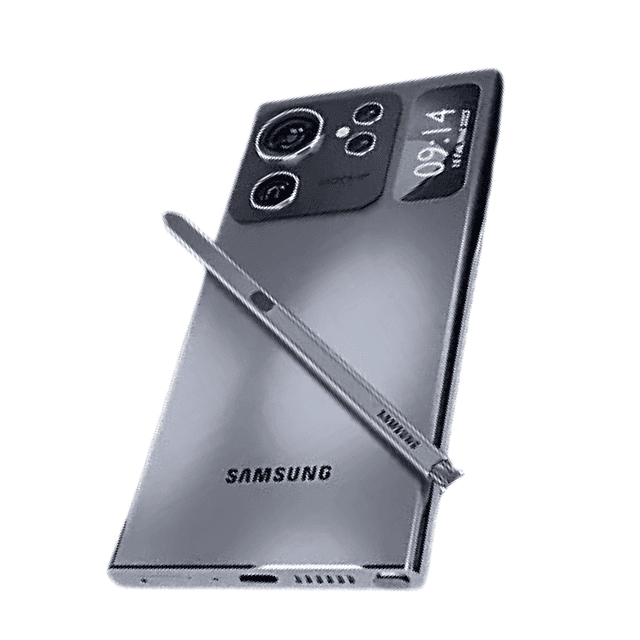
It’s an eye-catching claim – and one that deserves a clear explanation, healthy skepticism, and a look at why it could matter.
For context, current Galaxy phones rely on the front camera’s 2D image to recognize your face. It’s quick, convenient, and fine for casual unlocking, but it isn’t the gold standard for security because static images can sometimes be spoofed and depth information is limited. High-security systems typically add specialized hardware – think structured-light projectors, infrared (IR) flood illuminators, or time-of-flight (ToF) sensors – to build a detailed map that’s harder to trick.
What the leak actually says
A leaker known as @SPYGO19726 claims early test firmware for the Galaxy S27 Ultra references “Polar ID v1.0” within Samsung’s biometric framework. Internal logs allegedly describe it as a “polarized-light authentication system” tied to a front-facing ISOCELL Vizion sensor and a new secure enclave routine labeled BIO-Fusion Core. The same logs suggest an unlock latency around ~180ms and stronger spoof resistance than the current method. None of this is confirmed by Samsung, and the source does not have a long track record – so treat it as early-stage intel, not a promise.
Polarized light 101 – and why it’s interesting
Light waves vibrate in many directions; polarization filters select specific orientations. Skin and sub-surface tissues interact with light in distinctive ways, and a high-resolution polarization signature can act like a biometric fingerprint. In theory, using polarization could create a robust face model that’s less sensitive to glare, makeup, or small accessories. Advocates argue it may also work more reliably across tricky lighting and could remain effective with partially obscured faces – like masks or sunglasses – because the system is looking at how light is scattered and reflected, not just at a flat image. That said, real-world performance depends on sensor design, compute, and the quality of the on-device model.
How it might compare to today’s face unlock
- Security: A polarization-based profile, if implemented well, should be harder to spoof with photos or basic masks than a 2D selfie check.
- Speed: A claimed ~180ms unlock aligns with premium standards; the challenge is maintaining that speed while running anti-spoofing checks entirely on-device.
- Reliability: The approach could be less dependent on ambient light than RGB and may complement or even reduce reliance on IR only flows.
- Privacy: References to a BIO-Fusion Core suggest any template processing would live in a secure enclave, a must for serious biometrics.
Big potential, bigger caveats
Exciting? Yes. Inevitable? No. Hardware-anchored biometrics demand new sensors, supply-chain alignment, and deep software tuning. Samsung would need to validate anti-spoofing under lab and field conditions, ensure accessibility (beards, glasses, cultural headwear, varied skin tones), and integrate the feature into Android’s biometric tiers for banking apps and password managers. And there’s the calendar: the Galaxy S27 Ultra isn’t expected until 2027, which means anything seen in early firmware could change – or disappear – before production.
There’s also the source factor. The same leaker has sparred with others over earlier Galaxy S26 Ultra camera rumors, and that history is a reminder to keep our salt shakers handy. As of now, the nearer-term story is the Galaxy S26 Ultra, which is due in a few months. That model will set the tone for Samsung’s 2026 flagship strategy, and it may preview sensor directions or software foundations that later enable Polar ID – if it exists.
Bottom line
If Polar ID makes it to retail, it could give Samsung a distinctive, hardware-level face unlock that narrows the gap with depth-based systems while pushing beyond simple IR add-ons. Until we see parts lists, marketing materials, or developer documentation, it remains a compelling concept rather than a confirmed feature. Keep the excitement, keep the skepticism, and keep an eye on what Samsung rolls out with the S26 Ultra – because that’s where the next real clues will likely appear.