The image sensor race is entering a new phase: LOFIC (Lateral Overflow Integration Capacitor) technology is poised to move from niche experiments to broad deployment across flagship and upper-mid smartphones beginning in 2026. 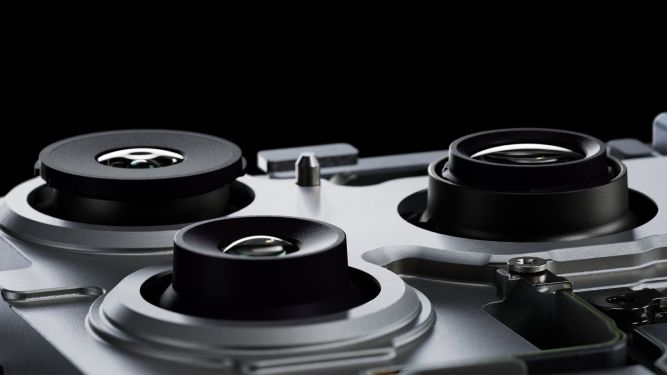
Industry chatter from reliable leak circles indicates multiple suppliers – OmniVision, Sony, Samsung, and even Apple’s in-house silicon team – are preparing LOFIC designs as part of a wider push for cleaner highlights, longer exposures, and high-dynamic-range capture without the blur and artifacts of multi-frame stacking.
What LOFIC actually does
Every pixel has a limit to how many electrons it can store before highlights clip – a threshold known as full-well capacity. LOFIC adds a companion capacitor next to the photodiode. When the pixel nears saturation, overflow charge is shunted laterally into that capacitor. By extending the charge “bucket,” the sensor preserves highlight detail and enables single-exposure HDR. That means fewer motion artifacts versus traditional multi-frame HDR, better color accuracy in high contrast scenes, and the option for longer exposures without blowing out bright regions.
Proof of concept is already shipping
We’ve seen LOFIC in the wild: OmniVision’s OV50K powered the Honor Magic6 Ultimate, a line long known for testing bleeding-edge camera ideas. More recently, OmniVision announced the OV50X – a 1-inch-type sensor aimed at premium phones with headline features like 8K HDR video support. Those parts established the template: bigger wells, more graceful highlight roll-off, and motion-robust HDR captured in a single read.
The rumored roadmap: 2026 and beyond
- OmniVision × vivo: A partnership is tipped to bear fruit soon, likely showcasing LOFIC in a mass-market flagship to validate the approach outside experimental lines.
- Sony (late 2026): A 1/1.3-inch LOFIC sensor – potentially the LYT-838 – is expected near the end of 2026, targeting top-tier Android devices that prize balance between size, light capture, and module thickness.
- Samsung (late 2026 / early 2027): A 200MP, 1/1.1-inch LOFIC part, reportedly ISOCELL HPA, would marry ultra-high resolution with overflow capacitors to tame highlight clipping in pixel-binned modes.
- Apple (2027–2028): Work on an in-house LOFIC sensor around 100MP has been reported, aligning with Apple’s preference to tune silicon, ISP, and computational photography as a unified stack.
Why single-exposure HDR matters
Today’s phone cameras often blend multiple frames to expand dynamic range. That works – until subjects move, lights flicker, or users pan quickly. LOFIC’s single-shot approach curbs ghosting, preserves micro-detail, and reduces tuning complexity in the image pipeline. In video, it helps stabilize exposure across frames while maintaining highlight coloration, which is vital for 4K/8K HDR capture.
Beyond phones: fixing LED flicker for cars
LOFIC isn’t just a smartphone story. Automotive cameras face severe LED flicker from headlights, tail lamps, and digital road signs. Because LOFIC tolerates longer per-frame exposures without nuking highlights, it mitigates that pulsating banding that can confuse driver-assist systems and degrade recorded evidence. Expect rapid adoption in ADAS and cabin monitoring as well.
Challenges and what to watch
Bringing LOFIC to scale means re-tuning ISPs for new tone curves, managing die area and power, and integrating with stacked architectures (e.g., dual-gain readouts, advanced HDR pipelines). But the payoff is substantial: richer highlight texture, smoother roll-off, and cleaner video in brutal lighting. If timelines hold, 2026 will mark LOFIC’s breakout year – moving from bold demos (OV50K, OV50X) to the default expectation in premium camera phones.
At a glance: the LOFIC timeline
| Player | Sensor / Size | Window | Notes |
|---|---|---|---|
| OmniVision | OV50K (shipped), OV50X (1″ class) | Now → 2026 | 8K HDR video; partnership with vivo tipped |
| Sony | LYT-838 (1/1.3″ rumored) | Late 2026 | Flagship Android focus |
| Samsung | ISOCELL HPA (200MP, 1/1.1″ rumored) | Late 2026–Early 2027 | High-res with LOFIC highlight control |
| Apple | ~100MP in-house LOFIC | 2027–2028 | Tight integration with ISP and software |
Bottom line: LOFIC is set to become the next must-have sensor feature, delivering truer highlights and steadier HDR in both photos and video – on the road and in your pocket.
2 comments
200MP with LOFIC sounds insane, hope heat is under control
vivo + OmniVision could be a sleeper hit