Apple’s iPhone 17 Pro arrives with a design refresh, a loud Cosmic Orange finish, and – quietly – the most controversial battery decision in recent iPhone history. For the first time, the exact same flagship ships with two different battery capacities depending on where you buy it. Regions that receive the eSIM-only variant get a physically larger cell, because the space once occupied by the Nano-SIM tray is now available for power. 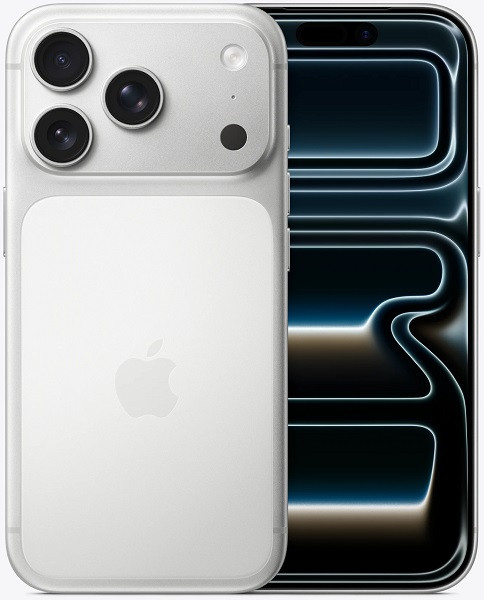
That’s not marketing poetry; it’s literal extra volume devoted to battery chemistry. We put the eSIM iPhone 17 Pro through our full battery regimen to see whether the added capacity translates into hours you can actually feel.
Why there are two iPhone 17 Pro batteries
Apple’s eSIM push is not new, but the iPhone 17 family doubles down. In select markets – Bahrain, Canada, Guam, Japan, Kuwait, Mexico, Oman, Qatar, Saudi Arabia, the UAE, the U.S., and the U.S. Virgin Islands – the iPhone 17 Pro and 17 Pro Max ship without a physical SIM tray. Apple repurposes that slot for a bigger battery in those eSIM models. Elsewhere, the 17 Pro retains a Nano-SIM tray and, consequently, a slightly smaller cell. Same chipset, same display, same chassis – different battery size.
What Apple claims – and what we tested
On stage in September, Apple highlighted up to two extra hours of video playback for the eSIM versions. Video is a useful, repeatable benchmark, but battery life is far more than movies. We wanted to know about web browsing, calls, and gaming – the things that actually drain your phone on a chaotic weekday. So we tested an eSIM iPhone 17 Pro against the otherwise identical model with a physical SIM tray using our established methodology and comparable conditions.
Specs at a glance
- eSIM iPhone 17 Pro (A3256): 4,252 mAh battery
- Nano-SIM iPhone 17 Pro (A3523): 3,998 mAh battery
- Capacity delta: +6.35% in favor of the eSIM model
Scores at a glance
| Test | eSIM iPhone 17 Pro (4,252 mAh) | Nano-SIM iPhone 17 Pro (3,998 mAh) | Change |
|---|---|---|---|
| Active Use Score | 16:12 | 15:23 | +49 minutes (+5.3%) |
| Call time | 24:01 | 23:14 | +47 minutes (~3%) |
| Web browsing | 13:41 | 12:39 | +1:02 |
| Video streaming | 22:40 | 22:47 | −7 minutes |
| Gaming | 10:58 | 10:14 | +44 minutes |
Category breakdown: where the gains show up
Calls: a welcome bump to a historic weak spot
iPhones have traditionally ceded call endurance to some rivals, so the eSIM model’s 24:01 result is a pleasant surprise. That extra 47 minutes won’t change your habits, but it will save you from battery anxiety on long travel days or marathon support calls.
Web browsing: the star of the show
The biggest real-world win lands in the browser. At 13:41, the eSIM iPhone 17 Pro stretches over an hour past the SIM-tray variant. That’s the difference between finishing your commute reading queue and scrambling for a charger at lunch. Given how often modern phones juggle page renders, script execution, and network hops, this is the improvement most users will feel first.
Video streaming: not the headline Apple promised
Here’s the twist: our eSIM unit actually trailed by a few minutes in the video loop, landing at 22:40 versus 22:47 for the SIM-tray model. We reran this test several times and consistently saw parity, not the two-hour leap Apple floated. It doesn’t torpedo Apple’s message – playback is still excellent – but it suggests that whatever thermal and power management behaviors govern streaming efficiency aren’t dramatically altered by the extra milliamp-hours.
Gaming: meaningful headroom
In the gaming test, the eSIM model endured for 10:58, a healthy 44-minute lead. That extra buffer gives room for performance spikes without the battery cliff you sometimes feel after a long session. If you play graphically intensive titles, this is the result to circle.
Active Use Score: the one-number summary
Roll everything up and the eSIM iPhone 17 Pro posts a 16:12 Active Use Score, which is 49 minutes better than the 15:23 we measured on the physical-SIM unit. In percentage terms, the 6.35% bump in capacity becomes a 5.3% uplift in our composite endurance. That conversion rate is entirely plausible once you account for the fact that not every workload scales linearly with capacity; power management, modem behavior, and display timing all play roles.
Availability: where you get the bigger cell
Buy the eSIM-only iPhone 17 Pro or 17 Pro Max in Bahrain, Canada, Guam, Japan, Kuwait, Mexico, Oman, Qatar, Saudi Arabia, the UAE, the United States, or the U.S. Virgin Islands, and you’re getting the larger battery. In other regions that still include a Nano-SIM tray, expect the smaller capacity – and the slightly shorter endurance profile that comes with it.
What about iPhone 17 Pro Max?
Apple applies the same design logic to the Pro Max: remove the tray, reclaim the volume, expand the battery. Our hands-on testing here focused on the 17 Pro, but if you live in an eSIM market and opt for the bigger phone, you should anticipate a similar pattern of gains relative to its SIM-tray counterpart.
Should Apple go eSIM-only everywhere?
From a hardware perspective, the answer seems obvious: more battery is always welcome. The sticking point is policy and infrastructure, which vary by country and carrier. When (or if) Apple unifies around eSIM globally, we’d expect the same larger-battery baseline to follow – eliminating the oddity of regional endurance differences on otherwise identical flagships.
The next frontier: silicon-carbon talk
There’s buzz around silicon-carbon anodes for higher energy density. If and when that tech lands in mainstream phones, the benefits could dwarf the gains from reclaiming a SIM slot. For now, there’s no clear timeline in iPhone land. The iPhone 17 Pro’s eSIM battery story is a pragmatic, mechanical win – more room equals more capacity, which mostly equals more hours.
Bottom line
The eSIM-only iPhone 17 Pro doesn’t just flex on a spec sheet; it lasts longer in the tasks that matter. You get standout improvements in web browsing and gaming, a modest lift on calls, and essentially a tie for video. The Active Use Score tells the simple story: a 5.3% real-world endurance boost anchored by a 6.35% larger battery. If you have the option to buy the eSIM model in your market, you’re buying back time – and that’s the most valuable upgrade of all.
4 comments
Video not better is weird, but +1hr web is what I need for work
Does the Pro Max get the same boost? guessing yes but would like tests!
Still hate eSIM when swapping phones… but I love that extra battery 😅
Apple should just go eSIM everywhere and be done with it