Twenty-five years on, Raven Software’s cult FPS Soldier of Fortune is getting the kind of visual reinvention fans used to only dream about. A work-in-progress RTX Remix project by modder Pathtraced Paradise replaces the game’s original fixed-function lighting with full path tracing, modern materials, and a contemporary post-processing pipeline. 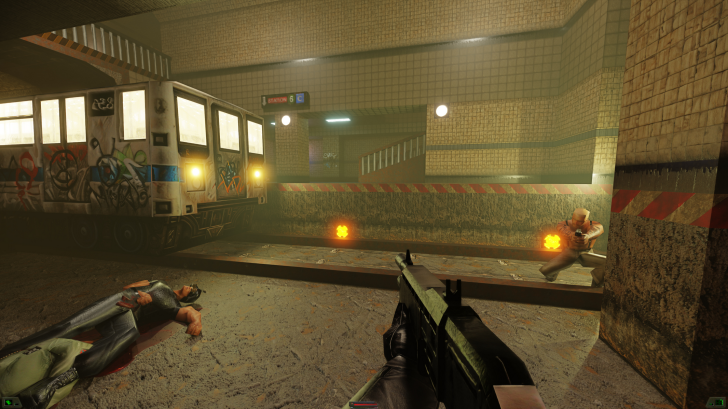
Even at this early stage, the result reframes a 2000-era shooter through a 2020s lens: muzzle flashes bloom across realistically lit corridors, chrome surfaces and wet floors trade accurate reflections, and the game’s notorious gore system sits under physically plausible illumination rather than baked lightmaps.
So what’s actually done? According to the creator, the tutorial and first three missions have builds compiled, with the first two levels showcased in YouTube clips. There’s no public download yet and no firm ETA – this is still an active WIP – but the footage already demonstrates the core promise of RTX Remix on older DirectX titles: swap the legacy renderer for a path-traced one, inject PBR materials where the original had none, and let modern denoisers, upscalers, and tone mappers carry the rest.
Why RTX Remix matters for an old shooter like this
RTX Remix isn’t just a toggle. It’s a toolchain that intercepts draw calls, lets creators rebuild or relight scenes, and then replays them through a path-traced runtime. For a 2000 PC game built around baked lighting and low-resolution textures, that’s transformative. Ambient occlusion isn’t faked; it falls out of light transport. Specular highlights don’t pop on and off; they converge over time. Even simple geometry benefits, because uniform grey walls suddenly inherit believable depth and material response, elevating atmosphere without touching the layout that made the original pace so intense.
Early footage looks uneven – and that’s normal
Some viewers are already polarized. A few minutes of WIP capture can look noisy or overly bright, especially once YouTube compression chews on temporal samples. Path tracing wants time to converge and good denoising; both are tricky to showcase in a short clip. Expect lighting tweaks, exposure passes, and revised material definitions as the project marches forward. The important part is visible: indirect light is actually bouncing, and reflections and shadows are coherent with that bounce, which is what gives older levels a convincing modern mood.
Performance and compatibility expectations
As with other Remix projects, this kind of overhaul typically targets hardware with dedicated ray-tracing acceleration. The final experience will depend on your GPU, your upscaler of choice, and how aggressive the denoiser settings are. The creator hasn’t published a settings matrix or minimum spec, so treat any performance takes as provisional. In practice, DLSS/FSR-class upscaling and sensible sample counts can make even big path-tracing passes playable, but every game and every mod’s content mix is different.
Where it sits in the wider mod scene
The Soldier of Fortune effort arrives alongside a wave of RTX Remix and path-tracing experiments for classics. Recent highlights include ambitious takes on Max Payne 2, Grand Theft Auto IV, and The Elder Scrolls III: Morrowind, with additional community favorites like Fallout: New Vegas and Black Mesa exploring similar lighting overhauls. Notably, the creator behind a well-known GTA IV project has also produced path-tracing mods for Call of Duty 4: Modern Warfare, Portal 2, and Left 4 Dead 2, proving that this approach can scale from corridor shooters to large, open urban spaces.
Tempering expectations without dimming the hype
No public build means this is, for now, a promising preview. Visuals seen today are not a contract for launch; they’re a snapshot of a moving target. Expect shader swaps, material audits (especially metals and skin), volumetric tuning, and broader level coverage before anything hits a release page. And because it’s a volunteer effort, cadence is defined by spare time, not sprints.
Community reaction, decoded
As ever, the comments run hot. Some viewers think the lighting looks too harsh or the image too smeared by denoising; others insist the original mood is intact, only finally lit like the mind’s-eye remembered it. There’s the predictable GPU tribalism, too – accusations that anything imperfect must be sabotage or brand bias. The reality: early path-traced mods are iterative and hardware-agnostic in spirit even when the current toolchain primarily targets specific RT features. Give creators time to balance materials and exposure, and many of those first-impression quirks fade.
The bottom line
If you cherish late-90s/early-00s shooters, this project is worth watching. It doesn’t rewrite level design or enemy logic; it reframes them through modern light. That’s a respectful kind of remastering – one that preserves kinetic pacing while letting atmosphere do more of the storytelling. When (and if) a public build lands, it could become the definitive way to revisit Soldier of Fortune on contemporary rigs. Until then, the WIP clips are a clear signal: even an aging classic can feel startlingly new once the light behaves like light.
1 comment
Will a 3060 handle this at 1080p with DLSS? Curious before I get hyped