
Galaxy S26 Ultra camera rumors: one new sensor, smarter processing, and a real push on video
The Samsung Galaxy S26 Ultra is shaping up to be a classic Samsung move: keep the proven hardware where it already leads, tweak the pieces that need attention, and pour on new computational photography features to lift the whole system. According to multiple reliable leakers, Samsung is not tearing up the camera playbook this year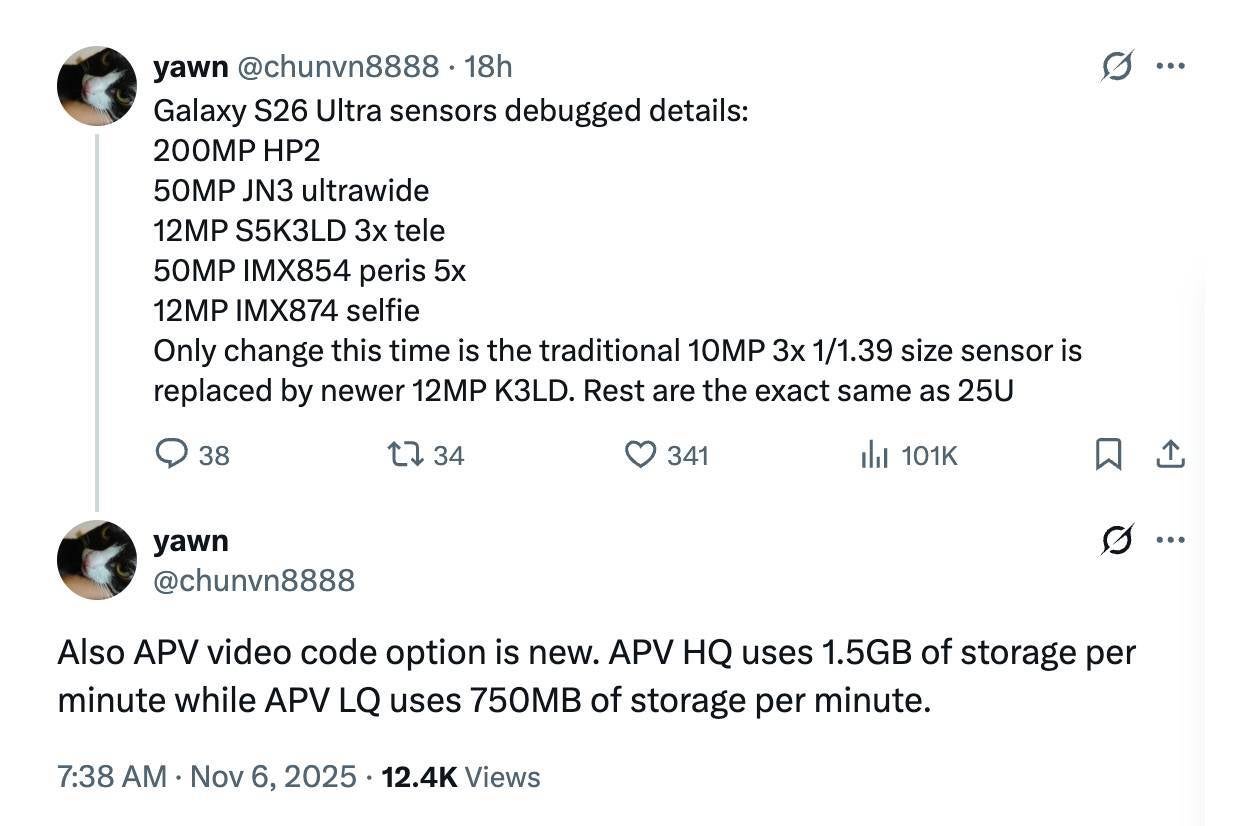
. Instead, the company is reportedly keeping three of the S25 Ultra’s main sensors while swapping in a new 3× telephoto and rolling out a slate of software and tuning changes designed to deliver cleaner low-light photos, faster focus behavior, and more flexible video capture.
The rumored camera stack: mostly familiar, one notable swap
If the current reporting holds, the S26 Ultra will carry over the 200MP HP2 main camera, the 50MP JN3 ultrawide, and the 50MP 5× IMX854 periscope. The 12MP front camera is also expected to remain. The one hardware change is a switch on the medium zoom: the S25 Ultra’s 10MP 3× Sony IMX754 will reportedly give way to a 12MP 3× Samsung S5K3LD. This is an in-house sensor Samsung has deployed in foldables and upper-midrange devices, which should help the company dial in tighter image processing control across the zoom range.
There has been chatter about sensor sizes here – some rumor posts even contradict each other – so take sizing specifics with caution until Samsung publishes the official spec sheet. What’s more important is the tuning: Samsung appears to be betting that a slightly different 3× module, coupled with new multi-frame processing and updated autofocus logic, will produce more natural textures and fewer artifacts at everyday zoom levels where people actually shoot.
Bigger apertures where it counts
Even with mostly familiar sensors, the primary and 5× modules are rumored to gain wider apertures. 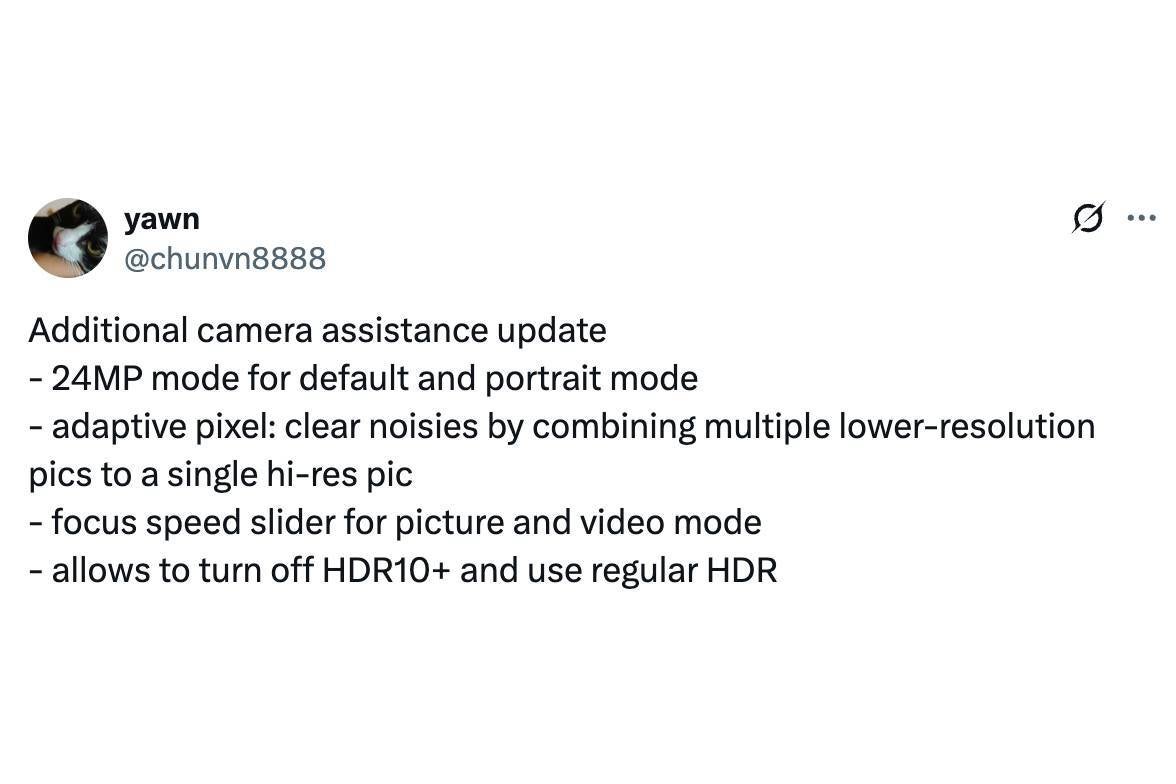
A larger opening lets in more light, which is the single most valuable commodity for image quality. Expect cleaner shadows, shorter shutter times that freeze motion better at night, and a touch more background blur in portraits from the main camera. On the 5× periscope, a brighter aperture could mean less reliance on aggressive denoising and sharpening, especially indoors where previous generations sometimes leaned into crunchy processing to keep images steady.
Adaptive Pixel and a smarter default resolution
On the software side, Samsung is reportedly introducing an Adaptive Pixel option that synthesizes a higher-quality frame from several lower-resolution captures. This is not just old-school pixel binning; think of it as a targeted burst that aligns, merges, and denoises to reduce color speckle and luminance noise while preserving edge detail. Alongside that is a 24MP default mode – available both for standard shooting and portrait mode – which strikes a savvy balance between the 12MP files many users share and the gargantuan 200MP full-res shots. Twenty-four megapixels offers more crop flexibility and detail retention without ballooning file size or slowing the camera pipeline.
Focus speed slider: creative control over snap vs. stickiness
A small but welcome tweak for enthusiasts could be a focus speed slider. If implemented as rumored, it would let you bias autofocus behavior toward quick subject snaps (useful for kids and pets) or toward steadier, stickier tracking (better for product shots and macro where focus hunting ruins sharpness). It’s the kind of pro-leaning control that can quietly elevate everyday results.
HDR your way – and a new APV video option
Not everyone loves the look of HDR10+. The S26 Ultra is expected to allow users to disable HDR10+ and capture in regular HDR, which should improve compatibility with certain editing workflows and social platforms. The headline for video, however, is a rumored new format called APV offered in two variants: APV HQ, which targets higher quality at roughly 1.5GB per minute, and APV LQ at about 750MB per minute. Those bitrates signal an emphasis on fewer compression artifacts and more robust color information – great news for creators who grade footage or pull frames for social. The trade-off is obvious: storage will evaporate quickly if you shoot long clips in HQ, so buyers may want to spec higher onboard storage from the start.
Where the ultrawide sits
The 50MP JN3 ultrawide appears unchanged on paper, but remember that ultrawide quality is heavily affected by lens corrections, edge sharpness tuning, and noise handling. Expect Samsung to lean on computational refinements here too, which could mean cleaner corners and better night sky or cityscape shots even if the sensor remains the same.
Design, chips, charging: the bigger S26 picture
Beyond the camera, leaks point to a chassis with rounder corners and a pill-shaped camera array. Under the hood, the S26 Ultra will reportedly ship with either an Exynos 2600 or a Snapdragon 8 Gen 5 Elite depending on region, paired with faster next-gen RAM. That matters for photography because multi-frame pipelines are memory and compute hungry; more throughput equals quicker shot-to-shot times and less waiting after night exposures
. Charging remains the big question mark. One prominent source has floated 60W support, while others suggest Samsung may debut a new charging architecture but stick to 45W on the spec sheet. Even at 45W, heat management and sustained charging speeds will dictate real-world behavior more than the number printed on the box.
So, is this a meaningful upgrade?
Short answer: yes – if you value consistency, low-light gains, and better video. The hardware story is evolutionary, not revolutionary, with just one new rear sensor. But combine wider apertures on the most important lenses with Adaptive Pixel processing, a smarter 24MP default, finer control over autofocus behavior, and the creator-friendly APV format, and you’re looking at a camera system that could feel noticeably more polished day to day. The only storm cloud is pricing. With component costs trending up, a modest increase over the S25 Ultra wouldn’t be surprising. If Samsung keeps any bump reasonable – and the imaging experience delivers as these rumors indicate – buyers may find the S26 Ultra a confident, well-rounded upgrade rather than a flashy spec leap.
As always with pre-launch reporting, details can shift before the final unveil. But the direction is clear: Samsung is doubling down on smarter light capture and stronger computational photography, giving the S26 Ultra a credible shot at topping the best camera phones lists without reinventing the entire sensor lineup.
1 comment
24MP default finally! 12MP always felt soft to me tbh