Thin is thrilling until the battery icon turns red. Over the past year, a quirky trend has quietly snowballed into a full-blown design movement: ultra-slim smartphones. It started on the margins, with lesser-known brands like Tecno showing what a wafer-thin device could look like, and it quickly nudged bigger players into experimenting. The iPhone Air is the most high-profile expression of that idea from Apple, and early signals suggest the experiment is wobbling. Industry chatter points to trimmed production targets and softer-than-expected adoption, while rival rumors hint that Samsung has shelved an ultra-slim flagship variant of its own. 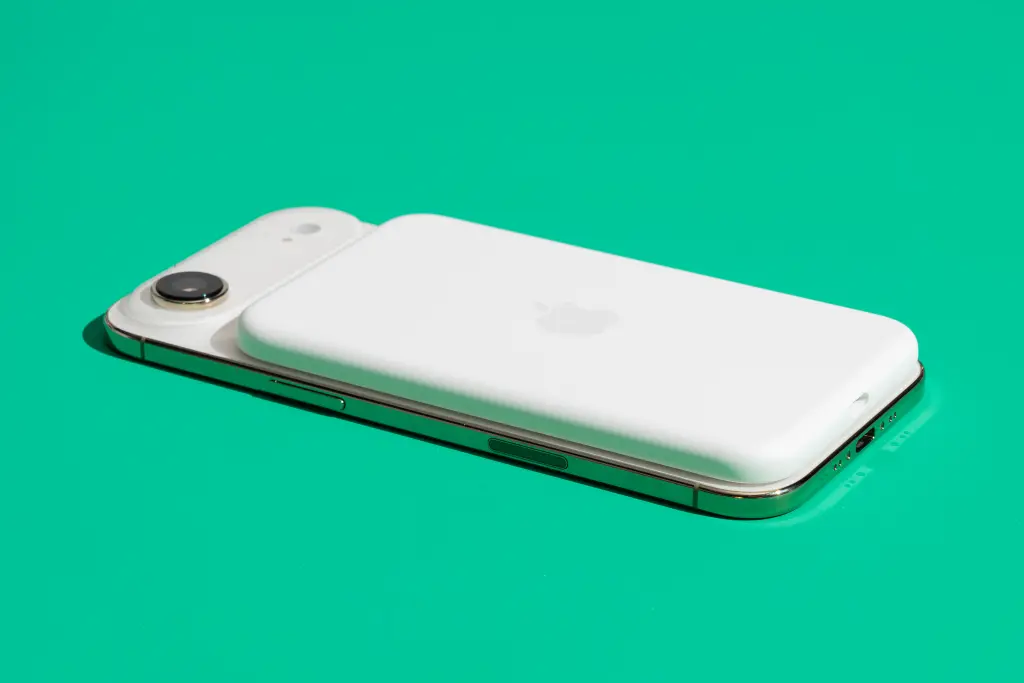
If that all sounds familiar, it should. We have seen this movie with the iPhone Mini. Aesthetic first, physics second, and sales third is a tough way to make a mainstream hit.
The parallels matter because they expose a strategic blind spot. The iPhone Mini was built for people who longed for one-hand usability and a truly compact footprint. The iPhone Air targets a different romantic ideal: the impossibly thin, featherlight slab that vanishes in a pocket. Both share one harsh trade-off that no marketing line can erase. When you make a phone smaller, or thinner, you remove space for the battery, and when you remove battery, you remove confidence. Smartphones are our all-day companions. Users forgive a lot, but they do not forgive a device that dies before dinner.
Consider how that compromise unfolds in practice. The iPhone Mini, with its small frame, squeezed in a compact cell that simply could not keep up for heavy users. The iPhone Air, though larger in screen size, still pays the same physics tax: a thin chassis means less room for energy storage and fewer thermal allowances for the kind of sustained performance people expect from premium phones. Pair a big, bright display with fast silicon and modern connectivity, and you have a beautiful object that is perpetually negotiating with its power gauge. It might last a day on paper, but real life includes 5G, navigation, camera bursts, and a steady drizzle of notifications.
Apple knows that endurance anxiety is sticky. Historically, when the company sees a structural gap in stamina, it shores it up with clever accessories. That is how we arrived at the MagSafe battery pack era during the Mini years, and why a renewed focus on snap-on power returned to the conversation once the Air entered the lineup. The irony is delicious: you buy an exquisitely thin phone to feel free of bulk, and then you clip a dense square of lithium to the back to survive a busy day. The design statement collapses into a practical workaround.
This is not unprecedented. Motorola tried to square the circle nearly a decade ago with the Moto Z series. The base phone was paper-thin, and modular backs promised flexibility: bigger battery today, projector tomorrow, speaker next weekend. The idea was clever, but mainstream buyers did not commit to a life of Lego blocks. Over time, the market moved on, and the Z line faded away. Different decade, same friction point: if the core device cannot satisfy the everyday baseline – reliable battery, strong camera, durable build – auxiliary fixes rarely scale beyond enthusiasts.
That brings us to demand, the unglamorous foundation of every sustained product story. On social media, enthusiasts are loud and passionate, and a chorus of techies can make any niche feel like a movement. But retail receipts are colder data. The appetite for truly small phones during the Mini era was real for a sliver of buyers, just not large enough to anchor a mass-market flagship. The ultra-thin ideal behind the iPhone Air faces the same headwind. People may admire thinness at the store counter, but in daily use they prize the practical pillars: long battery life, dependable camera versatility, and resilience. Put plainly, a cool silhouette is not a feature you can tap.
And then there is the camera dilemma. Slim phones typically trim hardware to hit thickness targets, which often means fewer sensors, smaller lenses, and tighter thermal and space budgets for advanced imaging pipelines. In an age when even midrange phones boast multi-camera arrays and convincing night modes, a pared-back camera system feels like a step sideways at best. That mismatch lands hardest on buyers who equate a thousand-dollar price tag with the complete package. It is not that the iPhone Air takes bad photos; it is that the market’s expectations have risen faster than a minimalist design can accommodate.
Pricing compounds the challenge. The iPhone Mini tried to justify itself as the least expensive new iPhone in its year, only for shoppers to notice that a little more money bought a lot more battery and screen real estate. The iPhone Air flips the script: it is a fashion-forward object with a premium sticker, yet one step up buys the Pro with tangible upgrades, and one step down buys a standard model with fewer compromises. That leaves the Air stranded in a narrow lane where the value calculus is hard to defend. The mere existence of a better-for-a-bit-more option is a silent assassin of mid-tier premium devices.
Why, then, do companies keep chasing slimness? Partly because design differentiation is scarce. Bezels are thin, chips are fast across the board, and software parity is real. When you cannot win with specs alone, you pivot to feel. A device that is uncommonly light can produce an immediate, emotionally positive first impression. It photographs well, it demos well, and it fits a narrative of progress. Suppliers, too, constantly shrink components, and product teams understandably want to showcase that engineering progress. The risk is that a beautiful demo day overshadows the ordinary Tuesday when someone is on a train with 18% left and an hour to go.
Could ultra-thin ever work at scale? Absolutely – but it requires a systems-level rethink rather than accessory band-aids. Higher-density batteries, power-sipping displays with adaptive refresh tuned aggressively out of the box, silicon designed not just for peak benchmark bursts but for flat power curves, and software that is ruthless about background tasks could transform the equation. There is also room for user education: honest setup flows that default to endurance-friendly settings would align the product with what most people actually want. If a next-gen iPhone Air 2 were to appear, those are the levers that could move it from curiosity to contender.
There is also a strategic repositioning available. The Air could be marketed not as a one-size-fits-all iPhone, but as the lightest travel phone for people who already live in the Apple ecosystem and are comfortable with accessories. Frame it as the runner’s iPhone, the city commuter’s companion, the device you pair with an Apple Watch to triage life on the go. That narrower pitch would be honest about what the product is optimized for. Crucially, the price would need to match that specialty. Premium, yes, but not sandwiched perilously close to a Pro that outguns it on every spec sheet line that matters in 2025.
What about the rumor mill that claims Apple has curtailed Air production, while Samsung’s rumored Galaxy S26 Edge variant has reportedly been struck from the roadmap? The signal beneath the noise is simple: both giants appear to be weighing real-world demand against the costs of steering entire supply chains toward extremes in thinness. Apple is famously pragmatic. If a product’s trajectory hints at a repeat of the Mini’s arc – beloved by a vocal few, ignored by the many – the company will give it a second try, learn what it can, and then quietly sunset it.
Consumers, for their part, can cut through the hype with three questions. First, will this phone reliably last through my longest days without an external battery? Second, does its camera system deliver in the conditions I care about – low light, fast action, casual video – without workarounds? Third, does the price make sense when I compare it to the next model up and down? If an ultra-thin device stumbles on any of those questions, admiration at the demo table may turn to regret by month three.
There is a bittersweet coda here for fans of the Mini and admirers of the Air. These devices push the industry forward by challenging assumptions. They force component makers to rethink packaging, they inspire new accessory ecosystems, and they keep the conversation about the future of mobile hardware ambitious. Yet the smartphone is the most utilitarian consumer gadget on earth. Utility wins. That is not a rejection of beauty; it is a reminder that the best designs are the ones you do not have to think about while living your life.
So will there be an iPhone Air 2? The most plausible path mirrors the Mini: one more generation to test a refined balance, followed by a fork in the road. To win, a sequel would need a bigger energy budget, a camera setup that feels complete, a software power profile tuned for endurance by default, and a price that reflects its niche. Without those changes, the Air risks earning the same affectionate yet brief footnote that the Mini holds – a fascinating chapter, a lesson learned, and a gentle acknowledgment that fashion is not function.
Until then, the verdict is clear: thinness is a garnish, not the meal. Buyers are telling brands that dependability ranks above design stunts, and that a phone can be beautiful and still have the stamina to keep up. If the iPhone Air wants to avoid the Mini’s destiny, it must prove that being light does not mean being light on the essentials.