Apple’s ultra-thin iPhone Air may finally get the one upgrade that could change its fate: a second rear camera. According to early leaks tied to the 2026 cycle, the next-generation model – widely referred to as the iPhone Air 2 – could swap its lone shooter for a dual-camera array. 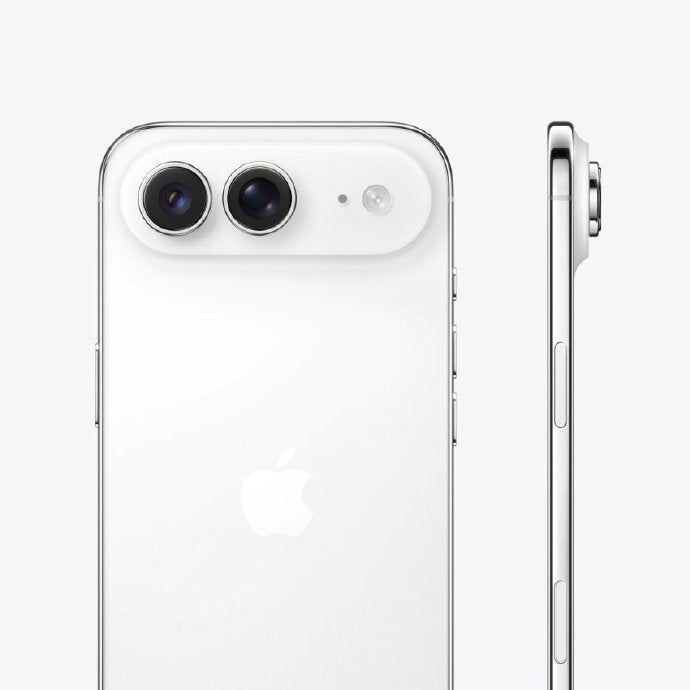
If accurate, that move would address the most obvious weakness of the current Air and could reshape Apple’s thin-phone experiment.
What the leak suggests
We are still roughly a year out from Apple’s expected reveal window, yet supply-chain chatter is already converging on a familiar idea: two cameras on the back, not one. The rumor points to a pairing of a 48MP wide main camera with a 48MP ultra-wide, bringing the Air closer in spirit to Apple’s mainstream flagship formula. In practical terms, it would align the Air with devices like the iPhone 17 that already lean on a dual-48MP approach for flexibility and detail retention across focal lengths.
Why one camera held the first Air back
The original iPhone Air’s single 48MP sensor delivered strong daylight photos and Apple’s signature computational processing – but it was still just that: a single lens. Marketing language about composite “fusion” imagery couldn’t replace the creative options of distinct optics. Without a true ultra-wide, users lost out on dramatic architecture shots, tight indoor frames, sweeping landscapes, and the different perspective that only a shorter focal length can provide. Add in the Air’s smaller battery – another compromise made in the pursuit of razor-thin design – and the package felt elegant but constrained, especially at a four-figure price point.
That combination likely explains why the Air line, despite its gorgeous profile, hasn’t matched Apple’s sales hopes. People love thin phones – until thinness cancels out the features they rely on every day. The rumored dual-camera upgrade is Apple’s clearest path to correcting course.
What a second camera unlocks
An ultra-wide lens does more than widen the frame. It helps in cramped spaces, adds drama to travel and street photography, and often doubles as a macro-capable option when paired with the right focusing distance. Coupled with Apple’s modern 48MP pipeline, an ultra-wide could retain more detail, reduce distortion through smarter correction, and improve night scenes by feeding richer data into multi-frame processing. Meanwhile, Apple’s in-sensor “2x” crop on the main camera would still offer a surprisingly clean mid-zoom option, giving the Air a practical trio of perspectives: 0.5x ultra-wide, 1x wide, and 2x crop – without resorting to a bulky telephoto.
Battery: the other big question
If Apple really wants to reposition the Air, camera upgrades alone won’t be enough. Rumors have floated about Apple exploring higher energy-density chemistries, including silicon-carbon blends, to squeeze more capacity into slim frames. If the Air 2 pairs a more capable camera system with a meaningfully larger battery – while keeping that signature profile – it could address both of the original’s pain points at once. None of this is confirmed, but the direction makes sense: the thin-phone idea only works if endurance doesn’t suffer.
Price, positioning, and the thin-phone dilemma
Across the industry, ultra-slim models like Apple’s Air and Samsung’s Galaxy S25 Edge look stunning on a table, but the physics bill often comes due in battery life and camera versatility. Customers at the $1,000 mark expect fewer trade-offs, not more. A dual-camera Air with better stamina could finally justify its premium by delivering both the aesthetic minimalists crave and the practicality mainstream buyers demand.
What to watch as 2026 approaches
- Lens arrangement & optics: Will Apple use identical 48MP sensors for consistency, and how will distortion and edge sharpness be handled on the ultra-wide?
- Computational features: Look for improved night processing, smarter HDR, and cleaner 2x crops thanks to higher-resolution input data.
- Battery strategy: Any move toward denser chemistries – or a re-architected internal layout – would be a major tell.
- Weight & balance: A second module can shift center of gravity; Apple will need to maintain comfort without thickening the chassis.
The bottom line
Adding a genuine second camera would be the most persuasive sign yet that Apple isn’t treating the Air as a design showcase but as a serious daily driver. If the leaks hold and Apple also tackles battery life, the iPhone Air 2 could move from beautiful compromise to balanced contender – still impossibly thin, but finally hard to argue against.