Nintendo opens the door to developer acquisitions, doubles down on Switch 2 games, and goes bigger on movies
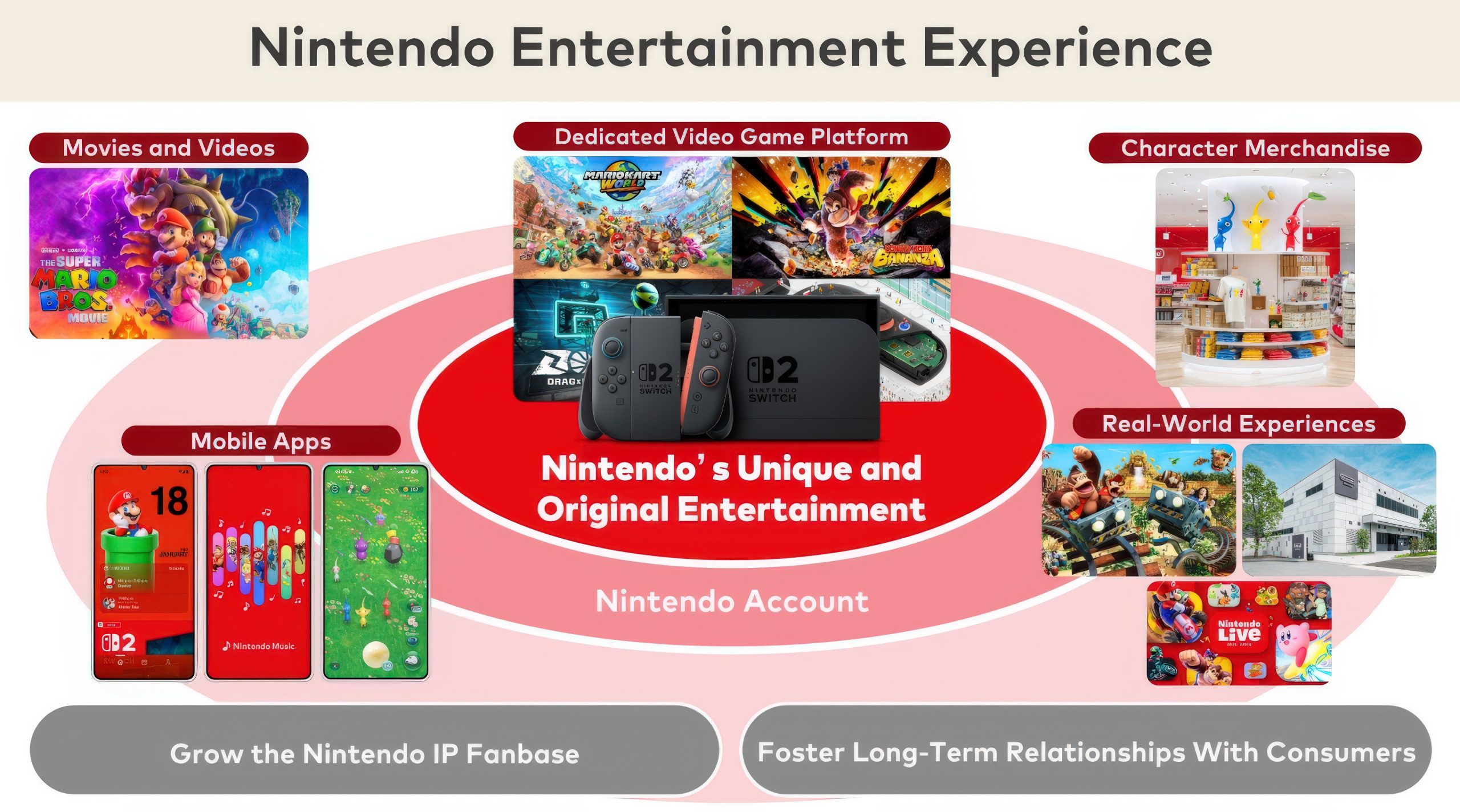
Fresh off a strong quarter and half-year, Nintendo president Shuntaro Furukawa circulated a 61-page strategy brief to investors that sketches a clearer picture of where the company is heading next. The short version: keep the Switch 2 momentum roaring with a dense slate of first-party releases, make sure the third-party pipeline is broader than anything Nintendo has shipped with new hardware before, and invest the windfall back into capability – ranging from studio acquisitions and facilities to transmedia projects and consumer touchpoints built on Nintendo Account.
A crowded first-party calendar to anchor Switch 2
Nintendo’s near-to-mid-term lineup reads like a victory lap designed to keep hardware demand high well beyond launch year. The schedule highlighted to investors includes Hyrule Warriors: Age of Imprisonment, Kirby Air Riders, Metroid Prime 4: Beyond – Nintendo Switch 2 Edition, Animal Crossing: New Horizons – Nintendo Switch 2 Edition, Mario Tennis Fever, Super Mario Bros. Wonder – Nintendo Switch 2 Edition + Meetup in Bellabel Park, Yoshi and the Mysterious Book, Pokémon Pokopia, and Fire Emblem: Fortune’s Weave. It’s a classic Kyoto playbook: lead with characters that sell hardware, then keep those players active with a steady rhythm of releases across genres and age groups.
That rhythm matters because Switch 2 demand is running ahead of expectations in several regions. Furukawa acknowledged ongoing shortages, apologized for the inconvenience, and reiterated that Nintendo is working to stabilize supply. The subtext is familiar to anyone who watched the original Switch era – hit software keeps pressure on the supply pipe, but it also buys time and goodwill while production catches up.
The biggest third-party lineup ever for a new Nintendo system
Alongside the first-party blitz, Furukawa emphasized something Nintendo rarely trumpets so loudly: the Switch 2’s launch window boasts “the largest third-party software lineup for a new Nintendo hardware ever.” That matters for two reasons. First, it broadens the value proposition for players who live beyond Nintendo’s own universes. Second, it signals healthier relationships with external publishers at the precise moment the install base is forming – when habits are set and libraries are built.
Why acquisitions are suddenly on the table
Historically, Nintendo has preferred long-term partnerships over big shopping sprees. Exceptions exist – most notably the 2021 purchase of Next Level Games, which had already proven itself on titles like Luigi’s Mansion 3. The investor document makes clear that mindset is evolving. One of the company’s main investment areas is now studio acquisition, specifically to “strengthen the internal game development organization within the Nintendo group.” In practice, that means three things: converting key partners into subsidiaries when it improves velocity and quality; expanding and upgrading development facilities; and moving ahead with the Corporate Headquarters Development Center, Building No. 2 (working title) to add capacity.
Which studios fit that mold? The most obvious targets tend to be those already embedded in Nintendo DNA – teams like Game Freak, HAL Laboratory, or Intelligent Systems, each responsible for long-running pillars of the catalog. On the Western side, MercurySteam, the Spanish studio behind two modern 2D Metroid entries, is frequently floated by observers, in part because integration could lock in a proven pipeline for a franchise Nintendo clearly wants to nurture. None of this is confirmed; the point is strategic intent. By buying selectively rather than indiscriminately, Nintendo can secure know-how, stabilize schedules, and reduce the risk that crucial partners drift away during a competitive hardware cycle.
The exclusivity trade-off players are already debating
There’s a live conversation among fans about acquisitions that reach beyond Nintendo’s usual orbit. What if, for example, Nintendo went after a multi-platform stalwart like Atlus? That would be a crowd-pleasing headline for some, but it would also mean beloved series could become hardware-exclusive overnight. The upside for Nintendo is clear – brand differentiation and deeper RPG coverage. The downside for players on other platforms is equally obvious. Expect Nintendo, if it does move, to favor studios whose identities are already intertwined with its IP, minimizing collateral damage and community blowback.
Beyond games: Nintendo’s transmedia push accelerates
The investor brief also formalizes a bigger bet on “software assets in non-game entertainment.” The world learned what that looks like with The Super Mario Bros. Movie; now Nintendo is ready to widen the aperture, allocating funds to screen projects that reinforce the core game business. On the slate: The Super Mario Galaxy Movie planned for April 2026 and a Zelda live-action film targeting March 26, 2027. This isn’t just licensing for licensing’s sake. The strategy loops back into the flywheel – films boost brand reach, renew interest in classic and upcoming games, and feed merchandising, which then justifies further investment in the characters that power Nintendo’s most reliable revenues.
Nintendo Account: the connective tissue to 400M+ players
The third leg of the investment stool is “maintaining and expanding our touchpoints with consumers,” centered on Nintendo Account. With more than 400 million accounts created to date, Nintendo now has a direct channel for lifecycle marketing, platform services, and cross-media engagement. Expect deeper personalization in the eShop, more integrated event-style promotions across games, and account-level benefits that blur the line between hardware generations. In a world where platform identity is as much about services as it is about silicon, Nintendo Account is the backbone for retention.
Indies, culture, and the long game
One sentiment echoed across the community is that Nintendo – together with a thriving indie scene – keeps gaming weird, playful, and joyful. That matters strategically. While the headline franchises sell consoles, it’s the breadth and variety (including indie hits) that keeps monthly active users engaged between tentpoles. Nintendo’s commitment to the “largest third-party lineup” implicitly includes these smaller studios, which benefit from discovery on a platform where family-friendly software and inventive design are rewarded.
The bottom line
Nintendo is not trying to outspend rivals on mega-deals or live-service land grabs. It’s attempting something more Nintendo: protect the magic by owning the key teams that make it, build enough infrastructure to ship reliably, expand the audience with films that feel true to the games, and keep fans close through an account system that spans eras. If the supply side catches up and the third-party promise materializes, Switch 2 won’t just repeat history – it could extend it.
1 comment
Nintendo + indies still make gaming feel fun again tbh. weird lil’ games in between the big ones is the sweet spot 🕹️✨