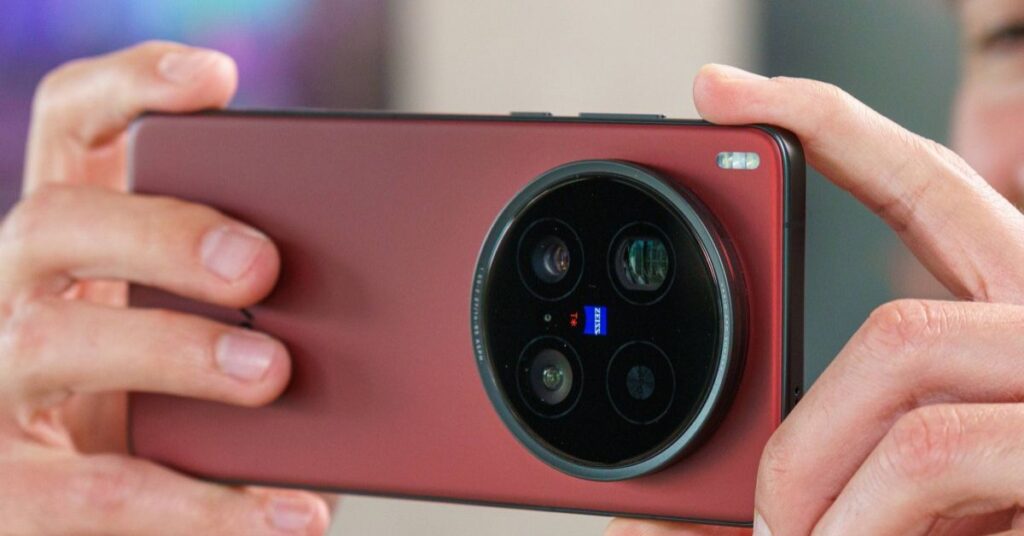
Vivo X300 Ultra global debut: a serious camera phone that won’t outsell iPhone or Galaxy, and that’s okay
The global spotlight is finally turning toward an unlikely protagonist in smartphone photography: Vivo’s X300 Ultra. Its arrival beyond China is a big deal not because it will dominate sales charts—it almost certainly will not—but because it challenges the rhythm of a market ruled by muscle memory. Most people walk into a store thinking iPhone or Galaxy, and most walk out with exactly that. Meanwhile, phones like the X300 Ultra quietly push the boundaries of what a pocket camera can do, raising the bar for everyone else and giving enthusiasts a reason to be excited again.
If you have ever shown friends a stunning photo taken on a high-end Chinese flagship, you know the script. They marvel at the clarity, ask whether it was shot on a “real” camera, and then freeze on the brand name. The recognition gap is real: brands such as Vivo and Oppo still sound exotic in many regions, even though their imaging teams have been building some of the most ambitious mobile camera stacks of the last few years. That gap should narrow as the X300 Ultra steps onto the world stage with the confidence of a device engineered first and foremost for photography.
To understand why the X300 Ultra matters, it helps to look back at the Vivo X200 Ultra, a phone that earned genuine respect among camera nerds. The X200 Ultra was not merely competent; it was unapologetically built for image quality, with hardware that left room for computational tricks to flourish rather than compensate. The X300 Ultra inherits that philosophy and, if early whispers hold, accelerates it. Crucially, Vivo has also primed expectations with its “little sibling,” the X300 Pro, which already ships with a camera array that many brands would reserve for their top-tier flagships. If the Pro is that good, the Ultra is poised to be the model that goes all-in.
Rumors surrounding the X300 Ultra read like a spec sheet written by photographers. The headline: two 200 MP sensors—one as the primary wide camera and another dedicated to telephoto duties. That might sound like overkill, but there is a practical upside. High-resolution sensors allow heavy oversampling and tighter in-sensor crop, preserving detail where conventional tele modules would already fall apart. Combine that with modern optical stabilization, faster image pipelines, and the kind of multi-frame fusion Vivo has been honing, and you get reach without surrendering texture. Huawei has been experimenting along similar lines, and it is no coincidence: when Chinese brands pursue audacious ideas, the industry tends to follow.
What makes this approach exciting is the balance between brute-force hardware and intelligent software. Computational photography is brilliant at lifting shadows, taming noise, and harmonizing colors. Yet the foundational physics of bigger sensors, better glass, and longer focal lengths still matter. Pair them well and you get a tool that is not only smart but also optically powerful. That is when smartphone cameras stop feeling like clever illusions and start behaving like trustworthy instruments. If even half of the X300 Ultra’s rumor stack materializes, it could be one of the rare handsets that delivers both the look and the latitude photographers crave.
Of course, leaving China usually comes with a tax. Import-friendly pricing disappears, regional support networks add overhead, and the sticker climbs. This is where many would-be buyers hesitate, and understandably so. Yet there is a comfort to walking into an official store, leaving with a proper warranty, carrier-friendly band support, timely updates, and none of the headaches that come with gray-market importing: no waiting weeks for shipping, no wrestling with bootloader quirks, and no praying that customs does not hold your parcel hostage. The extra cost buys peace of mind, and for an imaging-first flagship, that assurance can be part of the value.
Even with all of that, no one should expect a coronation. Apple and Samsung have earned their dominance. iPhone Pro models and Galaxy flagships deliver consistent image pipelines, top-tier video, stable app ecosystems, and a comfortingly predictable user experience. That reliability explains why millions default to them year after year. But mainstream excellence can also feel safe to a fault, and that is where devices like the X300 Ultra play their role: they bring back surprise. Think extreme optical reach that mimics a 5400 mm equivalent viewpoint, letting you pull a clock face from blocks away. Think night modes that chase fine star fields without reducing the sky to watercolor. Think macro work that retains lifelike micro-contrast instead of overcooked sharpening. It is not that Apple or Samsung cannot do these things; it is that Vivo often chooses to make them the headline act.
There is another, quieter benefit to globalizing a phone like this: it raises awareness that great mobile cameras do not belong to only two brands. Once names like Vivo and Oppo become familiar conversation pieces, shoppers start exploring. Some may graduate to full-on photography-first flagships; others might find a middle path with devices like the OnePlus 15 that borrow DNA from their camera-obsessed cousins while keeping prices gentler. Either way, curiosity expands the market, and competition improves the products that eventually land in everyone’s hands.
And the “Ultra” label is not just marketing flair here. Consider the kind of creative headroom such hardware affords. With a high-resolution telephoto, lossless-feeling 2x, 4x, or even 6x crops become feasible in bright light. Portraits gain a cinematic separation that does not look synthetic. Street shooters can frame from a distance without announcing themselves. Travelers can leave the compact camera behind and still bring home gallery-grade shots. Meanwhile, pro features like RAW capture, manual controls, and vendor-specific color science give enthusiasts room to develop a look rather than settle for a preset.
None of this dismisses the friction that will remain. Price will be higher than in China. Availability will be patchy at first. Accessory ecosystems will take time to catch up. But the payoff is a healthier smartphone camera scene worldwide. Every time an audacious flagship goes global, it nudges the status quo. The next iPhone or Galaxy tends to answer with a counterpunch; midrange devices inherit hand-me-down improvements; and consumers get better pictures no matter which logo sits on the back of their phone.
The bottom line is simple: the Vivo X300 Ultra probably will not outsell an iPhone or a Galaxy, and it does not need to. Its job is to remind everyone how thrilling mobile photography can be when a company pursues optics with conviction. If the rumors prove directionally right, this Ultra will be a traveling showcase of what happens when you mix daring hardware with mature computational smarts. For casual users, it means more choice. For camera enthusiasts, it means a new toy box. For the industry, it means pressure to keep innovating. And that is a win regardless of the sales league table.
1 comment
Why does no one in my city even know Vivo lol