For most of the last decade, the smartwatch story read like a foregone conclusion: Apple wrote the plot, Samsung tried to remix it, and everyone else played supporting roles. In 2025, Google barged into the writers’ room with the Pixel Watch 4 and flipped the whiteboard. The result isn’t just a better Android watch – it’s the first credible, sustained challenge to Apple’s dominance since the original Apple Watch.
From health gadget to truly smart companion
Ask Apple what a smartwatch is and you’ll hear a careful answer about medical-grade sensors, long-term wellness, and subtle nudges. Ask Google the same question this year and you’ll get something more ambitious: a wrist computer that understands context, reasons about your day, and helps you act. That philosophical split explains why the Pixel Watch 4 lands like a revelation – even when the spec sheet looks familiar.
The marquee difference isn’t a sensor, strap, or screen; it’s the brain. 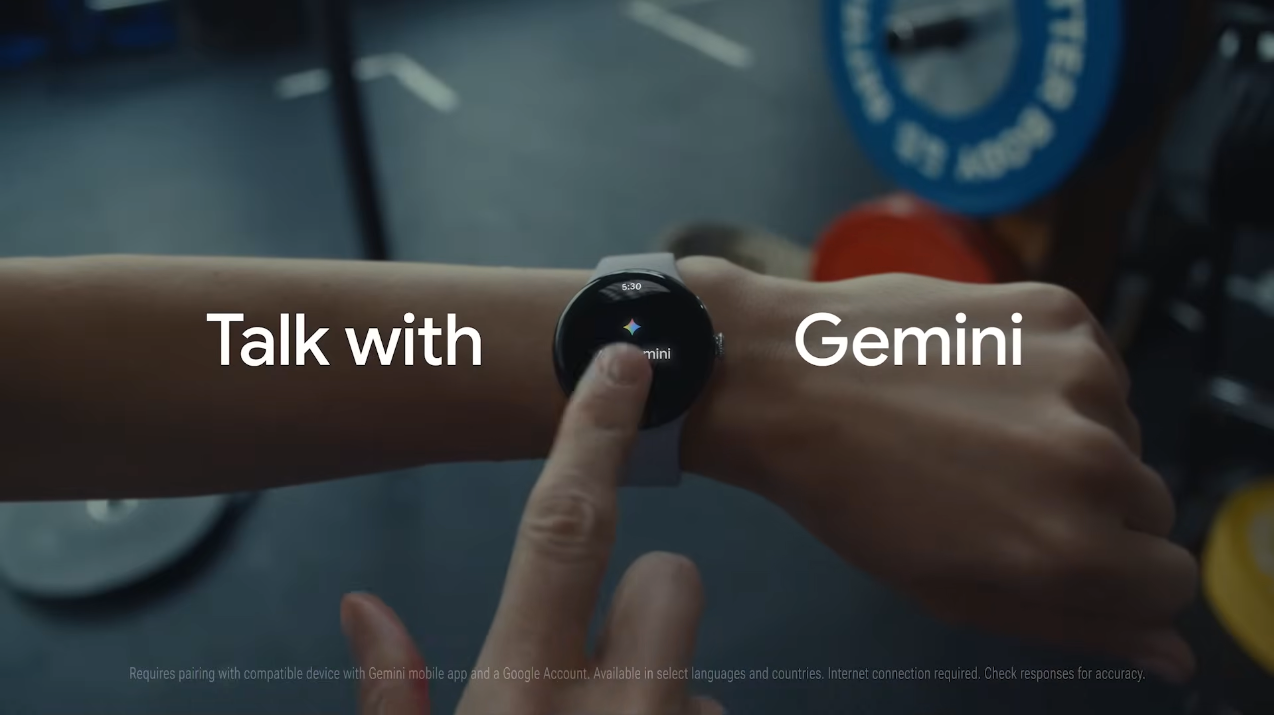
Google replaced Assistant with Gemini on the watch and, suddenly, interactions feel less like command-and-control and more like a conversation with a helpful aide. Gemini can fuse your calendar, commute, habits, and health signals into a single narrative thread. It will summarize your morning, propose a time-boxed run between meetings, and adjust that plan if your heart-rate variability hints at lingering fatigue. It even handles mundane stuff – setting multiple timers, controlling smart home routines, or walking you through a recipe – without constantly shipping every query to the cloud. Much of it runs on-device, which means faster responses and less data leaving your wrist.
On Apple Watch, Siri remains competent but constrained. It’s fine for quick texts or a kitchen timer, yet it rarely stitches together context from multiple apps or makes leap-of-logic suggestions. Apple Intelligence, the company’s next-gen AI stack, is present across the ecosystem – but on the watch it’s either barely visible or tightly sandboxed. Apple’s method prizes reliability and permissions, which is reassuring, but it also makes the watch feel more like a peripheral to the iPhone than a peer. By contrast, the Pixel Watch 4 acts like a colleague.
Proactive coaching vs. reactive metrics
There is a reason clinicians respect the Apple Watch. Features such as hypertension detection and sleep apnea indications are serious, conservative, and – crucially – supported by regulatory clearances. If you want a device that can flag conditions and provide well-structured reports to discuss with a doctor, Apple’s approach is a benchmark.
But those capabilities are mainly reactive: they inform you after physiology crosses a threshold. Google’s new AI Health Coach aims to be proactive. It eats the same streams of heart rate, activity, and sleep data, then turns them into daily guidance: adjust training zones, downshift intensity today, push for a short interval session tomorrow, go for a long walk after a heavy lunch, or target a higher step count only if your recovery markers rebound by afternoon. The experience feels like a coach who knows you’re a human, not just a bundle of VO₂ max charts. It’s early software with rough edges, but the intent is clear: less dashboard, more decision support.
The next battleground won’t be who offers 150 sport modes or who can survive a dunk in the ocean. It will be how tightly the watch can sync with your rhythms, detect context changes in real time, and nudge you toward better micro-choices – without you digging through menus. In that race, Google has sprinted out of the blocks.
Wear OS 6 finally feels like Google – and it shows
Samsung has spent years throwing everything at the wall: body composition sensors, hand-gesture shortcuts, scrolling bezels, you name it. The Galaxy line is powerful, but the experience sometimes feels like a set of features looking for a center. With Wear OS 6, Google found one. The Pixel Watch 4 expresses a coherent design language that takes the grace and momentum Apple nailed early – and speaks it in Material 3’s colorful, tactile dialect.
Twist the crown and the Actua 360 display blooms with silky animations. Notifications don’t just arrive; they arrive, with weight and motion that make them easy to parse and dismiss. Google Wallet taps are immediate, turn-by-turn Maps on the wrist are legible even mid-run, and the camera shutter tile makes group shots painless. The whole thing invites exploration, rather than demanding configuration. Where some competitors still feel like tiny phones on a strap, the Pixel Watch 4 feels like a sympathetic extension of the Android life you already live.
Hardware counts – but experience counts more
Credit where it’s due: Apple remains the build-quality standard in the U.S. market. The Apple Watch Series 11 can be had in titanium with sapphire glass, and it’s slimmer and lighter than Google’s pebble. If you wear a watch to bed every night, those grams matter. Apple’s case tolerances, haptics, and band ecosystem are still exemplary.
Google’s industrial design has its own magnetism. The Pixel Watch 4’s minimalist dome and edge-to-edge curve look like a river stone that learned to glow. It’s thicker than Apple’s, and while repairability has improved, the rounded glass is still not a fan of doorframes. If you’re tough on gear, Apple’s extra durability options are comforting.
But the display and battery story tilts decisively toward Google. The Pixel Watch 4’s 3,000-nit AMOLED is dazzling outdoors and melts into the glass so convincingly that Apple’s flatter panel feels, for once, conservative. And while Apple has stretched typical battery life to a claimed 24 hours, the Pixel Watch 4 routinely clears 40 hours – two honest days for many users. That difference changes behavior: you stop managing the battery and start forgetting about it.
Connectivity is another quiet win. Emergency SOS via satellite ships standard on Google’s watch, while Apple reserves comparable satellite functions for the pricier Ultra 3. Most people won’t need it, until the afternoon they do – on a trail with no bars or a roadside with a dead phone.
Privacy: Apple still holds the high ground
None of this erases the elephant on the table: data privacy. If your red line is that health data should remain fiercely local and monetization-immune, Apple continues to be the safest harbor. Its policies, permissions model, and public commitments reflect years of building trust with privacy-sensitive users.
Google is much better today than the caricature some still hold; the company ring-fences sensitive categories, and the Pixel Watch 4 does a lot of on-device work that never touches a server. But Google also coordinates services in ways that, while functionally great, won’t satisfy purists. It shares limited data across properties to make features… well, smarter. If that tradeoff makes you squirm, Apple’s approach will feel calmer and more predictable.
Why Google’s win feels different from Samsung’s near-misses
Samsung has threatened Apple’s lead many times in raw capability. Yet its watches often felt like impressive demos rather than a worldview. By contrast, the Pixel Watch 4 feels like Google finally believes in wearables on their own terms. The company isn’t chasing Apple’s medical playbook; it’s leaning into what Google is uniquely good at: reasoning across your data, predicting intent, and giving you timely options. That’s the same playbook that made Gmail, Photos, and Maps sticky. Now it’s on your wrist.
What to buy – and why
If you live inside the iPhone universe and value clinical-grade features, the Apple Watch Series 11 remains the obvious pick. Its sensor suite, app ecosystem, and superb hardware leave little to regret. For people who want the most durable chassis, Apple’s higher-end materials are reassuring, and its sleep tracking pairs naturally with iPhone’s Health ecosystem.
For Android users, the Pixel Watch 4 is the new default. You get a watch that feels truly integrated with Google services, a battery that lets you skip the nightly anxiety, and an AI assistant that actually deserves the term. Runners and cyclists who plan their weeks around recovery metrics will appreciate Health Coach’s proactive guidance, even if it’s still evolving.
Privacy diehards should lean Apple; feature maximalists who crave the newest software ideas will have more fun on Google’s side. Frequent travelers will appreciate Google’s deep Maps and translation chops on the wrist. Those who want a rugged adventure watch with extra buttons and expedition flair may still prefer Apple’s Ultra line – or wait to see how Samsung reframes its next Galaxy Watch for the outdoors.
The fun factor Apple mislaid – and Google rediscovered
The most surprising emotion the Pixel Watch 4 elicits isn’t tech lust; it’s delight. For years, smartwatches risked becoming scolds – nagging step counters and sleep shamers. Google’s watch feels playful and curious. It doesn’t want to be your doctor. It wants to be your companion, the helpful Tamagotchi that grows wiser about you every day.
Apple could absolutely match this energy. The company knows how to build personality into software and how to ship AI responsibly. But the head start belongs to Google, and momentum matters. Wearables evolve in tiny, daily interactions – the way a glanceable tile saves you 10 seconds, or how a timely suggestion prevents you from skipping a workout. Stack those moments over months, and they become loyalty.
The smartwatch wars enter their AI era
Apple’s reign isn’t ending; it’s maturing. The market is no longer a one-act play. With the Pixel Watch 4, Google has turned Android wearables from Plan B into a first-choice experience. Samsung, never count it out, could still swing big and unsettle both rivals. But as of late 2025, the competitive axis has shifted. We’re no longer arguing about bezels, speakers, or the 142nd exercise mode. The real question is: which watch understands you best – and helps you change for the better?
On that measure, Google is in the lead today. Not because it duplicated Apple’s strengths, but because it doubled down on its own. If Apple wants to keep the crown, the Series 12 and beyond will need less dashboard, more dialogue; less reporting, more guidance; fewer walls, more context. Make the watch feel alive again, and this rivalry becomes a classic.
Bottom line
- AI is the new moat. The Pixel Watch 4 reframes the smartwatch as a context engine, not just a sensor hub.
- Apple still sets hardware and privacy standards, and remains the best iPhone companion.
- Battery and display go to Google, with two-day stamina and a brighter, more immersive panel.
- Health Coach vs. FDA features is the defining philosophical split: proactive guidance versus validated detection.
- Competition is finally interesting again. Expect faster iteration, bolder software, and smarter nudges – on both sides.
Whichever logo ends up on your wrist, the winner of this new era is the wearer. Watches that simply record are giving way to watches that reason. And that’s the kind of pivot you actually feel – hour by hour, day by day.
1 comment
Nice writeup, but give me sapphire and titanium any day. I’m a doorframe magnet