Nintendo Says Film Fits Its Games: Inside the Strategy Driving Mario, Zelda and a New Era for Its IP
After its latest quarterly briefing, Nintendo leadership did something it increasingly does in 2025: talk about movies as a core part of the company’s entertainment roadmap. President Shuntaro Furukawa described film and broader visual media as “very well-suited” to Nintendo’s games, while Shigeru Miyamoto framed the push as a logical next step for an entertainment company built on characters, worlds, and decades of fan attachment. The message was clear: transmedia isn’t a side quest for Nintendo – it’s a mainline strategy.
Furukawa connected the dots between the breakout success of The Super Mario Bros. Movie and a broader plan to expand the audience, rekindle interest in classic franchises, and create multi-generational support that stretches beyond consoles. Films, he argued, can invite in families who don’t own a Switch, remind lapsed fans why they loved these worlds, and keep the brand culturally present in years when the software slate is lighter. This is less about chasing Hollywood cachet and more about sustaining the flywheel: movies lift games; games lift movies; both lift merchandise, parks, and online fandom.
From Interactive to Passive – Without Losing Nintendo’s DNA
Miyamoto’s longer answer provided the operating philosophy. Nintendo doesn’t want to bloat its headcount into a traditional studio system; instead, it is assembling global partners while keeping its own developers involved so the ethos of play, clarity, and charm survives the jump from controller to cinema seat. That’s where Nintendo Pictures comes in – not merely as a factory for feature films but as an experimentation lab. The division is tasked with shorts, research, and creative tests like the gentle Pikmin piece Close to You, with the explicit goal of building a durable content library rather than chasing box office alone.
This approach is refreshingly pragmatic. Film is a different medium with known business structures, but Nintendo wants to participate on its own terms: partner widely, protect the IP’s spirit, and use shorter-form work to learn what resonates before scaling up. If those experiments become reusable assets – trailers, shorts, streaming extras, or seeds for future features – so much the better.
Mario Proved the Door Is Open
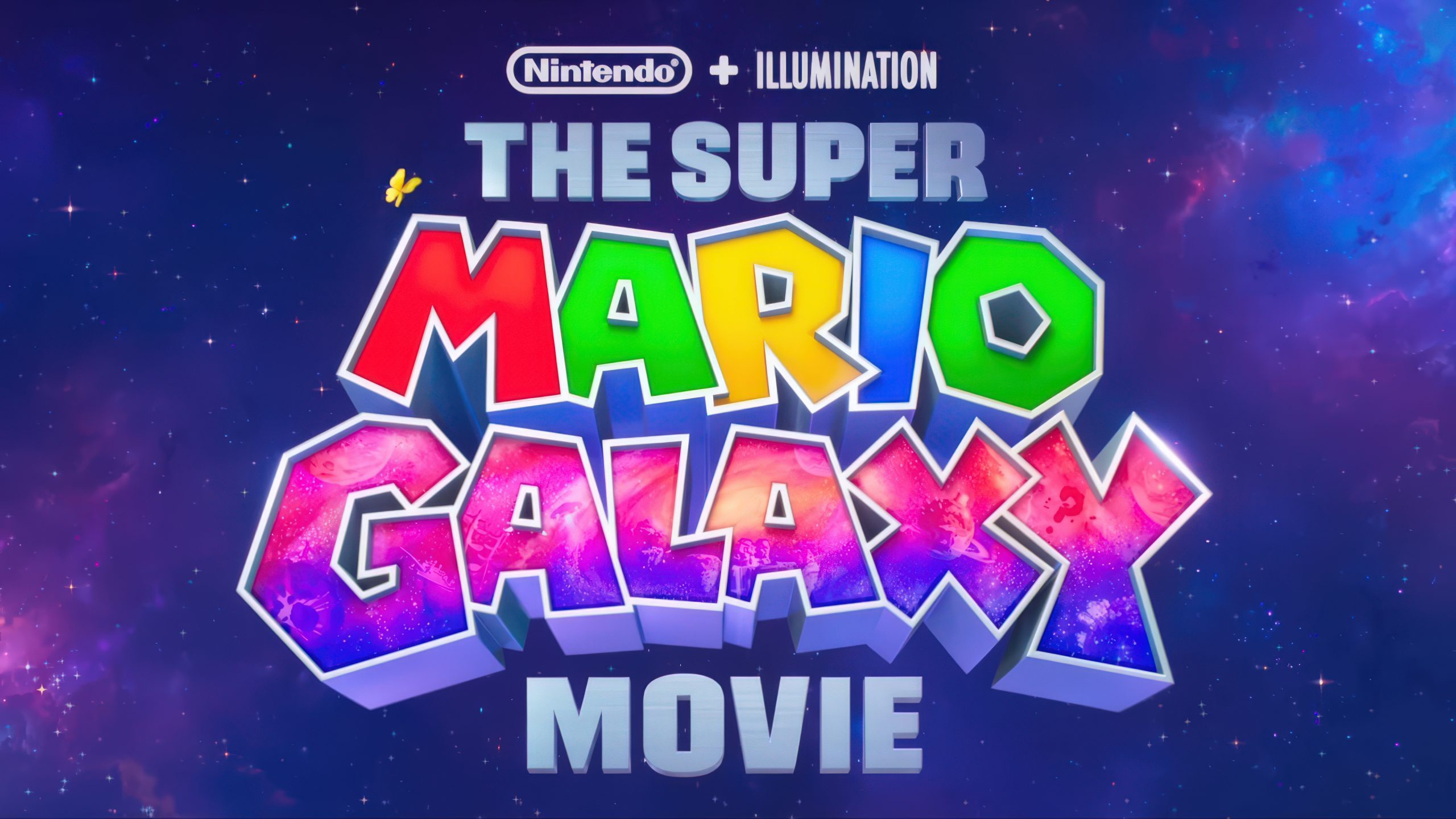
The 2023 Mario film didn’t just break records; it rewrote expectations for game adaptations. It leaned into clarity of character and physical comedy – the same things that make Mario work as a game – and delivered something families could watch together. Reports now point to a follow-up targeting April 3, 2026, with a “Galaxy” framing that practically begs for big-screen spectacle. Whatever its final title, the sequel will test how far Nintendo can stretch tone and scope while keeping that easy-to-love simplicity.
Zelda Is the Real Stress Test
Mario is globally ubiquitous; The Legend of Zelda is beloved but moodier, more contemplative, and less instantly memeable. That’s precisely why a live-action adaptation – reportedly starring Bo Bragason as Zelda and Benjamin Evan Ainsworth as Link – will be the industry’s litmus test. Can a property defined by quiet exploration, spare dialogue, and mythic ambiguity become a broadly accessible film without losing its soul? The answer will hinge on choices Nintendo has historically treated with restraint: how much voice acting, how much exposition, how much lore. Get it right, and Zelda could introduce an entirely new audience to Hyrule’s cycle of courage and calamity – and send them straight to the eShop afterwards.
The Critiques Fans Keep Raising – And How Nintendo Might Answer
“Nintendo stories are just ‘mumble mumble’ between jumps and pew-pew.” “They don’t do voice acting because of hardware limits.” “Make deeper worlds; stop with the big empty spaces.” “This is all one giant ad.”
These are real community sentiments, and they’re worth addressing up front. First, Nintendo’s narrative style has long favored readable emotions and environmental storytelling over dense scripts. That minimalism can look thin next to Sony’s prestige, but it also makes Nintendo’s characters portable across mediums and cultures. Film doesn’t need a thousand lines of lore; it needs arcs, chemistry, and a visual grammar that lands in any language – places where Nintendo historically excels.
Second, the voice-acting debate isn’t a storage issue; it’s a design choice. Nintendo has added extensive VO where it helps (see Fire Emblem), and kept it sparse where silence is part of the charm (Link’s quiet heroism). Movies will force the issue – and that’s okay. A carefully calibrated script can give Link and Zelda presence without turning them into quip machines.
As for “empty worlds,” that’s a critique of certain open-world trends, not a Nintendo doctrine. If anything, the company’s best work balances clarity and curiosity: teach the player quickly, then trust them. Translating that to film means clean stakes, tactile set-pieces, and a rhythm that alternates wonder with momentum – think Temple of Doom pacing with Hyrule’s poetry.
Finally, yes, films reinforce the brand. But calling them “just ads” undersells how modern franchises live. When done well, each medium respects the others: a film tells a complete story, a game offers agency, shorts and series fill in tonal corners. The commercial synergy is the feature, not a bug – so long as the audience gets genuine entertainment at every step.
Partnerships, Pipeline, and What Success Looks Like
Miyamoto emphasized a global network of collaborators, with Nintendo teams embedded to keep the compass aligned. That lets the company pursue multiple tracks at once: tentpole features when the creative fit is right, plus a steady cadence of shorts and special projects that test new ideas, tones, and techniques. The output doesn’t have to be annual; it has to be intentional. The KPIs aren’t only box office and streaming hours but fan growth, reactivation of dormant players, and the evergreen value of a content library that can be remixed for decades.
The real prize is multi-generational resilience. A child meets Pikmin in a two-minute short, drags a parent to a feature, and both end up buying a game on a Sunday afternoon. A lapsed fan watches a Zelda trailer, rediscovers Hyrule on Switch (or its successor), and then keeps the family in Nintendo’s orbit with a park visit or merch. That is what “very well-suited” looks like in practice.
What’s Next – And What Fans Want
Beyond Mario and Zelda, fans are already pitching candidates: Star Fox as a swaggering space-opera; a moody Metroid thriller; a cozy, slightly absurd Animal Crossing special. The experimentation mandate from Nintendo Pictures suggests those ideas aren’t just fantasy – they’re the kinds of bets short-form projects can prototype quickly. Start small, learn fast, scale what clicks.
In short, Nintendo isn’t trading controllers for clapboards. It’s extending the worlds players already love into formats their families, friends, and future fans can enjoy – carefully, experimentally, and with the same obsession over feel that made its games timeless. If the company keeps that balance, movies won’t dilute Nintendo. They’ll make it bigger.