Fairphone lands in the US with repairable audio gear first – and a bigger smartphone play on deck
Roll out the welcome mat: a new, values-driven tech brand is finally setting foot in the United States. Fairphone, the Dutch company best known in Europe for phones you can open, fix, and keep for years, is taking a deliberately staged approach to America. Instead of diving straight into the hyper-competitive handset market, Fairphone is introducing its modular, repair-friendly headphones first. That move lays the commercial and logistical groundwork for a later, carefully timed smartphone debut.
Why start with audio? Because the US is in the middle of a cultural and policy shift. The right-to-repair movement – once a niche cause championed by tinkerers and environmentalists – has become mainstream. More states are passing repair laws, more consumers are rejecting sealed, disposable electronics, and retailers are warming to products that advertise longevity rather than forced upgrades. Fairphone’s leadership told Reuters the company sees the US as a strong fit precisely because demand for fixable devices is rising even as trade conditions remain unpredictable. Tariffs can swing; consumer sentiment toward repairability is trending one way.
A strategy built for uncertainty – and longevity
Fairphone’s plan is pragmatic. Launch an accessory that showcases the company’s modular design language and service model; prove the logistics of parts availability, documentation, and support; then scale up to phones. While Fairphone, like much of the industry, assembles products in China, it emphasizes ethical sourcing, traceability, and social impact across the chain – from mining inputs to semiconductor components. That ethos has already won it a loyal following in Europe, where it pioneered the idea that a premium device could be measured not just by specs, but by how long it lasts and how fairly it’s made.
The brand’s momentum is quantifiable. In the third quarter of 2025, Fairphone reported a 61% year-over-year revenue jump. Device sales climbed 61%, audio products rose 41%, and spare parts grew 41% – a telling indicator that customers are actually repairing rather than replacing. The company hasn’t published US unit targets, but internally aims to sell at least as many audio units in America this year as it did across Europe last year. There is a headwind: Fairphone hardware currently faces a 34% tariff in the US. Yet the team argues that the demand signal – people actively seeking products they can maintain – more than offsets tariff volatility.
Distribution: Amazon now, carriers next
For its US debut, Fairphone is partnering with Amazon, a move that ensures immediate nationwide reach and straightforward fulfillment for parts and modules. The second phase will matter even more: expanding into carrier channels. In the US, more than 90% of smartphones are sold through mobile operators, making carrier presence a threshold requirement for scale. Establishing credibility with a widely available, serviceable accessory helps Fairphone make that case to carriers next.
What the smartphone roadmap looks like
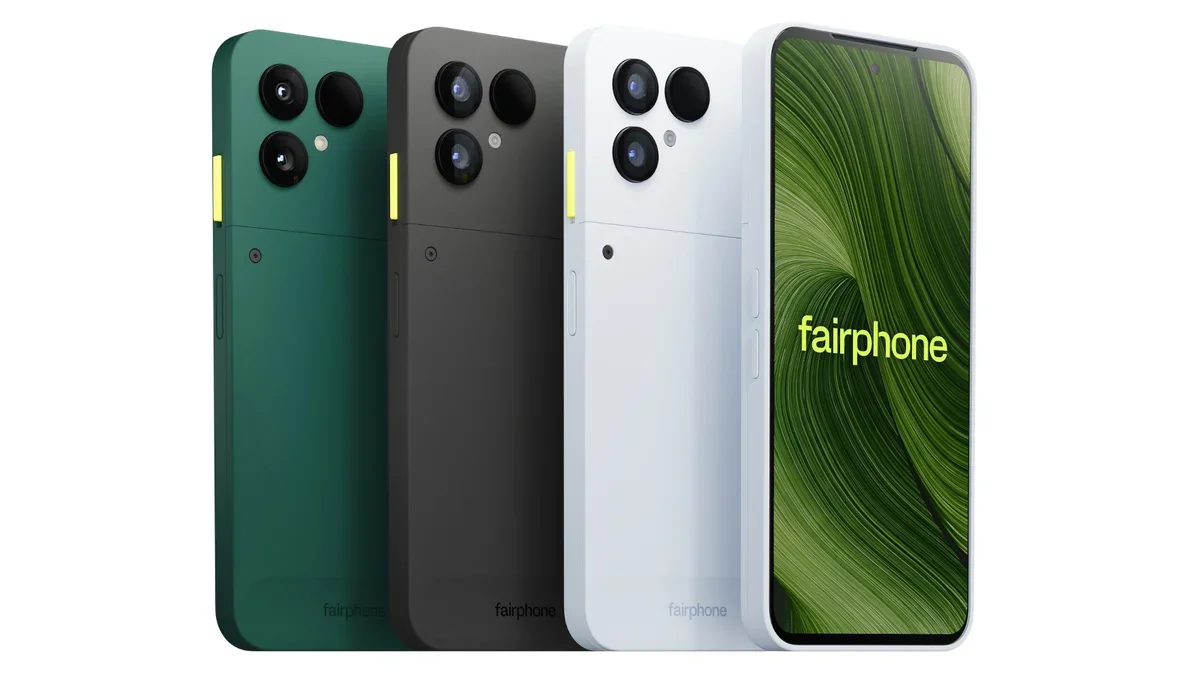
When Fairphone does bring a handset, the flagship reference point is the Fairphone 6. It promises up to eight years of software support, a five-year warranty, and guaranteed spare-part availability through 2033. Those commitments are bolstered by transparent repair guides and a modular architecture that makes common fixes – like swapping a battery, charging port, or camera – feasible with basic tools. Instead of treating repair as a grudging afterthought, Fairphone designs for it from the first sketch, and prices parts so that repairing is rational, not just ideological.
Right-to-repair moves from fringe to policy
The US policy climate is evolving quickly. Recent state-level right-to-repair laws, combined with growing public frustration over pricey annual upgrades and locked-down hardware, are reshaping buyer expectations. That dynamic creates white space for companies that bake in serviceability, publish parts catalogs, and back their marketing with measurable commitments. Fairphone’s arrival doesn’t just add another brand to the shelf; it pressures incumbents to extend support windows, ease repair restrictions, and rethink how long a premium device should meaningfully last.
There’s also a broader sustainability angle. Extending device lifespans reduces e-waste and the embodied carbon of frequent replacements. By making spare parts easy to source and upgrades modular, the company argues you can keep the best of your device while refreshing what ages fastest – batteries, ports, and cameras – without tossing the rest. If US consumers embrace that model, it could bend the market’s incentives away from disposability and toward durability.
Fairphone’s US launch might look modest – headphones first, phones later – but it’s a calculated opening gambit. Nail the service experience, meet parts-supply promises, prove the appetite for repairable gear, and the smartphone chapter becomes less of a gamble and more of an inevitability. If timing continues to align with policy momentum, the US rollout could turn into the company’s most consequential expansion yet – and a turning point for how we buy, use, and keep our tech.
1 comment
Tariffs gonna make it pricey, but at least I can swap a battery without begging a Genius Bar