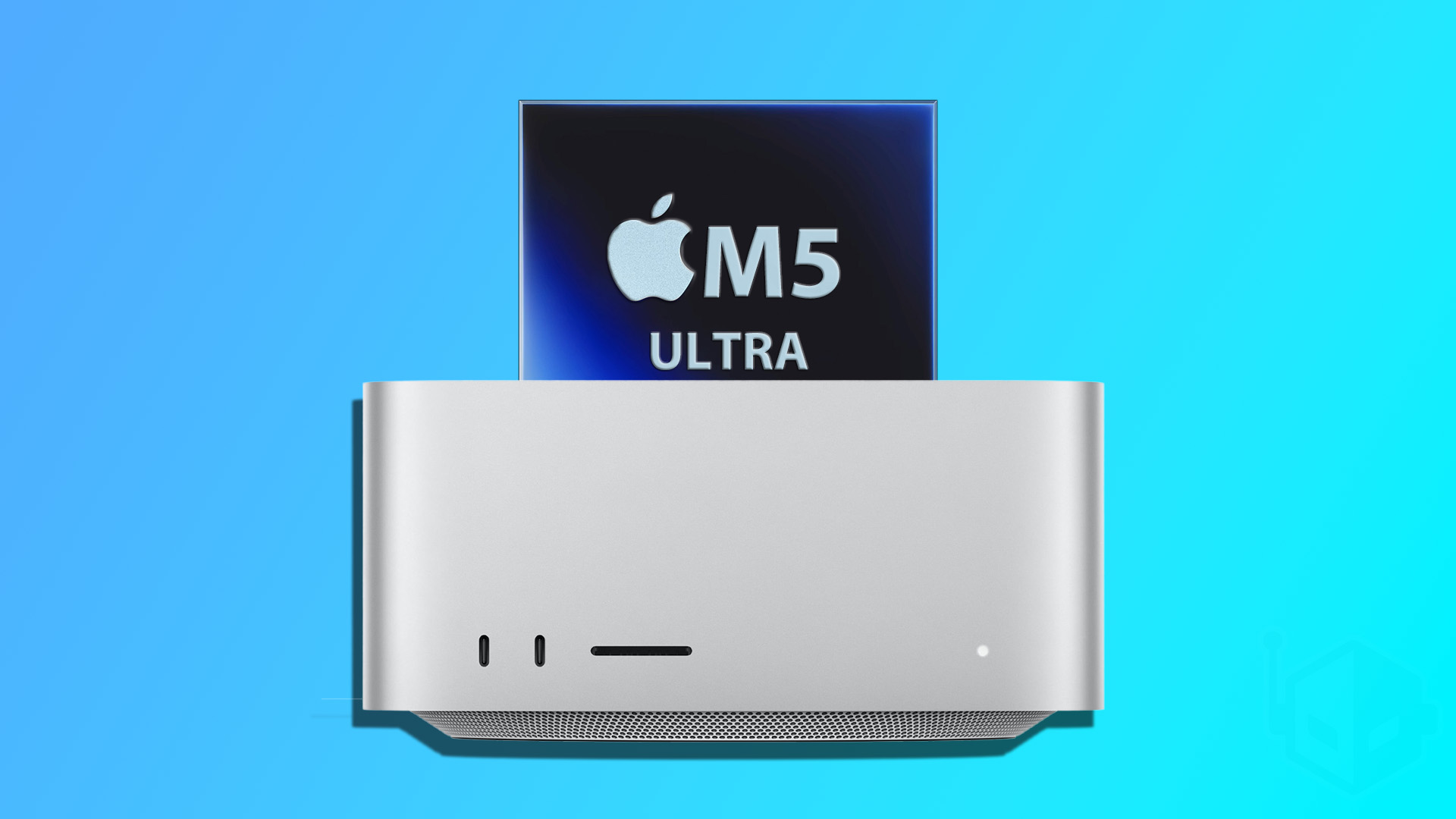
M5 Ultra Preps for 2026 Mac Studio: Monolithic Muscle or a Return of UltraFusion?
Apple is quietly lining up its next performance leap for professional Macs. Multiple reports suggest the company is preparing an M5 Ultra system-on-a-chip for a refreshed Mac Studio in 2026. The interesting wrinkle this cycle isn’t merely clocks and core counts; it’s the chip’s architecture. If the M5 Max arrives without Apple’s bridge-and-stitch interconnect, UltraFusion, the M5 Ultra could land as a single-die (monolithic) workstation-class SoC – a departure from the dual-die approach used by earlier Ultras.
Rumor Scorecard
To keep expectations grounded, here’s a transparent view of the chatter:
- Assessment: 85% – Highly Likely
- Source Quality: 5/5
- Corroboration: 4/5
- Technical Plausibility: 4/5
- Timeline Fit: 4/5
That doesn’t make it a done deal, but it does suggest the pieces line up with Apple’s typical cadence and prior strategy.
Timeline: How the Pieces May Fall
Apple’s in-house silicon waves usually break in stages: base M-series first, then Pro and Max, and finally an Ultra for Studio-class desktops. Current reporting points to the M5 Pro and M5 Max showing up in early 2026, with an M5 Ultra following to power the next Mac Studio. Separately, a more affordable MacBook is rumored for the first half of 2026, signaling a broad M5 rollout across tiers. In other words, expect Pro/Max first, then the Ultra after Apple has validated the platform at scale.
Why a Monolithic Ultra Makes Sense
Historically, Apple achieved “Ultra” by fusing two Max dies via UltraFusion (think M1 Ultra, M2 Ultra, M3 Ultra). The advantage is modular scaling: you build one premium die (Max) and pair two of them for the Ultra. The trade-offs include higher package complexity and potential latency quirks across the die-to-die fabric.
Enter the monolithic angle. If the M5 Max again ships without an UltraFusion connector – echoing what we saw around the M4 Max – Apple could opt to manufacture a single, larger M5 Ultra die. Potential benefits include lower inter-die latency, more unified cache behavior, and simplified scheduling for heavy, mixed CPU/GPU workloads. Risks include lower yields for a bigger slab of silicon and tighter thermal envelopes. Apple’s advanced packaging, binning strategies, and efficient cores could mitigate those downsides, but this is the balancing act.
Configurable Blocks: CPU/GPU Mix-and-Match
Commentary from the enthusiast community (including Max Tech) points to the M5 Pro and M5 Max using more clearly separated CPU and GPU blocks. If that modularity scales up to the Ultra, Apple could offer skus tailored to workload – for instance, a variant with fewer CPU cores but a beefier GPU for 3D, color, and AI diffusion work, and another with maximum CPU throughput for compile farms, big data transforms, and complex simulation. Unified memory bandwidth and enlarged caches would remain critical differentiators either way.
Mac Studio: Same Shell, New Heart
Don’t expect a radical chassis redesign. The current Mac Studio already delivers excellent acoustics and thermal headroom in a compact footprint. The 2026 model will likely keep that proven exterior while focusing on what pro buyers actually care about: more sustained performance per watt, faster media engines for ProRes/ProRes RAW/HEVC/AV1, stronger ray tracing, and expanded ML accelerators targeting on-device generative workloads. Port selection and SD performance could see iterative refinement, but the headline will be compute.
What It Means for Creators and Devs
- Video pros: Expect higher real-time playback ceilings, shorter export times, and smoother multi-stream HDR workflows.
- 3D and VFX: Larger scenes and textures held in unified memory, quicker previews, better path-tracing responsiveness.
- Developers: Faster local builds, tighter emulator performance, improved container orchestration on-device.
- AI/ML practitioners: More on-chip acceleration for diffusion and transformer inference without leaning on external GPUs.
Reality Check
This roadmap aligns with Apple’s pattern, but specifics – core counts, GPU cluster counts, memory ceilings – remain unconfirmed. The big unknown is whether Apple sticks to a dual-die play via UltraFusion or embraces a bolder monolithic Ultra. Our read: both paths are technically sound; Apple will pick the one that best balances yield, thermals, and product segmentation.
Bottom Line
If you’re eyeing a Mac Studio upgrade, 2026 looks like the year to watch. Whether the M5 Ultra is monolithic or bridged, expectations are rising for a meaningful step forward in workstation performance, especially for graphics-heavy and AI-assisted pipelines. Treat this as a well-sourced, highly likely scenario – promising enough to plan around, but not yet official.
2 comments
ngl a monolithic ultra sounds wild… wonder about yields tho
Please give us more VRAM… sorry, I mean unified memory 😂