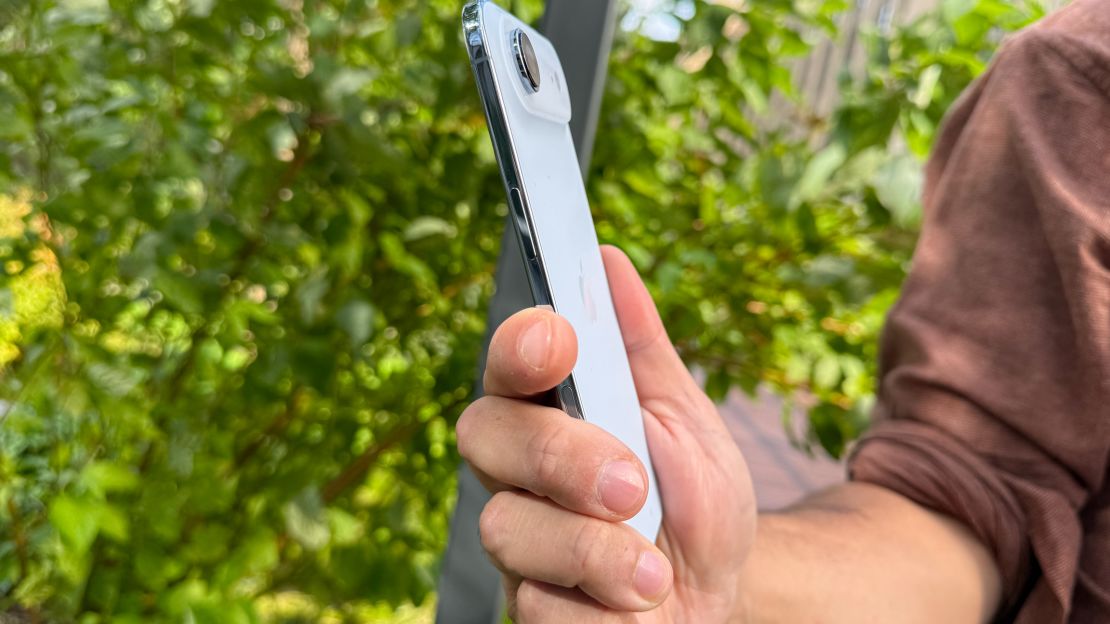
Ultra-Thin Fever: iPhone Air Looks Stunning, But Do the Trade-Offs Make Sense?
In 2025, the smartphone runway has a clear theme: razor-thin silhouettes. Samsung warmed up the crowd with the Galaxy S25 Edge, and Apple stepped out with the even slimmer iPhone Air, shaving the profile down to a scarcely believable 5.6mm. Pick one up and your brain does a double take – the device basically vanishes in your pocket and feels like a sheet of polished glass. Design teams deserve applause for the engineering gymnastics. But once the applause fades, a question lingers: how much utility has been left on the cutting-room floor to get this thin?
Early buyer sentiment suggests that the answer is: more than a little. The iPhone Air’s sales aren’t a disaster, but they’re also not the smash hit that usually follows a big Apple design swing. Industry chatter even hints that at least one major Chinese brand shelved its own Air-style project for next year after watching real-world response. Whether that brand is Xiaomi, Huawei, or another player is less important than the trend it signals: the market’s initial fascination with ultra-thin flagships is colliding with the reality of everyday use.
What Engineering Gives, Physics Takes
A phone is a three-dimensional jigsaw puzzle: battery, cameras, motherboard, radios, speakers, and heat management all fighting for volume. Make the body thinner and something has to shrink. That often means the battery, the camera stack, or the cooling system – the very parts that decide how the phone performs after the honeymoon phase.
Consider Samsung’s Galaxy S25 Edge. It pairs a flagship-class chipset with a dual-camera setup: a 200MP main sensor and a 12MP ultra-wide. Impressive on paper, and borrowed from the image-monster S25 Ultra for that primary camera. But at roughly 3,900mAh, the battery is smaller than the battery in Samsung’s own standard S25. That tells you where the space went. Less room also means tighter thermal margins, so sustained performance – think extended gaming, video capture, or long navigational sessions – has less headroom before throttling.
Apple’s iPhone Air leans even harder into the minimalism. On the rear sits a single 48MP camera. Apple’s messaging says its Fusion approach can approximate multiple focal lengths, and computational photography absolutely can do wonders. But physics still matters: there is no optical telephoto, and there’s no second or third sensor to bring different perspectives. The power pack? Around 3,149mAh. For a phone that costs about a thousand dollars, that’s a tough sell when the standard iPhone 17 – with more battery and more versatile cameras – exists just one shelf over.
Price Tags vs. Value Propositions
At the $1,000–$1,100 tier, buyers expect the whole flagship package: stellar cameras across multiple focal lengths, all-day endurance, confident thermals, and robust connectivity. The S25 Edge and iPhone Air deliver blistering speed and beautiful hardware, but ask for forgiveness where it counts: camera flexibility and battery life. When the alternatives – the regular Galaxy S25 and standard iPhone 17 – are better balanced at roughly the same price, it’s hard to justify paying a premium for the privilege of losing capacity and versatility.
That’s why many reviewers (and plenty of everyday users) come to a similar verdict after the novelty wears off: the ultra-thin design is cool, but you feel the compromises quickly. The phone that looks like a concept device ends up being the one you micro-manage by 5 p.m., dimming the screen, closing apps, and hunting for a charger – especially during travel or a photo-heavy weekend.
Cameras: Where Thinness Hurts the Most
Modern camera modules are vertically stacked sandwiches of sensor, lens elements, stabilization hardware, and wiring. Push a phone thinner and the sandwich has to go on a diet. Longer focal lengths (telephoto) need physical space for optics, which is why thin phones often skip them. Samsung’s S25 Edge sticks to wide and ultra-wide; Apple’s iPhone Air goes with one sensor and leans on software. Computational wizardry helps – portrait modes, night processing, fusion tricks – but the lack of true optical variety shows up in zoom quality, portrait compression, and low-light consistency.
It’s not about megapixels alone. The S25 Edge’s 200MP main camera is exceptional at detail capture, but without a dedicated tele lens, there’s only so much you can squeeze from crops. The iPhone Air’s 48MP sensor uses pixel binning and smart processing, yet a single lens can’t replace the creative flexibility of a true three-camera system. For many buyers in this price band, photography is the deciding factor – and that makes the thinness tax feel steep.
Thermals, Radios, and the Hidden Costs of Going Slim
Cooling is the unglamorous backbone of sustained performance. Vapor chambers or multilayer graphite sheets need surface area to spread heat. In thin designs, cooling hardware is constrained, which can nudge the phone to throttle earlier under prolonged load. Similarly, antennas for sub-6GHz and mmWave 5G prefer space and isolation. Packing them into a slimmer chassis with denser component layouts can complicate signal integrity and potentially influence consistency in challenging environments like stadiums or concrete-heavy interiors. None of this is a deal-breaker on its own – but stacked together, it nudges the day-to-day experience in the wrong direction.
Where Ultra-Thin Shines
None of this erases the genuine advantages. Ultra-thin phones are delightful to carry. They sit flat in a pocket, disappear in a clutch, and make one-handed use easier. The sensation of a 5.6mm slab is novel in the best way, and for some users with lighter workloads – messaging, streaming, light photography – the compromises may be perfectly acceptable. If you prize comfort and aesthetic minimalism above all, these designs finally give you a luxurious option that doesn’t feel like a brick.
A Smarter Pivot: Pro-Level Minis
There is, however, another path that’s getting more interesting by the month: compact phones that don’t compromise on specs. Think vivo X200 Pro mini or Oppo Find X8 Mini. These devices keep displays around the 6.3-inch mark – hardly tiny, but smaller in hand – while cramming in near-Pro-tier hardware. Big sensors with stabilized optics, healthy batteries, fast charging, and full-fat chipsets that breathe comfortably. They feel like a different kind of rebellion against the big-for-big’s-sake trend of the last few years.
For those of us who adored Apple’s iPhone mini era, the dream is simple: a modern “mini” with Pro-grade cameras, a serious battery, and top-shelf silicon. It would be niche, yes, but so are ultra-thin flagships. If manufacturers are going to build a passion product, why not make the one that sacrifices less and delights more in daily use?
These Aren’t Meant to Be the Main Show
It’s no surprise that the iPhone Air isn’t the hit the standard models are – just as the mini and Plus variants had mixed fates. But that misses their purpose. Apple (and Samsung, with the Edge line) use these side models as experimental labs. They probe demand curves, stretch materials, and test new manufacturing approaches. The core line – the bread-and-butter iPhone and Galaxy – remains relentlessly balanced because balance sells. Expect iterative follow-ups like an iPhone Air 2 or a Galaxy S26 Edge even if the rumor mill waffles; companies rarely abandon a concept without a second pass to extract lessons from round one.
Buying Advice: Who Should Consider Ultra-Thin?
- Great fit: Minimalists who prioritize feel-in-hand, pocketability, and a sleek aesthetic; light users who rarely push battery or camera limits; travelers who value weight savings over flexibility.
- Think twice: Photo enthusiasts who want optical variety and clean zoom; power users who game, shoot long 4K clips, or rely on hotspotting; professionals who need their phone to last a full day under heavy load.
If you fall in the second camp, a standard flagship or a compact “Pro mini” will deliver more real-world satisfaction. You’ll gain a larger battery, stronger thermals, and more camera options, usually for the same money or less.
What Would Make Ultra-Thin Work?
Breakthroughs. Denser batteries (silicon-carbon anodes), more efficient chipsets, stacked sensors with folded optics that don’t need depth, and cooling designs that exploit new materials could all change the calculus. If those arrive, a 5.6mm device could stop being a party trick and start being a no-compromise flagship. We’re not there yet, and buyers can tell.
Bottom Line
The iPhone Air and Galaxy S25 Edge prove that thinness can be breathtaking. They also prove that substance still wins over style when your money is on the line. Today, the ultra-thin play asks you to trade away battery endurance and camera versatility for a jaw-dropping profile. Tomorrow, with the right breakthroughs, that equation could flip. Until then, the smartest splurge for most people sits with the balanced mainline flagships – or the rising class of compact Pro-grade phones that put everyday usability first.
Phones, like real-life experiences, reward depth over dazzle. A gorgeous silhouette may turn heads, but it’s the performance, endurance, and camera system that keep you happy long after the unboxing thrill fades.
1 comment
All this for 5.6mm? I’d take a thicker phone with a 5,000mAh any day