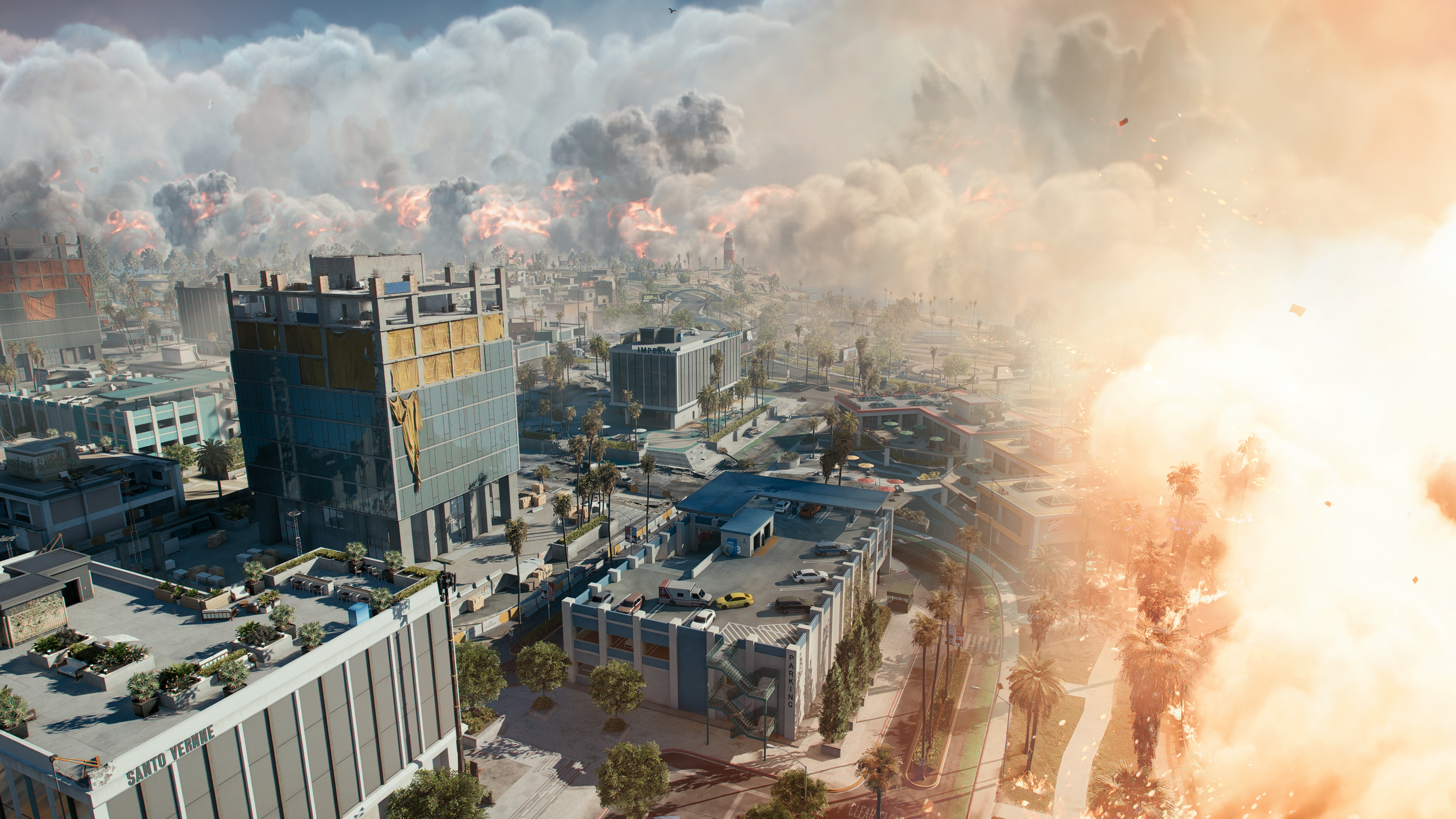
Battlefield 6 Map Sizes vs BF3 & BF2042: What a 72-Map Study Really Tells Us About Good Map Design
After months of arguing in forums and squad chats, Battlefield fans finally did what this community always does when a debate refuses to die: they measured everything. A collaborative project led by Reddit users ClaraTheRed and PENGUINonPC pooled more than 45 hours of work to size up 72 multiplayer maps across six Battlefield entries from the last decade and a half. The result is the most comprehensive apples-to-apples comparison this series has seen – color-coded bars, mode breakdowns, player-count context – the works. And the headline is blunt: Battlefield 6 does not crack the franchise’s upper tier for sheer acreage.
That doesn’t mean BF6 is small. It means the series has historically produced some absolute behemoths – especially in Battlefield 3 and Battlefield 2042 – that set a high-water mark few maps reach. In the new analysis, even the largest BF6 offering, Operation Firestorm – itself a downsized reinterpretation of BF3’s classic – lands 32nd for total shared playable space and 22nd for total map footprint. Meanwhile compact BF6 arenas like Iberian Offensive and Siege of Cairo sit in the same ballpark as tighter BF3 and BF1 battlegrounds. In other words, much of BF6 lives squarely in the medium band.
There are caveats. Not every Battlefield entry made the cut – Battlefield V, for instance, lacks enough reliable data for consistent comparisons. And even when a map’s “size” is pinned down, the series’ dynamic tech – environmental hazards, shifting sectors, and the notorious levolution moments – can mutate the effective battlefield mid-match. One other qualifier matters: BF6 is barely a month old. Past games are measured as complete works, DLC and seasonal reworks included. BF6 is a moving target.
Scale Isn’t a Synonym for Quality
Numbers are intoxicating because they’re neat, but play is messy. The community feedback pouring in alongside the dataset underlines this. A vocal group argues that gigantic maps turn Conquest into cardio – long jogs, quick deaths, repeat. Others miss the sweeping, sandboxy sprawl of Battlefield 1942, Vietnam, BF2, and 2142, where naval routes, long bombing runs, and real flanking latitude rewarded commanders who thought in arrows and encirclements, not just headshots per minute. Some players even single out modern boundary enforcement for funneling attacks into predictable choke points – try to swing wide like it’s Dragon Valley, Gulf of Oman, or Dalian Plant and you’re slapped with a return-to-battle warning.
Then there’s the sniper economy. BF6’s sightlines already gift high-ground sharpshooters skyscraper-long views; on the largest layouts those perspectives multiply. When too many players chase K/D over flags, objectives stall. Others counter that smaller maps devolve into meat grinders and that BF6’s medium sizing – more BF1 than BF2042 – hits a brisk, readable tempo that keeps squads in the fight. The study backs a simple truth: scale, density, and mobility are the design triangle. Tilt any corner too far and the other two suffer.
Reading the 72-Map Chart the Smart Way
So what do the bars actually tell us? First, BF6’s portfolio is more consistent than colossal. The median sits near the series’ historical middle, with outliers trimmed. Second, mode matters: Breakthrough and 128-player Conquest naturally stress different geographies than 64-player Escalation, and the dataset organizes maps by mode and player count for exactly that reason. Third, comparisons need context. REDSEC’s Fort Lyndon may be marketed as the “biggest Battlefield map ever,” but it ships with the standalone battle-royale-style offshoot, not the core BF6 rotation; the community is right to file it in a separate drawer.
Crucially, BF6 is already expanding. Season 1 added the medium-sized Blackwell Fields, with Eastwood teased for this month. Map pools rarely feel balanced in month one; they become balanced over seasons as the holes are patched and the outliers sanded down.
Where the Design Can Evolve
If size alone doesn’t solve flow, what does? A few veteran-tested levers could push BF6 toward that sweet spot where movement is fast, fights are readable, and strategy still breathes:
- Objective-first incentives: Heavier score multipliers and cosmetic track boosts for captures, defends, and squad orders can de-glamorize hill-camping and spotlight players who win rounds, not just duels.
- Transport backfill: Guarantee logistics: squad bikes, light transports, and redeploy balloons that spawn based on flag distance, not pure randomness, so “walking simulator” lobbies die out.
- Smarter boundaries: Replace hard out-of-bounds with elastic flanks that open as sectors change hands. Players feel like they earned the wrap-around, not like they’re glitching the edge.
- Vehicle fairness: Re-introduce vehicle timers or rotation rules so one player can’t monopolize the same armor every spawn.
- Suppression & flinch tuning: Light suppression on DMRs and ARs reduces long-range laser duels without turning every push into a blur.
- Commander-style macro tools: Even a pared-down commander ping economy – UAV sweeps, supply drops, limited strike calls – brings back the chess layer older fans crave.
- Limited-time experiments: Run Conquest or Escalation on the BR layout for a weekend. If it sings, great; if it breaks pacing, now you know.
The Community Is Right – From Both Sides
The contradiction at the heart of Battlefield is that two truths can coexist. Yes, trekking 300 meters just to get beamed at the flag is misery. Yes, war stories happen because you found a crazy flank the designers barely intended. The 72-map study doesn’t crown winners; it gives language to that tension. BF6’s current slate leans middleweight, and that’s fine – as long as updates continue to widen the playlist to include one or two true sandboxes, a couple of claustrophobic brawlers, and a backbone of medium maps that play great in 64 and 128.
In the short term, watch how Eastwood positions its lanes, whether Operation Firestorm gets flank relief along its oilfield edges, and how scoreboards reward objective chains. In the medium term, hope for a redux program that modernizes a few fan-favorite strategy maps – without flattening their identity into narrow corridors. And if BF6 does end up testing Conquest on Fort Lyndon, treat it like a lab: useful even if the verdict is “fun, but not for the main rotation.”
Maps aren’t just acres; they’re promises about how a match will feel. The new dataset proves BF6 can go bigger, but it also reminds us that bigger isn’t automatically better. Balance, not bloat, wins wars – and the season roadmap is where that balance gets forged.