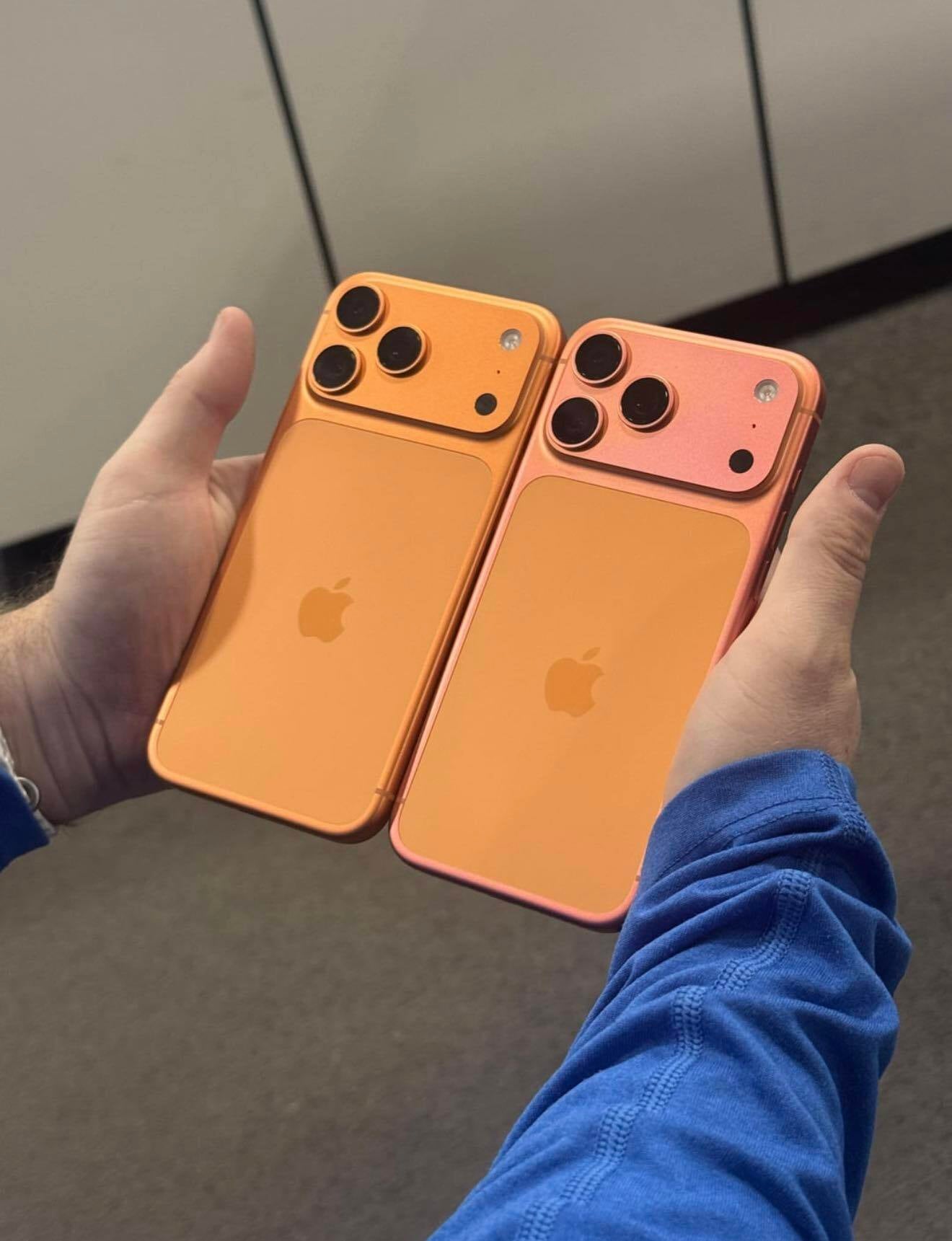
iPhone 17 Pro’s Cosmic Orange Is (Kinda) Turning Pink: What’s Going On and Whether You Should Care
The iPhone 17 Pro arrived with a bold new shade – Cosmic Orange – that splits the room. Some adore its marmalade pop; others call it traffic cone couture. Then a curious twist bubbled up across forums and social feeds: a portion of Cosmic Orange units appear to shift toward a peachy, salmon, or outright pink tone over time. Our recent poll puts the vibe in numbers: roughly a third of respondents say their phone has already drifted toward pink, while two-thirds report no visible change yet. That 34% figure is large enough to raise eyebrows, yet small enough to keep this from being a universal headache. And without widely verified, like-for-like photo evidence across different lighting and camera settings, it’s still more mystery than meltdown.
Let’s set expectations. Apple didn’t secretly greenlight a color that morphs like a mood ring. If there’s a shift, it’s almost certainly an unintended interaction between materials, finishes, and environments. The working theory among materials nerds goes like this: the alloy frame and its anodized, dyed surface can be sensitive if the protective layer is microscopically imperfect. When light, heat, oxygen, sweat, skincare residue, or cleaning chemicals meet that surface, the dyes can subtly change appearance. Most anodized aluminum is incredibly robust, but no finishing process is truly immune to chemistry or the real world – especially when phones live in pockets, gyms, sunny dashboards, and on kitchen counters next to spray bottles.
Why orange to pink? Two reasons. First, pigments that produce warm hues can be visually finicky under different color temperatures; the same orange can look redder (or rosier) under late-afternoon sun or warm LEDs. Second, dyes in anodized layers can shift when they interact with oxidizers or UV. If the clear-seal top layer isn’t uniformly dense, a tiny amount of dye near the surface can fade, bloom, or skew toward a neighboring hue. That doesn’t make your phone defective in the sense of failing to function, but it does turn a fashion statement into an unexpected gradient.
Some owners are leaning into the chaos. A subset of respondents said they actually like the “chameleon” effect, framing it as an evolving patina rather than a flaw. That’s a very 2025 energy – treating tech like leather that acquires character. Still, it’s understandable if you’re not thrilled. Color is part of the purchase decision, and unplanned shifts can ding resale or trade-in confidence. Even if buyers only see it as a quirk, quirkiness is rarely a price booster.
Can you accelerate the color change on purpose? Internet folk remedies are already circulating: leave the phone in direct sun, use peroxide-based cleaners, or wipe with mystery solutions. Don’t. Heat is tough on batteries and adhesives, UV can age seals, and harsh chemicals can cloud coatings or push a subtle tint shift into streaky blotches. If you truly want a pink phone, the low-risk route is still a case or skin. Those are designed to be loud, reversible, and far cheaper than a color experiment gone wrong.
Can you prevent it? While no home routine can change the underlying chemistry of a finish, you can reduce triggers. First, skip aggressive cleaners – especially anything with oxidizers like hydrogen peroxide or chlorine derivatives. Second, avoid prolonged sunbathing sessions for your device (car dashboards are notorious). Third, wipe with a soft, lint-free cloth slightly dampened with water when needed, and dry immediately. If you’re anxious about environmental exposure, a darker, opaque case acts like sunglasses for the phone’s finish, shielding it from UV and the odd splash of bathroom chemistry.
What about proof? The tricky part with color claims is photography. Cameras auto-white-balance; social images get crushed by compression; indoor lighting skews warm; outdoor shade skews cool. An orange that looks peach on your screen might be perfectly orange in person under neutral light. Controlled comparisons – same phone, same angle, same neutral lighting before and after – are the only way to convincingly show a true material shift. We’ve seen a few early side-by-sides, but the sample size is thin, and conditions vary. Until larger, well-documented batches surface, treat every viral pic with a pinch of salt.
Is this a scandal? For now, no. It’s an oddity with a loud online footprint. If the percentage of affected units stays modest and the change is mild, this will likely settle into the long list of “things we learned about bright hardware finishes” rather than a full-blown saga. That said, if you see pronounced blotching or uneven patterns, document it under neutral light and speak with support. Uniform, gentle toning over months is one thing; patchy or rapid shifts could indicate a specific defect worth addressing.
Zooming out, there’s a culture clash underneath the memes. A decade ago, visible finish drift on a flagship would’ve been framed as a design miss. Today, a chunk of buyers shrug, call it patina, and move on. Neither stance is wrong. Phones are tools, but they’re also personal objects. If yours happens to pick up a hint of pink and you find it gorgeous, enjoy the free tint. If you’re paying top tier and expect paint-chip consistency, you’re not being fussy – you’re being a normal customer.
Bottom line: Cosmic Orange is still a statement color, and for most people it will remain orange. If you’re among the 34% who think you’re seeing a shift, minimize UV and harsh cleaners, use a case if you want to play it safe, and keep receipts and photos in case you need to escalate. And if you’re simply orange-curious but nervous, the classic neutrals – or a case collection – will keep surprises to a minimum while you wait for the dust (and dye) to settle.
1 comment
Chemistry class flashback: anodized dyes + UV/oxidizers = maybe pink. Surprised Orange was the risky pick