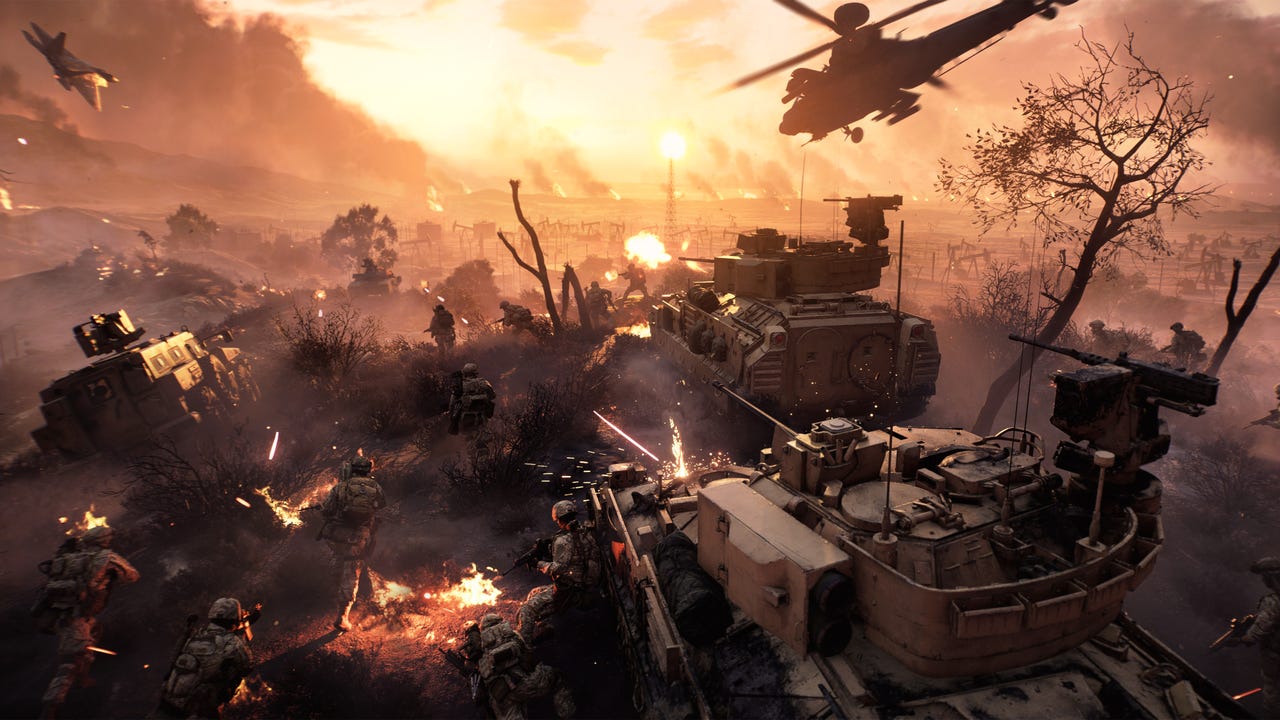
Battlefield 6’s Blackwell Fields: A Gorgeous California Wasteland That Plays Like a Shooting Gallery
Season 1 of Battlefield 6 was supposed to be the victory lap. Instead, conversation has zeroed in on the shiny new post-launch battleground, Blackwell Fields – a sweeping slice of sun-baked California where pumpjacks chew the skyline, radio towers stab at an orange haze, and every step in the open feels like a dare. Within hours of the update going live, feeds filled with clips and testimonies of players being deleted from staggering distances – sometimes the moment they materialize – fueling claims that Blackwell Fields is less a battlefield and more a firing range.
What Blackwell Fields Gets Right – And Why It Still Hurts
On vibes alone, the map is a triumph. The art team sells a convincing oil country: rusted skeletal machinery, low rolling hills smeared with smoke, an amber color grade that gives the whole match a late-afternoon heat shimmer. It’s cinematic, readable from orbit, and quintessentially Battlefield in scale. But the same broad strokes that make it beautiful also make it brutal. Massive open paddocks stitch together long, uninterrupted sightlines; an elevated ridgeline near center grants sweeping overwatch; and the scarce hard cover between flags turns movement into a coin flip – especially for anyone not encased in armor or spinning rotors.
Spawn Sightlines and the ‘HQ Laser’ Problem
The loudest complaint is structural: too many spawns surface directly inside enemy lines of sight. Players report dying to fire from as far away as the opposing headquarters, or watching squadmates evaporate before they’ve taken two steps. The result is a cascade effect. If a team establishes nest positions on the high ground – or parks recon squads just outside no-go zones – every flag push becomes a death march. Even when you survive the first sprint, you’re often trading one exposed lane for another.
Conquest Suffers, Breakthrough Surprises (Sometimes)
Blackwell Fields technically supports the series’ sandbox fantasy, but in Conquest its openness magnifies asymmetry. Flags anchored in depressions or hard cover can be fine; others framed by open rows of earth are meat grinders where the first team to lock angles tends to keep them. Breakthrough fares better intermittently – density spikes around objectives compress the chaos – but when defenders hold the ridge or a chain of pumpjack catwalks, attackers get funneled into predictable kill lanes. A few players report decent rounds here; most describe them as tense, smoky brawls punctured by beams of impossible sightlines.
Air Power, Grounded
Pilots are having a particularly rough time. The combination of long-range missiles, clear angles from the ridge, and minimal masking terrain near the airstrips means some jets and helis are tagged before their wheels leave the tarmac. Community shorthand calls them “garage helicopters” – pristine, gleaming, and safer in the hangar than in the sky. It’s funny until you’re the one taxiing under a wall of lock warnings.
It’s Not Just Size – It’s Access
Players also point to access friction across the game: rooftops without ladders or ziplines, objective “cheese spots” that only parachuters can reach, and squad spawns that let a single hidden recon act as an infinite backline portal. On Blackwell Fields, these systemic quirks collide with the layout. The center ridge blocks flanking, the flat approaches punish assaults, and the best vantage points double as spawn farms. When a team falls behind, their choices shrink to gambling on a risky vehicle roll or hoping a beacon sneaks through.
The Visibility Tax
The red-orange grade looks cinematic, but in firefights it muddies target acquisition. Add smoke from explosives and industry, plus dust kicked by vehicles, and silhouettes blend into the haze. Visibility was already a pain point for some; Blackwell’s palette and particle stack push it over the edge. Smaller versions of the map in objective modes retain that orange wash, amplifying the noise when bodies, tracers, and debris crowd the same lanes.
Not Everyone Hates It – But the Split Is Telling
There are defenders. Recon mains praise a playground of angles, perches, and laser-designator feast days. Objective diehards insist the answer is to play the flag, not the sightline – PTFO, smoke the push, and rotate. A few even relish the chaos as “war is hell” authenticity. Yet the middle ground is thin. Plenty of veterans say they’ve already disabled the map in custom rotations or avoid air entirely on Blackwell. When a battlefield becomes a place you dodge, the design is probably over-indexing on spectacle at the cost of flow.
How to Make Blackwell Fields Work
- Break the HQ lasers: Add berms, stacked containers, and oil equipment to sever direct sight from HQ to immediate spawns. Consider slight spawn offsets that bias toward masked terrain.
- Flag geometry passes: Reposition props to create mid-distance cover chains and lateral crossing options. A handful of jersey barriers and low walls can flip push odds.
- Airstrip safety buffer: Introduce taller revetments and a brief “no-lock” acceleration window so pilots can lift and maneuver before the first tone.
- Access parity: Ladders, ziplines, or ground routes to popular rooftops; reduce parachute-only cheese where capture progress can be held from near-invulnerable angles.
- Squad spawn sanity: Tighten rules that allow endless spawns on isolated backliners within line-of-sight of objectives.
- Visibility retune: Soften the orange grade, adjust smoke density, and increase contrast on character shading to restore silhouette clarity.
Tips Until the Patches Land
- Travel smart: Don’t sprint the open; chain cover, use transport, and rotate wide rather than contesting the obvious lane.
- Layer utility: Smoke, flares, and soft counters are worth their slots when every meter is watched.
- Pilot patience: Time takeoffs with friendly AA, climb under terrain masking, and avoid loitering near the runway.
- Team composition: Mix recon spotters with assault and engineer counters; lone-wolfing is punished here.
What’s Next for Season 1
EA and Battlefield Studios have been responsive post-launch, shipping both cosmetic and systemic tweaks, and Season 1 is set to add Eastwood – promised to be a less orange change of scenery. Whether Blackwell Fields gets a hotfix or a full geometry pass remains to be seen, but the outcry is too loud to ignore. Meanwhile, the team is also juggling live support for Battlefield REDSEC and its battle-royale mode, which has its own queueing and progression gripes to sort.
The Bigger Conversation: What Should Battlefield Feel Like?
Blackwell Fields rekindles a familiar argument about identity. Some players crave the sweeping, vehicle-centric spaces that defined older entries; others prefer tighter, cover-rich arenas closer to today’s twitch shooters. The two aren’t mutually exclusive – but when a big map’s scale isn’t matched by traversal tools, access routes, and spawn logic, it stops showcasing the sandbox and starts shrinking the viable playstyles. As it stands, Blackwell Fields is a breathtaking postcard from oil country. Now it needs the invisible plumbing – cover routing, spawn protection, air safety, and readability – to play as good as it looks.
If those fixes arrive, Season 1 can still turn its rough opening into a case study in fast iteration. Until then, expect the community to keep circling this map like vultures – or snipers – looking for a better angle.
1 comment
Recon here: Blackwell slaps for spotting/lasers. Helis are perma-painted tho. Fix the spawns so HQ campers gotta actually leave base