NVIDIA’s long struggle in the Chinese market might soon take a dramatic turn. Following recent diplomatic signals between Washington and Beijing, President Donald Trump has suggested that the company’s next-generation Blackwell AI chips could become a central discussion point during his meeting with Chinese President Xi Jinping. If the U.S. 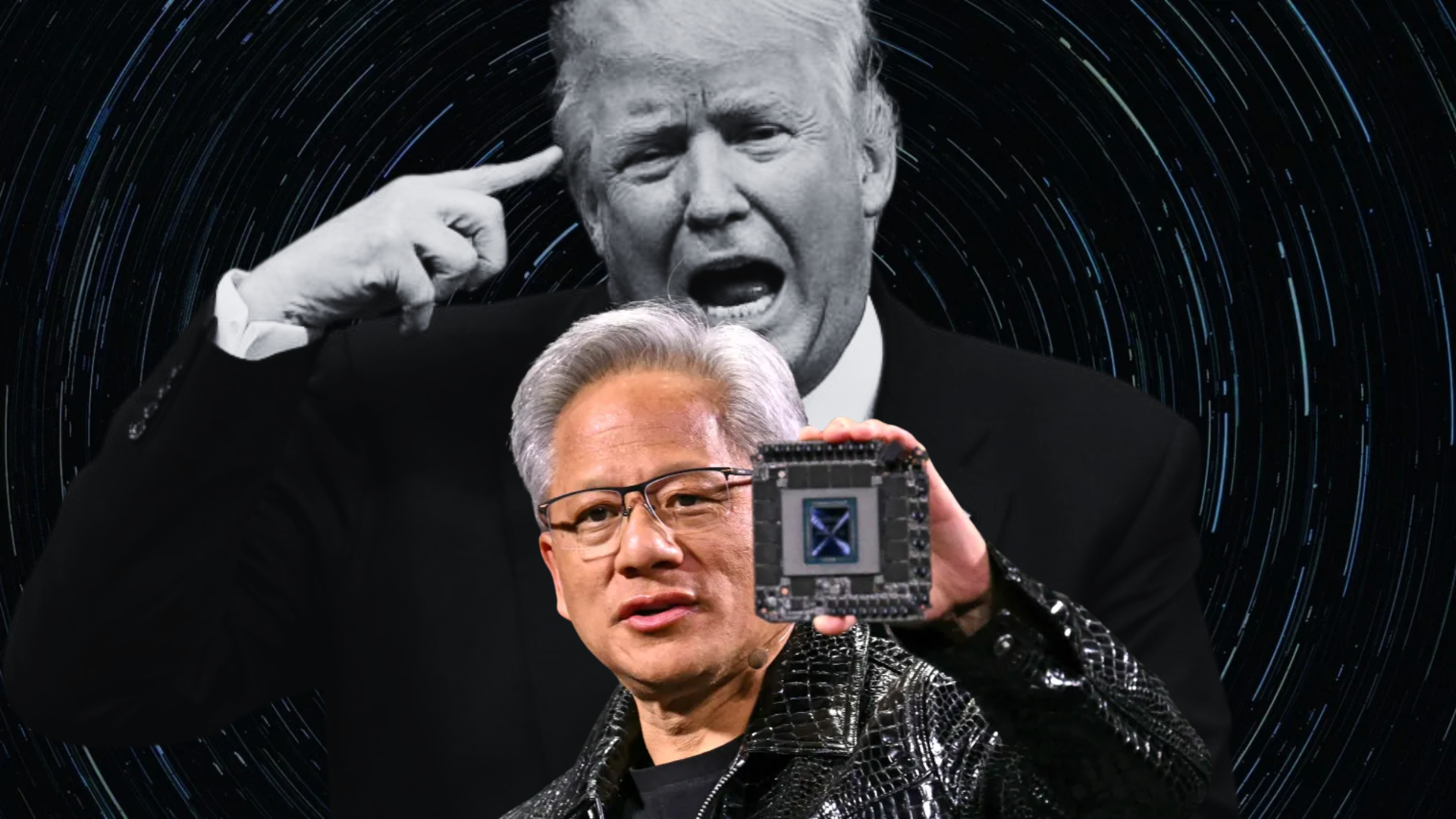
approves limited exports of the advanced AI processor, it would represent not just a political breakthrough but a business revival for NVIDIA in one of the world’s most critical tech markets.
For years, NVIDIA’s relationship with China has been defined by restrictions and retreat. U.S. export controls, combined with tariffs and sanctions, forced Jensen Huang’s company to essentially abandon its once-dominant position in China’s high-performance computing space. The company’s CEO even acknowledged earlier this year that NVIDIA’s market share in the country had dropped to virtually zero after once leading the AI acceleration landscape. But the winds may be shifting.
According to Bloomberg, Trump stated he intends to lower tariffs on Chinese imports linked to the ongoing fentanyl dispute, while also exploring the possibility of loosening semiconductor restrictions. Central to these talks is NVIDIA’s Blackwell platform – the successor to the Hopper lineup – designed to redefine AI performance through new chiplet architectures, next-generation interconnects, and advanced memory integration.
The rumored China-specific variant, the B30A AI chip, could be the company’s key to re-entry. Reportedly based on TSMC’s refined N4P process and equipped with 8-Hi HBM3E memory stacks, the B30A includes NVLink interconnect support and a powerful dual-die design. Unlike the H20’s monolithic structure, this configuration mirrors the modular approach seen in NVIDIA’s flagship B200 and B300 models. Though the exact performance metrics remain under wraps, industry insiders suggest the B30A could deliver a significant leap forward – enough to satisfy both export regulators and Chinese AI developers hungry for modern compute power.
If the approval goes through, it would be a massive win for NVIDIA – financially, politically, and technologically. It could restore a segment of its lost revenue stream and position the company once again as a strategic player in Asia’s booming AI race. Moreover, it would mark a rare example of cooperation amid geopolitical rivalry, proving that innovation often finds a path even through the tightest trade barriers. For Jensen Huang, who has spent the past two years navigating between policy constraints and market demands, this potential deal might finally signal the return of Team Green to one of its most vital markets.
Whether or not the Blackwell AI chips reach Chinese data centers depends largely on the outcomes of these high-level negotiations. But one thing is certain – if Washington gives the green light, NVIDIA’s Blackwell could reignite its dominance in the East, reshaping the competitive balance in global AI infrastructure for years to come.
2 comments
Lol politics aside, those specs sound insane. B30A might be a beast
Jensen playing 4D chess again 😎