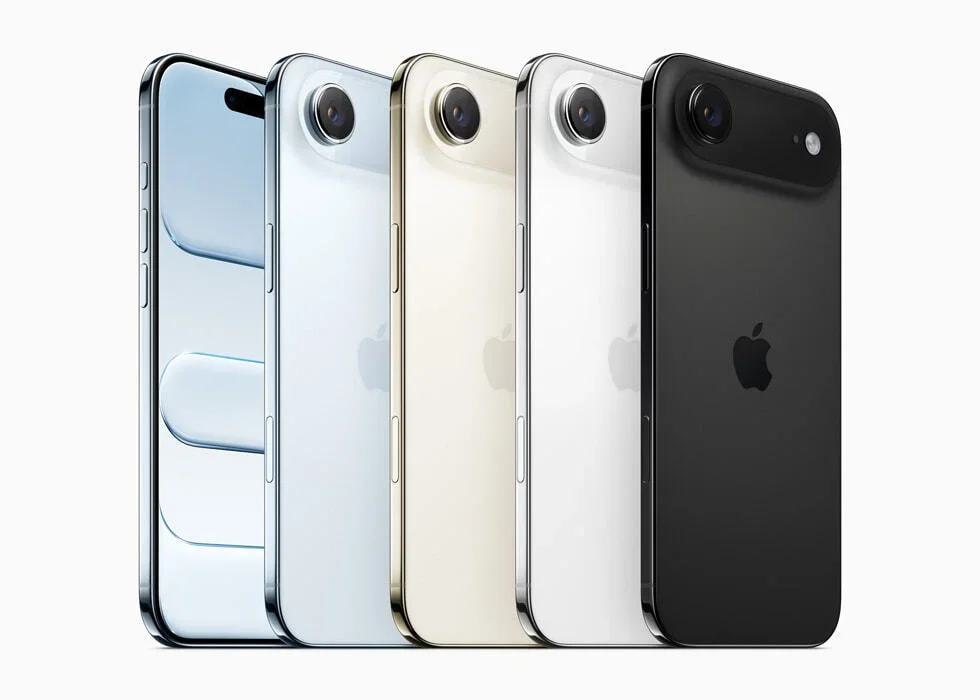
Apple’s iPhone Air Production Rumors: Sorting Fact from Fiction
For weeks, tech circles have been buzzing with rumors suggesting that Apple was scaling back production of its new iPhone Air due to disappointing sales. Reports from supply chain analysts painted a bleak picture, implying that Apple’s latest slim smartphone might be struggling to find its audience. But now, fresh data from investment firm TD Cowen tells a completely different story – and it might just change the narrative around Apple’s sleekest iPhone yet.
According to a new note to investors, seen by AppleInsider, TD Cowen’s analysts assert that Apple has not made any reductions in iPhone Air production for the remainder of the year. In fact, their research indicates that Apple’s manufacturing plans remain exactly as projected. The firm’s internal checks – including what it calls ‘field work’ – found that supply chains showed no signs of slowing down or altering their schedules for the model’s production.
Specifically, TD Cowen expects Apple to produce around 3 million iPhone Air units during the third calendar quarter of 2025, followed by a significant increase to 7 million in the fourth quarter – numbers that remain consistent with previous forecasts. For context, production for the entire iPhone 17 series is reportedly steady as well, with 54 million units expected for the September quarter and a whopping 79 million planned for the December period.
Conflicting Reports from the Supply Chain
This latest claim directly contradicts earlier reports from other industry observers. On October 17, Mizuho Securities in Japan first stirred controversy by asserting that Apple had slashed iPhone Air orders by roughly one million units, reallocating resources to other iPhone models by adding around seven million to their combined production. That revelation sparked a wave of speculation that Apple had lost confidence in its lightweight flagship.
Shortly after, well-known Apple analyst Ming-Chi Kuo backed Mizuho’s assessment, suggesting that Apple’s supply chain partners were indeed winding down iPhone Air assembly lines. Even some supplier sources were quoted describing the device as being on the verge of ‘end-of-production mode,’ allegedly due to low consumer demand. It seemed, at least briefly, that the iPhone Air’s sleek design might not have been enough to win over buyers in a market increasingly dominated by large-battery devices and camera-heavy flagships.
But TD Cowen’s rebuttal challenges that interpretation entirely. The firm insists that there’s no concrete evidence of any reduction, calling the rumors premature and based on incomplete data. Their analysis underlines an important reality: supply chain fluctuations don’t always reflect product performance or long-term strategy. In fact, Apple’s operational model allows it to adjust manufacturing volumes quickly in response to real-time market conditions – often with just a few weeks’ notice.
Why These Confusions Keep Happening
It’s not unusual for conflicting reports like these to emerge. Apple’s supply chain is vast and complex, spanning dozens of countries and involving multiple component suppliers. A single supplier reporting a slowdown can easily spark speculation that entire product lines are being scaled back, even when it’s not the case. Additionally, production adjustments can happen for countless reasons – from supply balancing between different models to component optimization for later batches.
Industry insiders also point out that the iPhone Air’s launch window overlaps with a period of heavy demand for Apple’s Pro models. Early adopters tend to flock to the most feature-packed versions, leaving the slimmer, lighter models to pick up momentum later in the product cycle. Apple’s data-driven forecasting often accounts for this staggered demand, meaning temporary production lulls could simply reflect timing rather than performance concerns.
The iPhone Air vs. the Competition
Adding to the intrigue, Apple’s main rival in the slim-phone market, Samsung, appears to be facing similar challenges. Reports suggest that the Galaxy S25 Edge – the iPhone Air’s closest competitor – has seen sluggish sales, leading to rumors that Samsung may have canceled its successor, the Galaxy S26 Edge. The similarity in trends might indicate that ultra-thin designs, while elegant, are currently out of favor among mainstream consumers prioritizing battery life and camera performance over form factor.
Still, the appeal of the iPhone Air is undeniable. It represents Apple’s ongoing commitment to design minimalism and portability, values that once defined the golden age of the iPhone SE and iPhone 5. The device’s engineering is a triumph of compact precision – though it inevitably sacrifices battery capacity in pursuit of thinness.
Are Slim Phones Still Relevant?
Despite mixed signals from the market, slim phones remain beloved by a loyal niche audience. Many users still crave lightweight devices that fit comfortably in a pocket or hand, offering a minimalist aesthetic free from bulk. For these users, the iPhone Air is more than a phone – it’s a statement of design philosophy.
As one might expect, not everyone agrees. Some buyers prioritize endurance and power efficiency, favoring thicker devices that can last all day. As one Apple fan admitted, “I love the design of the iPhone Air and Galaxy S25 Edge, but they just don’t last long enough on a single charge.” That sentiment highlights a key tension that manufacturers continue to face – balancing elegance with practicality.
For now, Apple appears confident in the iPhone Air’s future, and TD Cowen’s report reinforces that optimism. Whether or not the device turns into a long-term success will depend on how consumers respond once the novelty fades. But one thing’s certain: Apple’s production pipeline is steady, and the slim phone era isn’t quite over yet.
2 comments
Still love the Air design, hope it stays around 🔥
Galaxy S25 Edge flop too? wow slim phones cursed 😂