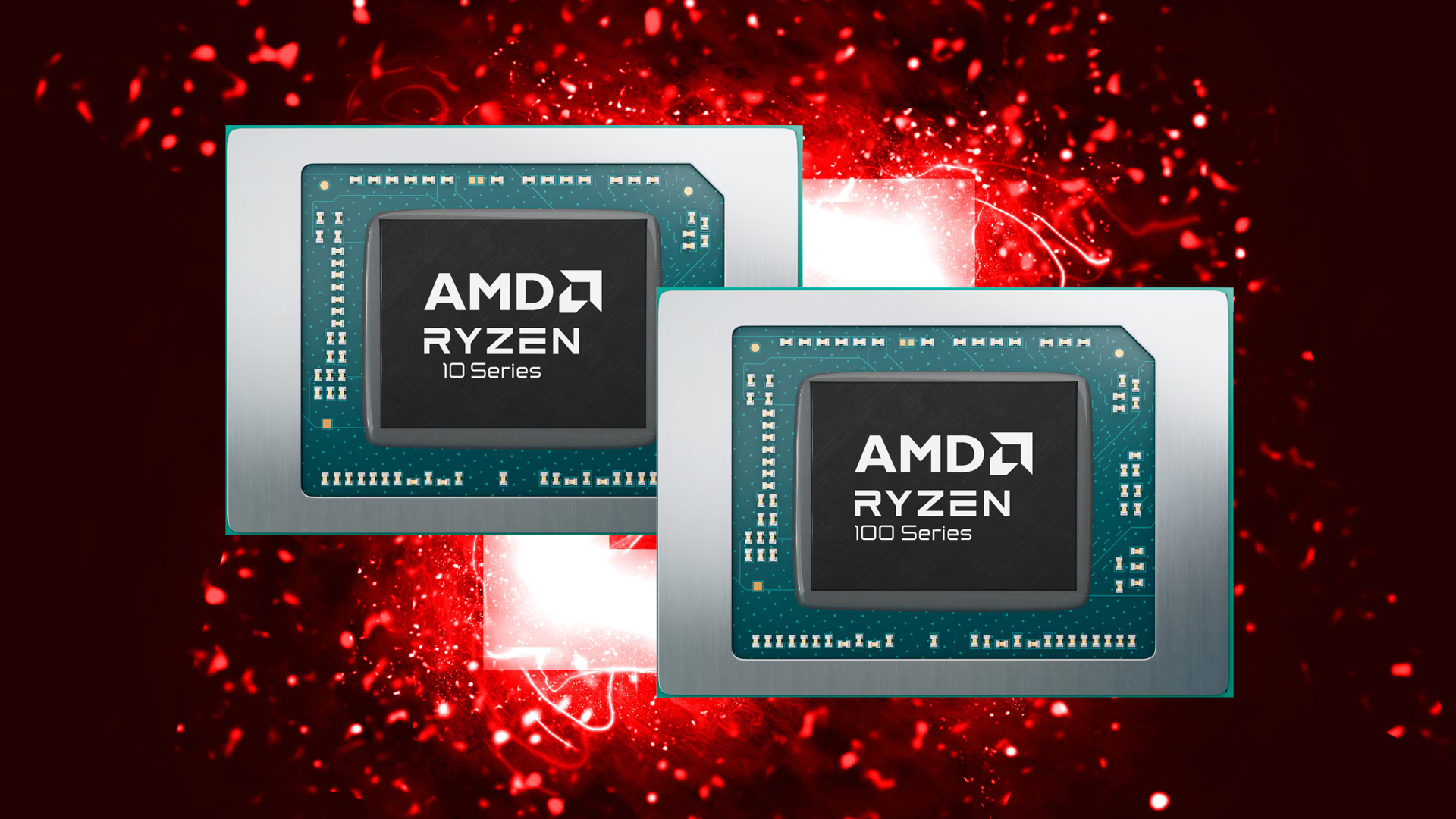
AMD’s Ryzen 10 and Ryzen 100: Rebadged Zen 2 and Zen 3+ Chips, New Names, Same Silicon
AMD has quietly introduced two new mobile CPU families, the Ryzen 10 and Ryzen 100 series, which, beneath their shiny new labels, are essentially rebranded versions of older Zen 2 and Zen 3+ processors. While refreshing and renaming chips is a long-standing industry practice, it’s hard to ignore the pattern of these so-called ‘new’ CPUs being nearly identical to their predecessors. The move resembles Intel’s own recent relabeling efforts, such as the Core 5 120 and 120F models, which turned out to be little more than reissued 12th-gen chips with minimal changes.
Let’s start with the Zen 2-based Ryzen 10 lineup, also known as ‘Mendocino Refresh.’ AMD is introducing four new SKUs: Ryzen 5 40, Ryzen 3 30, Athlon Gold 20, and Athlon Silver 10. All of them carry the same 15W TDP, Radeon 610M integrated graphics, and nearly identical specs to the previous Ryzen 7000U series. For instance, the Ryzen 5 40 matches the Ryzen 5 7520U almost line-for-line – 4 cores, 8 threads, 2.8 GHz base, and 4.8 GHz boost. The same duplication appears throughout the lineup. Essentially, this ‘refresh’ is a rebadging of old Mendocino chips, merely wrapped in new names to populate low-end laptop shelves again.
The story continues with the Ryzen 100 series, built on the Zen 3+ ‘Rembrandt R’ architecture. The new SKUs – Ryzen 7 170, Ryzen 7 160, Ryzen 5 150, Ryzen 5 130, and Ryzen 3 110 – are direct clones of their Ryzen 7000 counterparts. For example, Ryzen 7 170 mirrors the Ryzen 7 7735HS with the same 8 cores, 16 threads, 45W TDP, and Radeon 680M graphics. Even the boost frequencies are unchanged, topping out at 4.75 GHz. The rest of the line follows suit, with the Ryzen 5 150 being indistinguishable from the Ryzen 5 7535HS, and the Ryzen 3 110 echoing the 7335U.
Both families officially launched on October 10, 2025, with laptops featuring them expected to arrive before the end of the year. AMD’s choice to simplify the naming scheme into two- and three-digit SKUs marks an attempt to unify its mobile branding strategy, much like Intel’s move away from the traditional ‘Core i’ naming. However, for enthusiasts and professionals who track CPU architectures, these labels risk creating confusion. A Ryzen 10 might sound like a generational leap, but it’s still a Zen 2 core inside – technology that dates back to 2019.
Reactions from the community have been split, leaning toward skepticism. Many users see this as another example of marketing over innovation, especially since Zen 2 mobile chips were already showing their age compared to Intel’s 12th and 13th-gen offerings. Others argue that for low-cost laptops, particularly Chromebooks or thin-and-light notebooks, Zen 2 remains serviceable – efficient, cheap, and good enough for basic computing. Still, enthusiasts who expected performance or power improvements are left disappointed.
There’s also the broader context: AMD, despite dominating desktop and server markets, seems content to stretch its mobile silicon lifecycle. Some call it smart business – clearing inventory while maintaining platform support for longer AM5 socket users. Others see it as recycling technology under a new paint job. Either way, it highlights how competitive the CPU landscape has become, where both AMD and Intel are playing the same game of renaming rather than reinventing.
As one frustrated user summed it up: ‘Zen 2 wasn’t good even on desktop, let alone mobile.’ Another quipped, ‘No waste ever – Lisa says sell that stuff,’ pointing to AMD’s efficient strategy of repurposing chips. And perhaps that’s the real takeaway here: this isn’t about raw performance anymore, but about how cleverly companies can rebrand old silicon to meet new market cycles.
Ultimately, the Ryzen 10 and 100 series won’t surprise anyone following CPU news closely. They’re solid for budget machines but hardly groundbreaking. If you were hoping for a mobile leap forward from AMD this generation, you might have to wait for Zen 5.