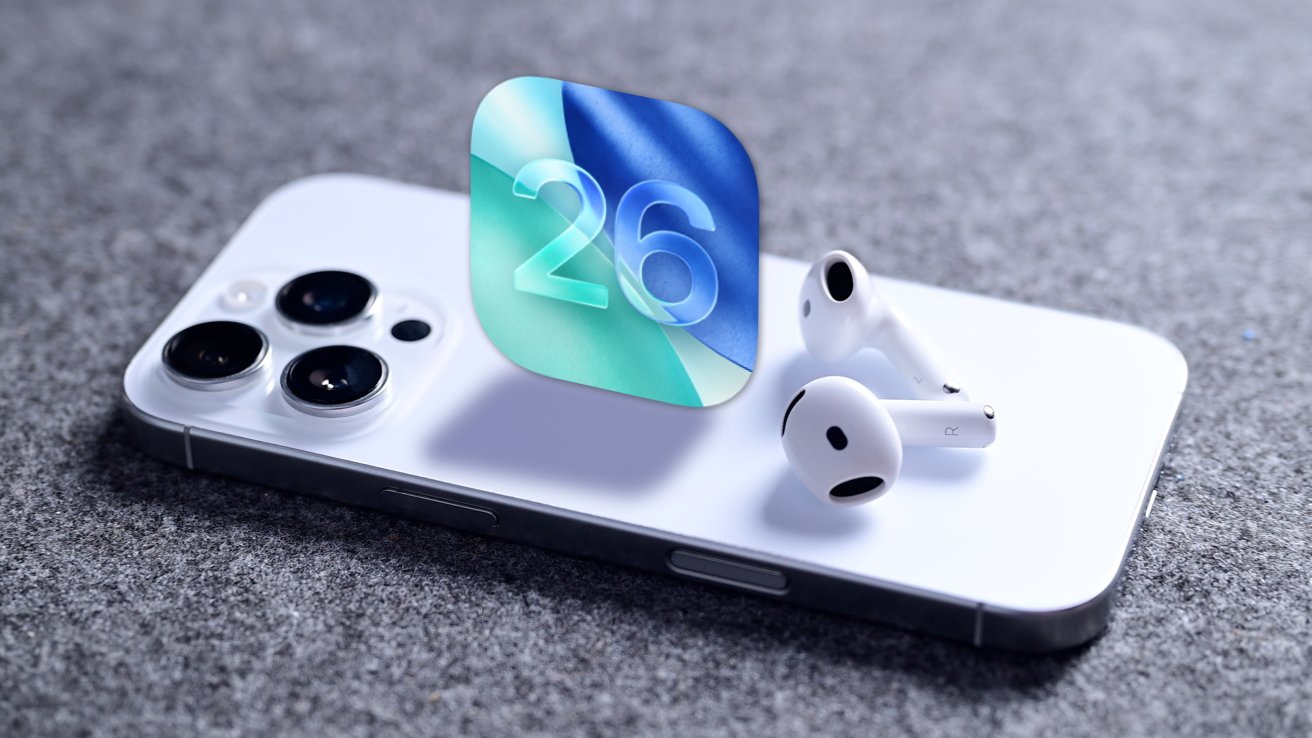
Apple’s AirPods Just Redefined What “Smart” Really Means for Earbuds
For years, the competition among premium earbuds has been little more than a specs war: stronger noise cancellation, better sound precision, longer battery life. The same cycle, again and again. But Apple’s latest move with iOS 26 signals something far bigger – a genuine paradigm shift in what it means for earbuds to be smart. The new sleep detection feature for AirPods isn’t just a neat trick; it’s a fundamental rethinking of what wearable tech should do for its user. It’s a quiet revolution that turns the AirPods from reactive gadgets into proactive companions.
With iOS 26, AirPods gain the remarkable ability to recognize when you’ve fallen asleep using a combination of sensors, Apple Watch data, and motion analysis. This isn’t about convenience alone – it’s about awareness. Your earbuds can now tell when your body transitions from wakefulness to rest and automatically adjust to suit your state. Podcasts fade down, non-urgent notifications go silent, and your personal soundscape evolves intelligently around you. This isn’t some toggle buried in a settings menu – it’s the beginning of an era where earbuds anticipate your needs before you realize them yourself.
Why This Changes Everything
Until now, earbuds have been clever but not truly intelligent. Most so-called “smart” features are still driven by the user. You tap, swipe, or command them to act. Samsung’s Galaxy Buds 2 Pro and Google’s Pixel Buds Pro are stellar in audio fidelity and noise cancellation, yet they remain reactive devices. You tell them what to do – they don’t infer, adapt, or sense.
Apple, meanwhile, has quietly shifted the definition of the category. By allowing AirPods to interpret personal context like sleep, the company has elevated them from accessories to contextual computers. This subtle but crucial leap separates Apple from the rest of the market. Where competitors measure decibels, Apple measures your state of being. It’s software intuition layered over hardware excellence.
Samsung’s lineup, for instance, brims with features – but most depend on the user’s intervention. Want ambient sound mode? Tap. Want to pause noise cancellation? Tap again. Even “Detect Conversations,” which lowers volume when it hears your voice, remains a basic audio trigger, not a contextual understanding. It doesn’t know if you’re exhausted, asleep, or meditating – it only knows you spoke. Google’s approach, on the other hand, should have been a slam dunk. The company has declared itself an “AI-first” pioneer for nearly a decade, yet its earbuds lag in delivering any deeply personal intelligence. Pixel Buds Pro boast adaptive volume and real-time translation, but they lack awareness. They can’t tell if you’re jogging, dozing off, or sitting through a conference call. That’s a startling oversight for a company whose strength lies in contextual AI.
Apple’s Quiet Health Revolution
Apple’s sleep-detection feature isn’t just a clever UX upgrade – it’s a stealth health innovation. By gathering sleep insights seamlessly through AirPods, Apple expands its wellness ecosystem without forcing users into hardware they might not wear. Many people find sleeping with a watch uncomfortable, but falling asleep with AirPods in? Common. Now those moments become valuable health data. That’s Apple’s genius – frictionless wellness. It captures the invisible moments of daily life and turns them into meaningful information without users lifting a finger.
For millions of people who already rely on AirPods for bedtime listening – white noise, ASMR, or podcasts – the feature bridges comfort and insight. It transforms casual listening into passive well-being tracking. More than that, it shows how personal devices can dissolve into the background of life, quietly optimizing our habits without demanding attention. When you fall asleep, your AirPods know it and act accordingly – no alerts, no buzzes, no sudden sound spikes. It’s digital empathy in motion.
The Broader Impact: From Specs to Sentience
For years, the “hearables” category has plateaued. Brands have refined materials, enhanced codecs, and extended playtime, yet the essence of what earbuds could be remained stagnant. Apple’s iOS 26 update punctures that monotony. It pushes the industry into a new era where user state – not just input – dictates behavior.
Think of it this way: active noise cancellation was about shaping your environment. Adaptive sound was about reacting to it. But contextual computing is about understanding you. It’s not about how the world sounds; it’s about how you are within it. This shift mirrors what Apple did for smartphones and wearables – melding hardware, software, and health insight into one living ecosystem. AirPods are now part of that fabric.
Competitors face an uncomfortable reality. They can’t simply copy this with a firmware patch. Apple’s advantage lies in its tightly integrated ecosystem – AirPods, iPhone, and Apple Watch already communicate fluently. That shared intelligence creates a multi-sensor awareness that others can’t replicate without similar infrastructure. Samsung and Google may excel at open platforms, but their fragmentation becomes a liability here.
For users, the payoff is subtle yet transformative. Imagine your AirPods knowing when to fade your audiobook as you drift off, or pausing notifications until morning. Imagine them learning patterns – detecting when stress levels rise and gently modulating sound to calm you down. We’re witnessing the dawn of earbuds that care not just about what you hear, but how you feel.
The Future of “Smart” Is Context
In truth, Apple has outgrown the spec sheet race. Its new battleground is invisible – context, anticipation, and understanding. This AirPods update marks the moment when intelligence in wearables becomes less about voice commands and more about silent prediction. Instead of asking Siri to help, your device quietly helps before you ask.
That’s why this update matters. It’s not only about comfort or convenience – it’s about redefining what “smart” actually means. For all of Google’s machine learning power and Samsung’s technical prowess, Apple has managed to humanize technology again. The AirPods no longer just sound great – they understand you. And once you’ve experienced that kind of subtle awareness, there’s no going back to earbuds that simply play sound. The future belongs to those who listen – not just literally, but empathetically.